Top 10 Enhancements to Locus EHS Compliance Software in 2020
Let’s take a look back on the most exciting new features and changes made in Locus Platform during 2020!

Let’s take a look back on the most exciting new features and changes made in Locus Platform during 2020!
Is your organization still using multiple software systems for EHS&S when you can (and should) be using one robust and unified platform? Unify your compliance, sustainability, water, air, and environmental data with Locus’ cloud platform for EHS&S. It’s easier, cheaper, and more efficient.
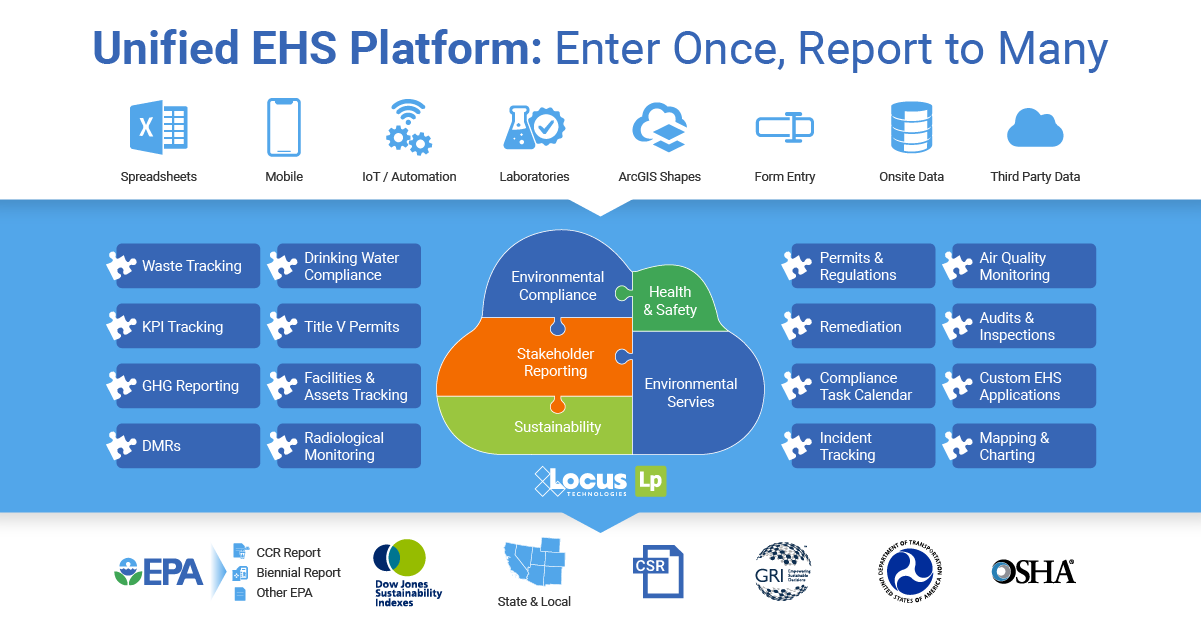
With Locus Platform, you can easily and securely feed all of your different EHS data sources to the cloud via a wide array of import options. You will then be able to analyze and report to virtually any regulatory agency, meeting any specific requirements they may have. We believe in making EHS compliance simpler.
For the better part of 2020, it’s safe to say that predominant changes to our daily lives have been brought on by COVID-19 and the associated response measures. This is certainly true for those of us working in the EHS field. EHS workers have an active role on the front lines, preparing our workplaces with new safety measures, including social distancing signage, training, and personal protective equipment (PPE).

Beyond those direct response actions, the realities of the ‘new normal’ have already impacted how other compliance and sustainability programs are implemented. And for good reason… many of the routine activities like inspections and onsite data collections now have a new safety issue to consider. Even with all the new protective measures we’ve implemented to address this pandemic, there remains some unavoidable added health risk caused simply by staff presence and interaction. For activities that are not mandated by a permit or regulatory requirement, the benefit of continuing those activities must now be weighed against the added health risk. For example, a daily waste inventory walkthrough may have been a standard routine for many EHS managers to collect data on waste generation as a key performance indicator. The value of that data collection effort may now be called into question, since it may increase travel and contact between staff. Depending on the value of those optional activities, some may be temporarily suspended simply because they are not worth the additional risk to health and safety.
For compliance requirements, this situation is more complex, due to the involvement and oversight of the applicable regulatory agency. The ultimate decision about whether a compliance activity must proceed generally lies with the regulator. The majority of EHS managers initially proceeded with meeting all their obligations without any changes. Although there are many applicable state and local ordinances and shelter-in-place orders related to COVID-19 that prohibited normal business operations, most of them include exceptions for activities that are ‘essential’ or required to maintain compliance with other regulatory programs. Public agencies have made very few blanket decisions to waive requirements for regulatory programs, even when they conflict with those local ordinances.

Despite the lack of a uniform response from agencies about whether or how compliance programs should be modified to accommodate COVID-19 precautions, I’ve observed several cases where regulatory staff have been given some level of authority and discretion to suspend or modify requirements. This is happening at federal, state, and local levels for various regulatory programs ranging from Superfund to GHG programs to land use covenants. I’ve experienced required deadlines delayed on remediation projects, modified approaches accepted for health risk mitigation, and on-site inspections postponed or drastically modified to accommodate social distancing. Any of these changes would have been unthinkable just a few months earlier. But now the regulators are seriously considering whether the continued enforcement of these requirements would create a potential health risk, and how their agency would defend their decision if the implementation of their requirements impacted someone’s health.
This ad hoc approach to compliance modifications brings its own new challenges for EHS managers, most of whom have detailed programs to track their efforts and ensure they stay on top of all the applicable compliance programs. Most of the regulatory programs that we work in have been in place for many years or decades, so the systems we’ve built up for those programs have been operating with minimal deviation for a long time. But now, in addition to the original set of requirements we’ve been implementing, we have new modified versions to track. In all the cases I’ve observed, the original requirements aren’t officially edited by the agency. Rather, the agency staff have issued temporary amendments in the form of a letter, memo, or email. So EHS managers will need to maintain the original requirements as well as the approved modifications in these various formats. Regulators are still planning that eventually these COVID-19 precautions will be lifted, so they can get back to the ‘old normal’ with the previous requirements we’ve implemented for years. This means that we can’t just overwrite the requirements in our compliance program, so we stay prepared to revert to the original official requirements if/when that happens.

The long-term impact of these compliance modifications is yet to be seen. The COVID-19 pandemic has forced more thought to be put into the cost/benefit of routine EHS activities. This is true not just for EHS managers but for regulators as well.
Since many EHS compliance programs have been largely unchanged for years, this is a rare opportunity to rethink or update those requirements. Technology has advanced significantly since many EHS requirements were written. This technology offers better and safer methods to achieve the same objectives. For example, I’ve attended several remote EHS inspections over the past few months, which were previously conducted in person. And after those inspections were completed, I can’t think of anything that was reduced or lost in terms of oversight. For some facilities, I’ve also seen remote automated monitoring used in place of manual field measurements, where it was previously only considered supplemental to the required manual data collection. Although the regulations technically required this work to be done in person, the remote versions were just as effective, and completely avoided the added health risks associated with physical gathering and travel.
So instead of wondering ‘When can we go back to the old normal?’ we might ask ‘Should we go back to the old normal?’ The regulatory programs we work with were designed to be protective of human health and the environment, but they were also mostly developed when things like handheld phones with live video were present only in science fiction. Obviously, these technologies are not new anymore, but this situation has provided an unprecedented opportunity to implement these alternatives, and ultimately confirm that they can be just as protective as the former methods they replaced. In addition to the cost savings that these options provide, there is a very real safety concern that they circumvent. And while cost-effectiveness is usually a difficult point on which to drive regulatory change, a safety issue is harder to dismiss.

While it still may be a while before we reach the end of this pandemic, there’s a lot we have already learned about how resilient EHS programs can accommodate this kind of major event. If we use this opportunity to engage with regulators, and closely review and update our programs, there’s no doubt they will only become stronger and better suited to the modern workplace and way of life.
See How Locus EHS Software Helps.
At Locus, we understand the unique requirements of EHS managers. More than many, EHS managers are dealing with a wide range of duties instead of a few pointed ones. With so many responsibilities, it can be hard at times to stay on top of your organization’s EHS needs. In this blog we highlight a few common compliance-related issues that should resonate with most EHS managers and the steps we’ve taken to help you with them.

They say it takes a village to raise a child, but it also takes a village to keep up with your organization’s regulations. If you are dealing with compliance, then chances are you’ve not been the first to know about a regulatory change, or you’ve found out about one later than you would have liked.
When you’re getting notifications from OSHA and the DOT and you’re checking specific permits and getting letters and emails about changes, sometimes it can all be too much. With Locus, you have the added benefit of an extra set of eyes, well… multiple sets of eyes. Our team keeps up with every rule and regulation used in our applications to further assist you with the breadth of information you have to manage. Locus EHS software is also integrated with RegScan, giving users seamless real-time access to current EHS regulations. This will allow Locus users to customize a watchlist in RegScan to quickly and readily view EHS regulations relevant to them.

When you have to worry about ever-changing costs that touch several parts of your business, the last thing you need is a gated product update from your EHS software vendor. With Locus’ SaaS model, you see reduced implementation costs and no costly upgrades – everyone is on the same version. And since everything is in one place, you have a reduced amount of wasted time finding information and making it actionable.

EHS managers deal with sensitive data, ranging from social security numbers to workman’s comp issues. Not taking proper care of this information can be anything from a PR debacle to a legal battle. With Locus, you have the peace of mind in knowing that your data is stored in entirety on the most secure cloud, Amazon Web Services (AWS). Not only that, but you have extensive security and admin access options, so you can have the relief in knowing only those with privileges can see certain information.

Whether you’re looking for purchase documentation of PPEs or you need to reference yesterday’s GHG numbers, you need access to that data without having to wade through multiple applications. And with all of your data stored in one secure repository, not only can it be accessed quickly, but it can be incorporated with other tools like automated reporting.
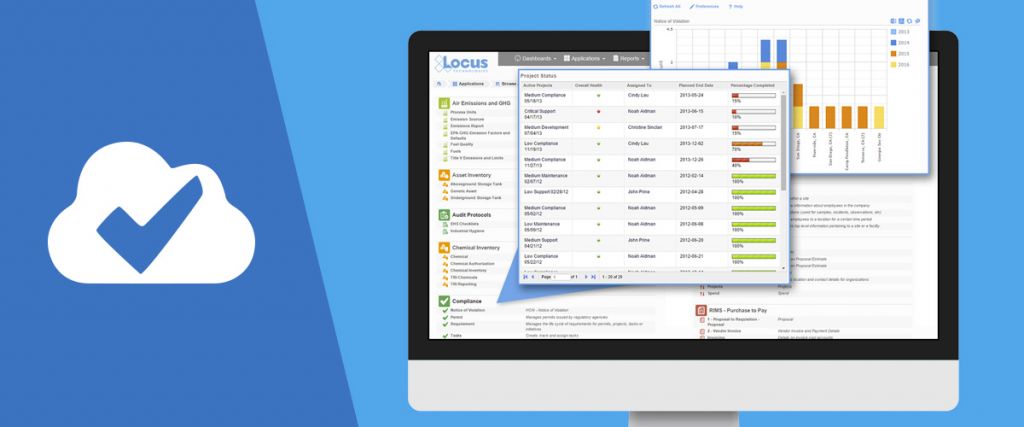
Are you still dealing with a different filing cabinet or file folder for each type of compliance? Not having your compliance data consolidated into one application means wasted time and time spent re-entering information (possibly incorrectly). Locus combines water, air, hazardous waste, DOT, PPE, workman’s comp, incidents, and more into one streamlined application to help with your organization and efficiency.
We are determined to support the needs of the user, you, first. By focusing on product development and customer service first, we feel that we have created a software as a service model that is both flexible and time-saving. If you are experiencing any of these issues with your current provider, we ask that you speak with a Locus representative today for a consultation or in-depth demo of what we can offer.
OSHA has released their most cited violations of the 2019 fiscal year, and perhaps unsurprisingly, the same mistakes are being made year after year. They are:
With over 30,000 cumulative violations for the top ten alone, and the same mistakes being cited repeatedly, there is an obvious need for an EHS software solution that provides a number of tools to prevent these missteps from being made. From configurable smart notifications to follow-up assignments when accidents, near misses, or when other incidents are logged, Locus EHS&S compliance software offers assurance that your safety procedures can be followed promptly and correctly.
Let’s take a look back on the most exciting new features and changes made in Locus Platform during 2019!
Sustainability is a corporate necessity, and finding the right software to support company-wide sustainability goals and initiatives is imperative to streamlining this time-consuming activity. This is especially true if you are managing inputs from many facilities/locations or have required or optional reporting requirements. Not to mention, most corporate annual reports demand a summary of key sustainability initiatives as part of the corporate annual reporting process.
Here are some features to look for when selecting a sustainability software—to make sure your new software will actually help your company track and report its sustainability initiatives more accurately and efficiently.
This is especially important when dealing with company locations in various geographic regions. A well-designed software system can solve this most vexing problem: finding the relevant data.
Data can come from multiple sources, and your sustainability software should be able to handle them all—then consolidate this data into a single source of truth.
Any decent software can make data collection easy, but to truly improve your company’s sustainability initiatives, it must also have tools for quality assurance reviewers and third-party verifiers to easily review the information, track the reported values to source data, and understand how the data were processed. Ultimately, the software also needs to allow the reporter to easily make updates or corrections as needed. Because these data are reported to regulators or shareholders, accuracy is paramount.
Look for the following features to support transparency and auditing:
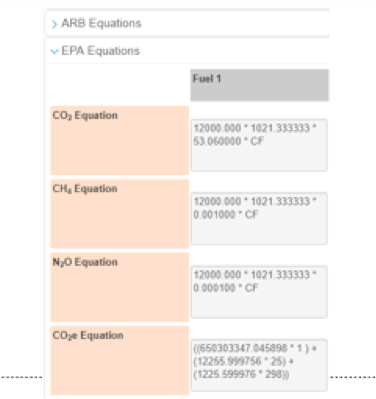
Your sustainability software should make it easy to see and understand the formulas that produced any calculated data values.
Many companies report to various regulatory or voluntary bodies, and the software you select should support all the major reporting requirements to avoid the need for separate calculations for some jurisdictions.

Find out what formats you need for regulatory reporting, and make sure your software supports exporting in these formats.
If you normally report 500 metric tons of GHG per year and you are finding entries of 500,000 metric tons per year in your data, chances are, it’s just simple data entry errors. However, no one wants to track these down months after the data entry event. Look for software that will flag these anomalies on entry and force the user to fix them before you ever get to the data review step.
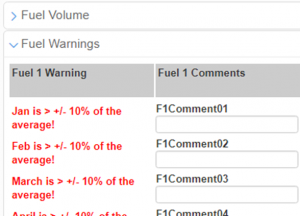
Immediate, inline alerts about outlier data values help prevent last-minute surprises.
The sustainability software you select should help simplify data entry and reporting by supporting your preferred workflows. Software with configurable workflows can be a huge help for both data entry personnel and managers reviewing data, by making the status of all data entry and reporting business processes abundantly clear.
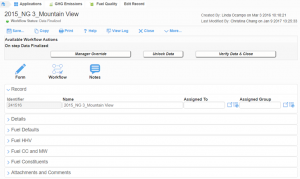
Options for managers to lock down data are important for preventing edits to data that is being prepared for reporting.
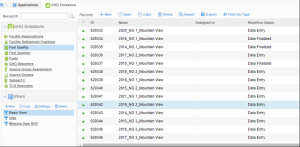
There should be an easy way to see the current workflow status of any data in your system.
All software that handles critical or regulatory data should provide auditing on key data fields. Find out the details of what is audited and how you will be able to access the audit information.
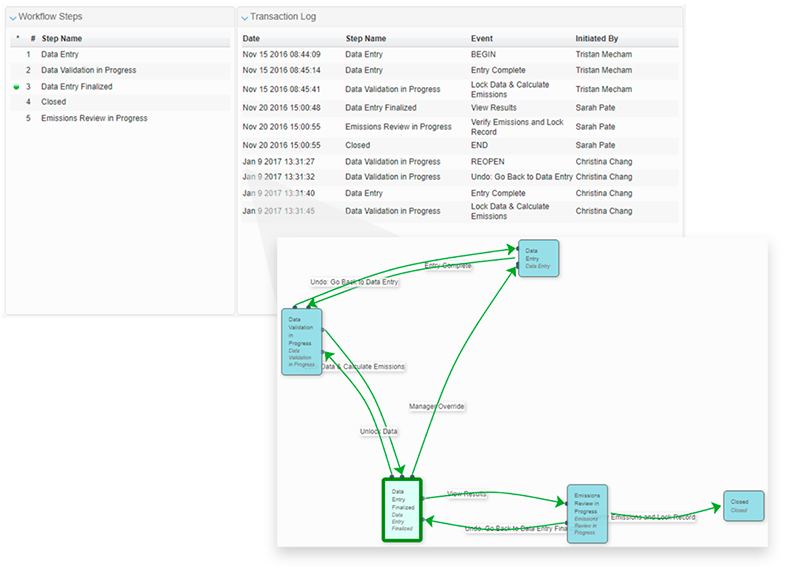
Your software should be automatically recording a history of all changes at each step of your workflow.
Every software has built-in report and dashboards, but they may not meet all your needs out-of-the-box. Assume some reports will need to be configured, and review the software accordingly.
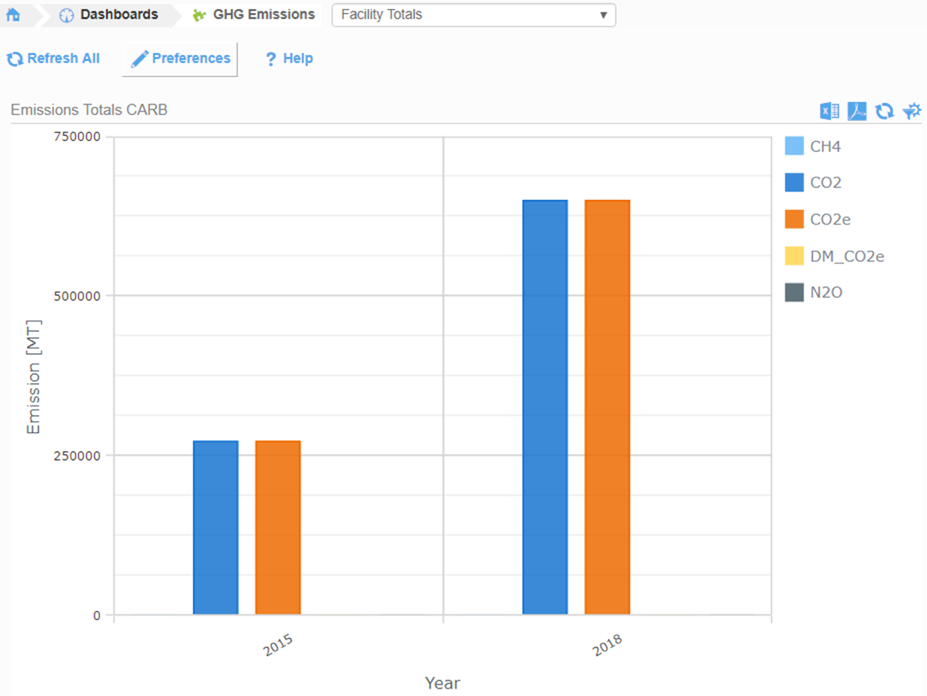
Look for options to easily configure reports, charts, and other visualizations that help you easily review summaries of your data.
Software can shoulder the burden of getting people to do what they are supposed to do (reminders), alerting people to when an action is needed (notifications), sharing information (messaging) and sending them information (report notifications). Be sure to review the strength of all notification features of the software, as this can be a huge help during reporting season—and it can lighten the burden on your inbox as well.
While you are evaluating software options, use these points as a guide to make sure you choose a solution that will truly make a difference for your organization’s sustainability initiatives and reporting goals.
As more sustainability software solutions appear in the marketplace, it can be difficult for a company to discern which features really matter for its workflow. Try a simple exercise—imagine what a perfect sustainability management business process would look like if you found the perfect software solution. Consider the challenges you face now, and what it would look like if those problems were handled by your software.
Then, ask how well the sustainability software you’re considering will make this dream a reality. The right software selection can help reduce operational risk, fulfill regulatory reporting requirements in less time and with less effort, and provide safeguards against bad data and missed deadlines. All you have to do is ask the right questions.

In the next few years, an opportunity exists to make significant advances in how we monitor and manage environmental emissions to the air, soil, and water, potentially resulting in significant disruptions in current approaches. Currently, industries and commercial establishments monitor their emissions and submit reports on a regular basis, often as frequently as quarterly, to federal and state agencies to demonstrate they are meeting regulatory requirements. However, no one on the generating or receiving end of these data dumps and reports is aggregating these emissions to create a more composite, inclusive picture of emissions across sources or media.
The reason is this: emissions of different types and to different media are reported to separate regulatory entities that, in general, do not interact or talk to one another. And although there are significant potential benefits to both generators and regulators in reviewing integrated environmental data sets, our traditional methods of storing and sharing this information make such integrations a hugely difficult effort.
Only by integrating all available data can we begin to
Blockchain enables the integration of these data sets for quick, yet comprehensive “big picture” assessments.
Blockchain technology is a highly disruptive technology that offers an efficient way of storing records (called blocks) which are linked using cryptography. While still in its infancy, blockchain promises to change the world as we know it, much like the internet did after its introduction in 1991. Today, the technology is most widely associated with digital currencies and money transfers. In time, however, blockchain technology will not only shift the way we use the internet, but it will also revolutionize the global economy and almost all transactional business that relies on an intermediary.
One Environment, Health, and Safety and Sustainability (EHS+S) sector well positioned to benefit from blockchain technology is emissions monitoring and reporting. I reported more on the technology and its impact on the EHS space in this in-depth article about blockchain and emissions management.
Presently, companies with emissions monitor these following regulatory requirements, input the resulting data into a database or spreadsheet, perform emissions calculations on the entered readings, and then report the results of these calculations to regulators. The entire focus of this process is to:
There is no suitable software technology or mechanism to look at aggregate emissions across geographical areas or sectors or how emissions of one type interact with emissions of an entirely different kind. Examining such interactions could be far more critical than monitoring and assessing the impacts on human health and the environment of single parameter emissions to only one media, and may reveal new opportunities for optimizing our EHS+S practices for reduced cost with similar or improved performance.
To take a hypothetical scenario, consider the possible consequential damages when two incompatible streams of chemicals or waste mix to create even worse chemicals as a result of their chemical reaction. EPA has only recently started looking into these type of scenarios. Its Envirofacts databases allow the public to retrieve information from multiple sources of Envirofacts’ System Data relevant to your area of interest. However, each database is a separate silo of information (Figure 1). The next step that ought to be taken is to assess and, as needed, report on the possible interaction of incompatible emission sources that are nearby, but are independently monitored and stored in disconnected databases (see Figure 2 below).
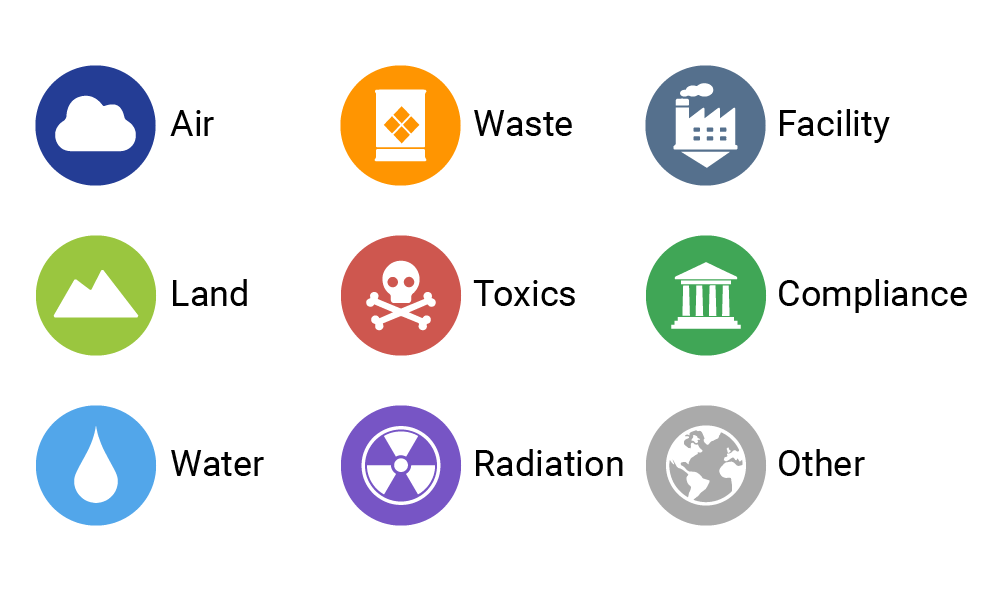
Figure 1: EPA Envirofacts databases allow the public to retrieve information from multiple sources, but only one source at time and disconnected from each other.
Most everyone taking prescription medicines comes to understand that interactions between drugs are quite common. Imagine something similar to the interaction of drugs in your body happening on a much larger scale in the environment. EPA recently imposed the highest environmental fine ever at the 2,530-acre Eastern Michaud Flats Contamination Superfund site near Pocatello, Idaho.
Two adjacent on-site phosphate ore processing facilities, the FMC Corporation and the J.R. Simplot Company, began operations at the site in the 1940s. The J.R. Simplot facility produces solid and liquid fertilizers using phosphate ore, sulfur, air and natural gas. The FMC plant is North America’s largest producer of elemental phosphorus which is used in a variety of products from cleaning compounds to foods. Operations at these plants have independently contaminated both the groundwater and soil with hazardous chemicals. Both plants have received numerous environmental violations, many of which were settled with the EPA. Each of the sites has its environmental ills (and fines), but the more significant environmental problem is a combined regional plume.
Everyone knows that acids and metals do not play well together. Sulphuric acid from the J.R. Simplot operation has leaked from surface impoundments into the groundwater and, on its way downstream, has leached all kinds of toxic metals from the FMC site, creating a highly poisonous plume of contaminants. An accurate assessment of the environmental disaster that exists in this area requires that the environmental impact of the two plants be examined in toto. Blockchain-based monitoring technology would allow both the public and regulators to see the resultant subsurface commingled plume and possibly pave the way to a more comprehensive remedy.
Issues involving contamination of multiple media have also arisen at sites where discharges of volatile organic compounds or VOCs have occurred. In Silicon Valley, where I live, many engineering consultants have made their living chasing plumes of VOC chemicals (e.g., TCE) and then, when deemed appropriate, have installed various groundwater treatment plants tucked in the back of parking lots of companies like Google or HP to ameliorate this contamination. Santa Clara, the central county in Silicon Valley, is home to more Superfund sites than any other county in the United States.
The process is analogous to rinsing detergent from a sponge. After many rinses, it still seems to have more in it. It is an endless process with little environmental benefit. Has anyone looked at the additional impact of the high energy demand for treatment systems that have minimal effect on improving groundwater, but can contribute significant CO2 equivalents to the atmosphere?
With blockchain technology, we could simultaneously measure the positive effect of the treatment plant removing contaminants from water and the negative impact that this same plant produces by contributing to the CO2 emissions. Quantities of removed chemicals over time could be plotted in real time vs. CO2 emissions produced resulting from high energy usage of the treatment plant. This would allow companies operating treatment plants and regulators overseeing them to determine at what point in time continued treatment could be harming, not helping the environment. It is these type of analyses that would benefit society and help with the decision to shut down a remediation process when diminishing returns of the treatment system are reached.
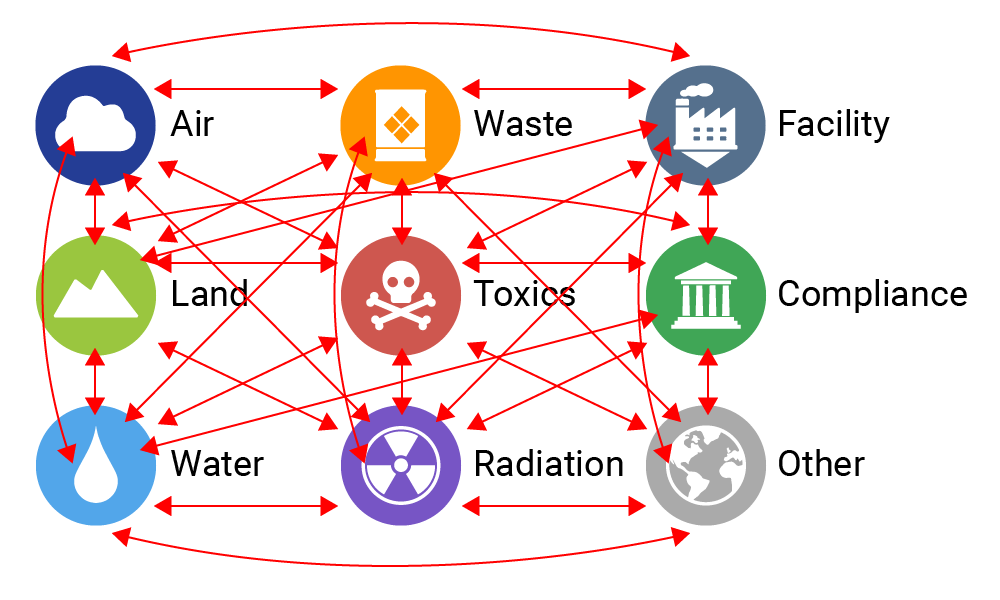
Figure 2: Interaction of incompatible emission sources is better managed if emissions are aggregated than if independently monitored and stored in disconnected databases.
How would blockchain technology help in a scenario like this? Chemical removal rate would be tracked in one block (of the chain) and CO2 emissions in another. Owner and regulator would agree on the formula to determine when the treatment process ceases to produce a significant environmental benefit. At this point, the system would be shut down. All of this would be monitored and measured in real time, and more importantly, it would be transparent to the owner, regulator, and the public.
When you think about emissions, they are generally (except incidents and accidents) operating problems that can be managed and optimized before discharges even happen. It is to the benefit of companies to do it this way. Every process that has an exhaust or smokestack for dispersing air emissions or pipelines for discharging liquids to surface receptors or water bodies could be managed to reduce harmful emissions coming out the system regardless of regulatory prescribed permissible levels. As an organization with a legacy environmental site knows, it is far more cost-effective to eliminate the original cause of emission than to spend decades of effort to remediate after the fact.
Unfortunately, many businesses are currently not genuinely looking at the aggregated data they collect about their emissions, wastewater, and energy use alongside their operational metrics. Current practices for EHS+S data management only allow for very simplistic comparison of normalized indicators between these disparate data sets. But it would benefit these operators to gather, aggregate and analyze data, and then make better, more cost-effective decisions as part of their risk-management protocols, while still maintaining their environmental compliance requirements.
Blockchain technology allows for review of more detailed data when making decisions with aggregated data sources so that managers can look beyond the simple normalized performance indicators. For example, many organizations only review their environmental and sustainability performance on an annual basis, mainly because the current tools to aggregate this data require them to be evaluated on a consistent time frame, and there is a significant investment in bringing all of the relevant data together.
But through blockchain technology, the data maintain their connection at every level. This allows for trend evaluation at other time frames not currently being examined. So if some short-term operational practice causes a spike in emissions, that issue can be identified and resolved immediately, rather than waiting for the end of the year, when the emissions have already happened, and the effect may not even be apparent when averaged out on an annual time frame. Then, even looking beyond the facility or organization, blockchain also allows for data aggregation across industry, region, and country, so that we will be in a better position to forecast the future and assess the viability of different measures to ameliorate the problems confronting us.
There is a growing need for companies to bring together information from their vast disconnected databases, single tenant clouds, and spreadsheets, and then mine the data they collect from these sources. In a decade or so, planet Earth may be a meshed grid of static sensors coupled with movable ones installed on people, animals (yes animals roaming in the wild), transportation devices, and other moving objects to collect data in real time. The conversation about the environmental landscape has evolved drastically over the last 50 years as we continue to understand the extent to which human activity has affected the planet. Companies and society need a collective and holistic understanding of the problems we face.
The only way to understand the full picture, and in turn to act meaningfully on a global level, is for all individuals and companies to understand the impact of their activities. It’s impossible to mitigate the net risks and effects of these activities on the planet when we have not fully assembled the data to characterize the problem and understand the full picture. Blockchain technology offers the best path forward, making it possible for environmental data be integrated at multiple levels.
Any coordinated effort of this magnitude will be years in the making, but every journey starts with a first step. There are two impediments to institute a change like this: technology (until recently, blockchain did not exist) and a government with the initiative to require such technology. Just as was the case with the internet revolution of the nineties, the rate of progress in technology is surpassing politicians’ ability to come to grips with its impact on society.
So far, there have been no imposed data exchange standards; a prerequisite for a broad data exchange, land for implementation of blockchain technology. But in the meantime, progressive organizations will want to start taking advantage of this technology to look at their operations and make more informed EHS+S decisions.
Perhaps blockchain technology is not ready for prime time. Some may argue that it creates a secondary problem of additional energy consumption much like water treatment systems described earlier. This is a theme that is advocated by some media outlets and blockchain skeptics who argue that the computer algorithms require significant amounts of electricity to power the servers on which they run. Estimates of blockchain’s soaring energy use are likely overstating the electric power used as the current debate on power consumption is not backed by hard data. When it comes to technology, history has consistently shown that the cost will always decrease, and the impact will still increase over time. It is inevitable that blockchain technology will become more accessible with reduced infrastructure over the next few years.
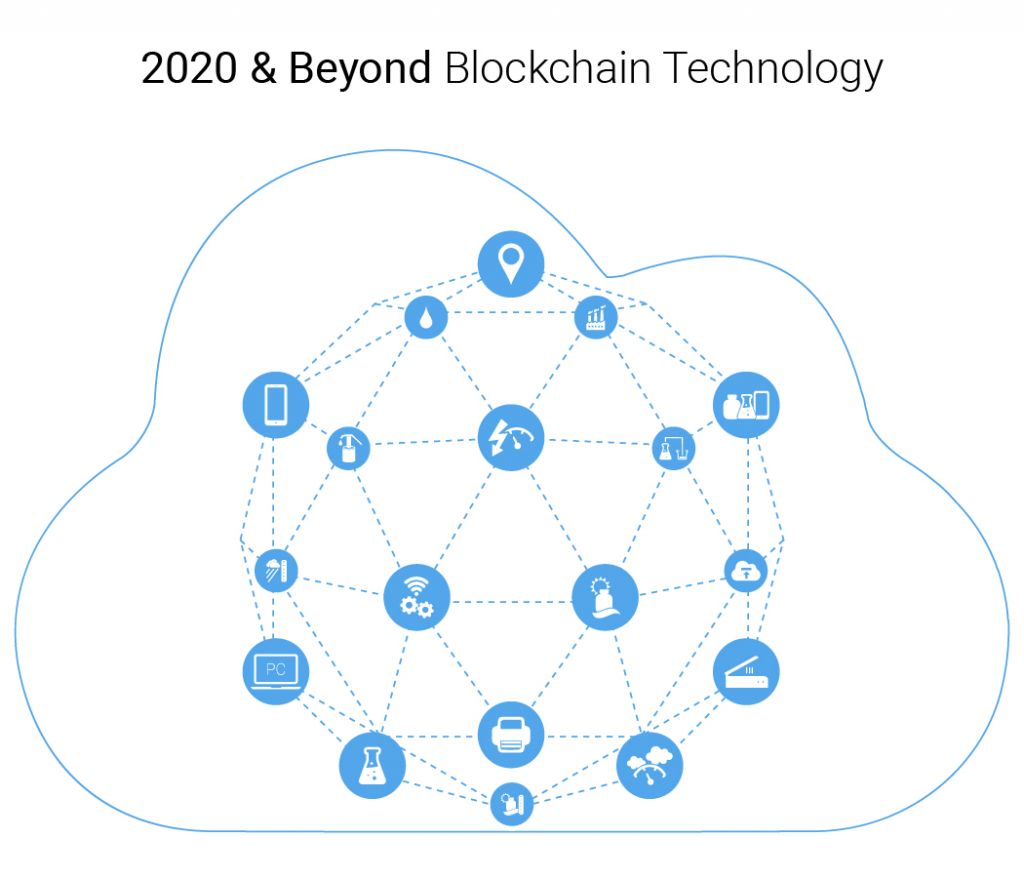
Blockchain could completely change how companies run their businesses and present new opportunities far beyond sustainability and environmental emissions management.
We are living in a world where companies and governmental agencies are not able to comprehensively analyze EHS+S information efficiently. Using blockchain technology will allow organizations to track, store, rollup, gain insights into, and also share their data with other interested parties as needed. It has the potential to put accurate and verifiable information into the hands of companies and regulating agencies more quickly. To make better progress on how we use EHS+S information, regulators will need to find ways that reward positive and proactive behaviors. We are not going to solve these issues by fining emitters until they behave.
Blockchain technology can help us move us away from the punitive approach and toward a more collaborative one by assisting companies to reduce their emissions while lowering their operating costs at the same time. Social sharing elements may also play a role here, giving companies that benefit from the fruits of blockchain technology a valuable marketing and PR advantage over those who do not adopt this technology, and as such, lag behind in their progress on environmental issues.
In the final part of our 4-part blog series, find out how cloud environmental databases enable better data stewardship and quality assurance.
 Continued from Part 2
Microsoft Support confirms that it is possible to share an Excel workbook. Two or more individuals can indeed access the same spreadsheet simultaneously. Edits are even possible:
You can create a shared workbook and place it on a network location where several people can edit the contents simultaneously… As the owner of the shared workbook, you can manage it by controlling user access to the shared workbook and resolving conflicting changes. When all changes have been incorporated, you can stop sharing the workbook.
Sharing a spreadsheet may work in a small office or facility with a couple of users, but it certainly is not a viable option when more users need to access, view, and generate reports. This is a task for which databases are far better suited.
On any given day, for example, Locus EIM supports hundreds of simultaneous users. Some may be inputting form data, while others are loading and checking laboratory EDDs, and still others are creating reports and graphs and viewing data on maps and in tables. Many of these are very data-intensive processes—yet Locus EIM handles them seamlessly.
Being able to handle such simultaneous activity is inherent in the designs of relational databases. In contrast, the ability to share an Excel workbook is not a native feature of such software and, as such, is unlikely to meet the needs of most organizations (especially as they evolve and grow).
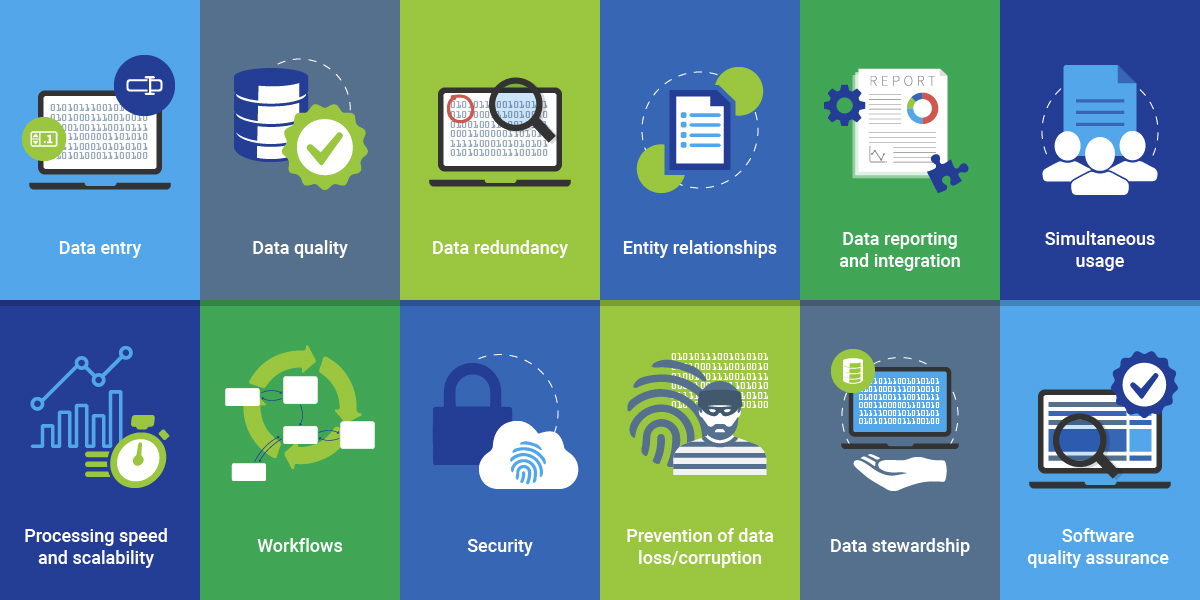
 7) Processing speed, capacity, and scalability is better with databases
Compared to spreadsheets, databases are the hands-down winners with respect to processing speed and the numbers of records they can store. Higher-end databases can store hundreds of millions of records. In contrast, spreadsheets with hundreds of thousands of records can bog down and become difficult to manage.
An underappreciated, yet the critical difference is that while you’re using a spreadsheet, the entire file is stored in a computer’s random access memory (RAM). In contrast, when using a database, only the dataset that you are currently working with is loaded into RAM.
To illustrate just how fast a powerful database can be, I sent a query to EIM at our secure facility on the opposite coast, asking how many “benzene” records were in one of our larger laboratory results table (N > 4,500,000). Sitting at a desk here in the hinterlands of Vermont, the result (“number of records = 64773”) came back in less than a second. I did not even have time to call in the cows for their afternoon milking.
Because they are both faster and can store more, databases scale far better than spreadsheets. As such, they can meet both your current and future requirements, no matter how fast the information you are required to store grows over time.
 8) Databases support creating and following complex workflows
In contrast to spreadsheets, databases support the creation of formal workflows. Let’s consider one example from EIM—its cradle-to-grave sample planning, collection, and tracking process.
Using EIM’s Sample Planning module, you can:
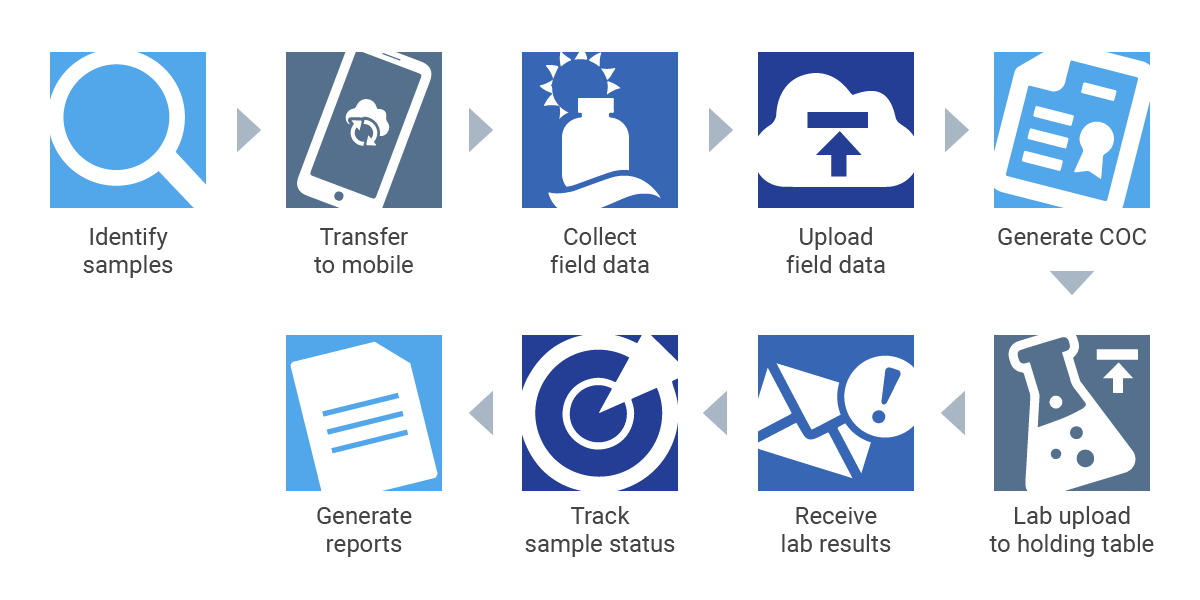
You simply could not build such a comprehensive and sophisticated workflow in Excel. Notice we mentioned maps. Building complex workflows is yet another area where advanced, integrated database management systems shine, especially as they can automatically create GIS-based maps of the results from data housed in the database—without the need (or expense) for ancillary software.
 9) Databases provide more security than spreadsheets
Microsoft identifies the following security features available in Excel:
You can remove critical or private data from view by hiding columns and rows of data, and then protect the whole worksheet to control user access to the hidden data. In addition to protecting a worksheet and its elements, you can also lock and unlock cells in a worksheet to prevent other users from unintentionally modifying essential data.
At the file level, you can use encryption to prevent unauthorized users from seeing the data. You can also require password entry to open a workbook, or you can secure a workbook by employing a digital signature.
You can specify user-based permissions to access the data, or set read-only rights that prevent other users who may be able to view the data from making changes to it.
Perusing the web for postings comparing the features of databases to spreadsheets, you’ll find plenty of accusations that spreadsheets lack security and control features. Clearly, Microsoft’s description of the security features available in Excel shows that this isn’t the case. However, these security features may not be as robust as Microsoft claims, and they may prove difficult for the average user to implement.
As Martin Cacace of BoundState Software explains, “Although Excel allows you to protect data with a password and Windows-based permissions, it is extremely delicate and requires a deep understanding of Excel.” Some of these features won’t work if you have people using different operating systems or if you need access from other computers. Even a password protected Excel file is not really secure; there are tools on the Internet that anyone can use to unlock a protected Excel file without knowing the password.”
Databases offer far more control than spreadsheets over who can access and make changes to data. As an example, Locus EIM users must have a unique username and password. Users can be assigned to multiple privilege levels, ranging from “administrator” to “guest”. Customers that require a more fine-grained approach can use “roles” to assign permissions to specific modules, activities, or functionality to users. Password security is typically robustly designed in commercial databases, and can be configured to require complex passwords, session expiry, and password expirations to match customer IT requirements, something Excel would find challenging. Locus EIM also tracks all users and makes that information available to database admins to provide yet another layer of security for the system.
 10) Databases are better at preventing data loss and data corruption
Because of the general lack of controls that exist in most spreadsheets, it is far easier for a user to wreak havoc on them. One of the most dreaded developments that can occur is associated with the “Sort” function. A user may choose to sort on one or more columns, but not all—resulting in the values in the missed columns not matching up with those in the sorted ones. Nightmares like this are easily preventable (or are simply not possible) in databases.
Another advantage of database management systems is their ability to create audit trails, which preserve the original values in separate tables when changes are made to records. In the event that a user wants to undo some changes (including deletions) that he or she has made to a table, a data administrator can retrieve and restore the original state of the modified or deleted records. Also importantly, the circumstances of these changes are fully tracked (who, what, when, where), which is a minimum requirement for any quality assurance process.
Lastly, Excel stores the entire spreadsheet in memory, so if there is a system crash, you will lose everything you have entered or edited since your last save. In contrast, each operation you perform in a database is saved as you complete it. Moreover, most databases have daily backups, and in some cases, maintain an up-to-date copy of the data on a secondary device. Additionally, data is typically backed up in multiple geographic locations to provide even more recovery options in a disaster situation. Any good commercial database vendor will be happy to share their disaster recovery process because securing and maintaining your data is their most important job. In short, you can rest assured that your valuable data—often gathered over many years at a high cost—will not be lost if it is stored in a DBMS like Locus EIM.
About the author—Gregory Buckle, PhD, Locus Technologies
 Dr. Buckle has more than 30 years of experience in the environmental field, most of which have been devoted to the design, development, and implementation of environmental database management systems. When he joined Locus in 1999, he was responsible for building and deploying Locus’ cloud-based EIM software. He was also instrumental in customizing EIM for the water utility industry and developing EIM’s powerful Sample Planning and Data Validation modules. The latest iteration of the Sample Planning module that Dr. Buckle built is currently being used by Los Alamos National Laboratory and San Jose Water Company to plan and schedule thousands of samples per year.
About the author—Marian Carr, Locus Technologies
 Ms. Carr is responsible for managing overall customer solution deployments and customer relationships with Locus’ government accounts. Her career at Locus includes heading the product development team of the award-winning cloud-based environmental ePortal solution as well as maintaining and growing key customer accounts with Locus’ Fortune 100 enterprise deployments. In addition, Ms. Carr was instrumental in driving the growth and adoption of the Locus EIM platform with key federal and water organizations.
Sorry, no posts matched your criteria