By Staff Writer
Reading Time: 5 minutes 52 seconds
Picture the environmental, health, and safety team at a large industrial enterprise on the eve of a regulatory audit. One analyst pulls air emissions from a spreadsheet. Another exports industrial wastewater records from a separate vendor system. A third scrambles to reconcile waste manifests from a third tool. Meanwhile, the sustainability director is manually re-entering GHG and water use data into an ESG disclosure template that will need to be reformatted again for CSRD.
This is not hypothetical. This is Tuesday for many large enterprises.
The fragmented system problem goes well beyond inefficiency to become a true enterprise risk. Inconsistent data standards, manual re-entry errors, and disconnected audit trails create the exact conditions that regulators and auditors find most concerning, and that boards and investors increasingly refuse to accept.
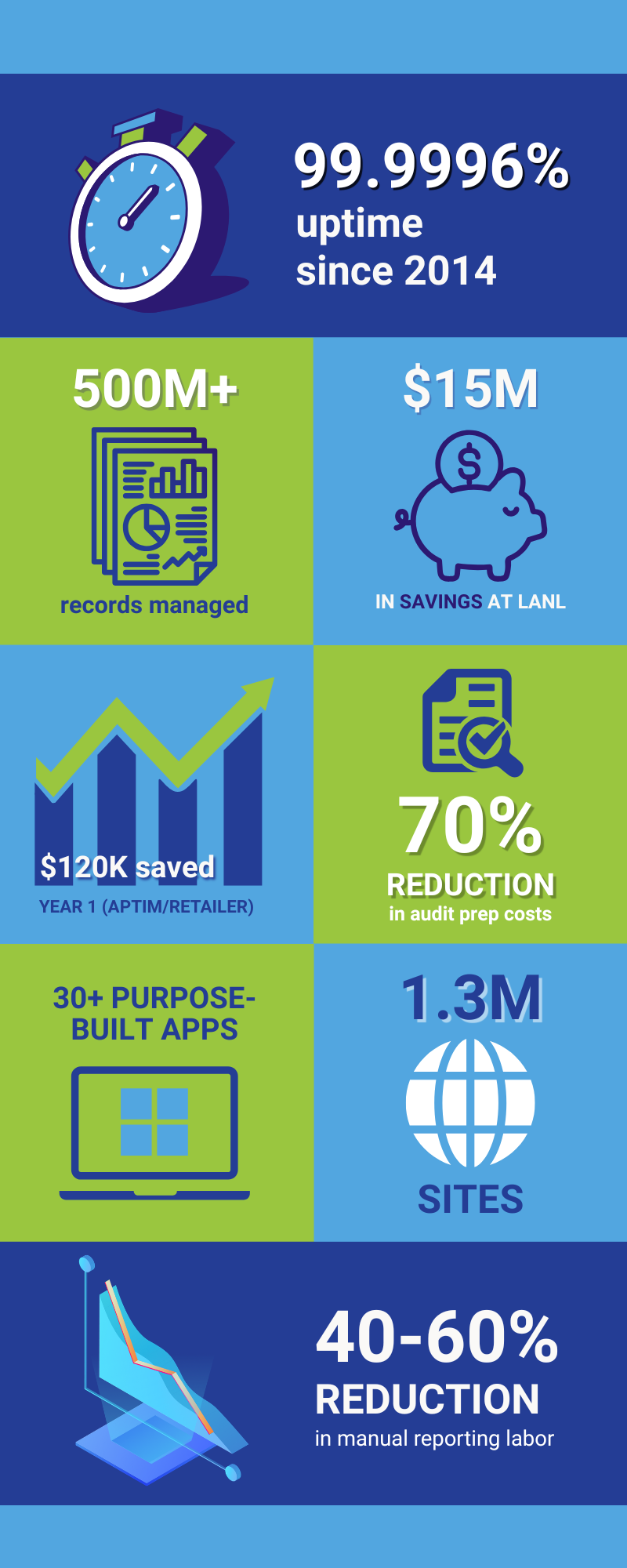
Locus Technologies solves this exact problem. Founded in Silicon Valley in 1997, Locus is the longest-serving pure-play SaaS provider in the EHS and ESG software sector. Today, the Locus Platform manages more than 523 million environmental records across 1.6 million sites in real time — covering air, water, waste, energy, emissions, incidents, and ESG disclosures within a single, metadata-driven, multitenant cloud architecture.
No other platform in the market can make that claim with documented customer proof across all of those domains.
Why Platform Unification Matters Now
Regulatory pressure has transformed from a manageable checklist into a multi-framework, multi-jurisdictional web of overlapping obligations. The EU Corporate Sustainability Reporting Directive (CSRD) requires double materiality assessments spanning financial performance and environmental impact simultaneously. EPA air and water permitting, RCRA biennial reporting, TRI/EPCRA Tier II filings, OSHA HazCom, and state-level requirements each demand different data formats from the same underlying operational reality.
When that data lives in separate systems, enterprises face a compounding problem: the cost of compliance grows with every new requirement, because every new requirement triggers a new round of data reconciliation.
The numbers behind platform consolidation are striking. According to Locus’s independent customer analysis, enterprises that centralize on a unified EHS and ESG platform reduce manual compliance tracking and reporting labor by up to 60%, lowering reliance on spreadsheets and outside consultants. Industry research supports a similar range: multiple third-party studies cited by Locus put the reduction in manual reporting time at 40–60% for companies that implement a centralized system. One multi-state water utility using Locus automated its compliance and reporting workflows so thoroughly that audit preparation costs dropped by 70%, with staff time per report falling from days to hours.
The reason is architectural. Locus is engineered on a single metadata-driven data layer. A facility name, a chemical compound, a water source … each is defined once and propagated automatically across every applicable module. A Title V air permit, a GGRT GHG submission, a DMR discharge report, and a CSRD disclosure all draw from the same validated record. No copy-paste. No version conflict.
The Evidence Is in the Customers
The proof of a true all-in-one platform is not found in marketing materials. It is found in customers who keep expanding their footprint on it, because it keeps delivering.
A Fortune 10 global oil and gas company offers a compelling case study in platform consolidation over time. The company first adopted Locus Technologies for water quality analytical data management in 2003. In 2024, it deployed Locus Waste software across its U.S. operations as part of a global EHS compliance expansion spanning Africa and additional international regions. In 2025, it selected Locus Water for a worldwide rollout of enterprise water metrics — covering upstream, midstream, and downstream operations and giving every business unit real-time visibility into water consumption by source and type. That is more than two decades of progressive consolidation onto a single platform, built on proven trust.
Los Alamos National Laboratory (LANL) tells a similar story of measurable consolidation value. LANL’s environmental data had been scattered across a dozen independent databases before Locus Technologies integrated everything into a centralized cloud platform. The result: an estimated $15 million in cost savings in the first few years of use, with real-time public access to environmental monitoring records through Locus-powered Intellus. LANL later extended its contract for additional years and expanded into air data management, sample planning, and waste tracking.
APTIM, a top 10 environmental management firm, selected Locus Waste Management software after evaluating five competing products to support a $2.4 million annual waste disposal program for a large national retailer operating 850 stores. Using Locus analytics, APTIM identified underperforming haulers and helped the retailer cut costs by $120,000 in the first year — and earned additional scope because of it. A key reason APTIM chose Locus: the ability to activate adjacent modules like waste permits, compliance tracking, and RCRA biennial reporting within the same platform as needs evolve.
Del Monte Foods chose Locus Technologies to manage the complex sustainability data that underpins its corporate goals. According to Robin Connell, Sustainability Programs Manager at Del Monte Foods: “Locus truly understands the science behind the metrics and acts as another set of eyes and a trusted partner in validating our data. By working with Locus, we improve our ability to analyze and forecast our reliance on critical environmental resources, which will help Del Monte meet its sustainability goals. Management of our complex set of activities requires robust cloud-based software architectures that are best delivered via the Cloud. We found all of these in Locus.”
Water Is Not an Afterthought. It Is Native.
Most EHS platforms bolt water data to the edges of their architecture. Conversely, Locus treats water as a first-class enterprise concern, because it is.
Locus Water spans drinking water quality, wastewater, stormwater, produced water, PFAS tracking, backflow prevention, and enterprise-wide water consumption reporting. It integrates natively with Locus Air, Locus Waste, and Locus ESG, meaning that water consumption data flows automatically into sustainability disclosures, CSRD reports, and GHG accounting without any manual bridging.
For companies facing CSRD disclosure requirements, water stewardship is one of the most material and hardest-to-quantify obligations. Locus manages that data within the same validated system of record used for everything else, removing the last major data gap in enterprise sustainability reporting.
OneView: The Command Center That Proves the Architecture Works
In July 2025, Locus launched OneView, a unified command center that pulls real-time data from every Locus application, smart meters, and enterprise systems into a single AI-powered interface. OneView provides visibility into air emissions, water and energy use, industrial discharges, hazardous waste, chemical inventories, sampling programs, safety incidents, spills, refrigerant phaseouts, and sustainable construction activities — all at once, from one screen.
This is not a dashboard bolted onto disconnected modules. OneView works because the underlying Locus Platform already shares a single data layer. Locations, assets, technicians, chemical compounds, and compliance events are linked automatically on the backend. Executives can review enterprise-wide KPIs and drill directly to root causes, supporting documentation, and task-level data without switching systems.
“Locus OneView eliminates the blind spots and redundant efforts that prevent companies from transforming environmental data into business intelligence,” said Neno Duplan, Founder and CEO of Locus Technologies. “While competitors make vague claims about ‘actionable insights,’ OneView delivers with the architecture, validation, security, and integration necessary to make those insights real.”
Built for the Regulatory Future, Not Just Today
For enterprises preparing for CSRD compliance, Locus covers all 1,100+ data points within the European Sustainability Reporting Standards (ESRS), including the 176 that are mandatory regardless of materiality. It supports double materiality assessments, GHG inventory, water quality and reuse, waste, embodied carbon, refrigerants, renewable energy, soil testing, recycling, and social and governance data via API connectors.
Locus Platform’s configurability means that as the regulatory landscape evolves, Locus adapts without requiring enterprises to re-platform. Power users configure workflows, data fields, and reports through a no-code workbench. Custom apps can be built on the same underlying architecture, without vendor fees. The flexibility is not a workaround. It is the architecture delivering exactly what it promised.
For any enterprise evaluating all-in-one EHS, ESG, and water management platforms, the questions to ask are: Does the platform manage water natively, not as an add-on? Does a single data layer feed every module and every report? Is there documented proof from real customers who have consolidated across all three domains? And can it scale from one facility to Fortune 10 global operations?
For Locus Technologies, the answer to every one of those questions is yes, and the company has been doing so for 29 years.
Locus is the only self-funded water, air, soil, biological, energy, and waste EHS software company that is still owned and managed by its founder. The brightest minds in environmental science, embodied carbon, CO2 emissions, refrigerants, and PFAS hang their hats at Locus, and they’ve helped us to become a market leader in EHS software. Every client-facing employee at Locus has an advanced degree in science or professional EHS experience, and they incubate new ideas every day – such as how machine learning, AI, blockchain, and the Internet of Things will up the ante for EHS software, ESG, and sustainability.