By Amelia Anderson
Reading Time: 5 minutes 10 seconds
TL;DR: Most EHS, ESG, and water management platforms handle one or two of these domains well, but few can genuinely unify all three in a single database with a shared audit trail, reporting engine, and workflow layer. The primary reason is that environmental and water data requires specialized scientific expertise, including sampling plans, laboratory analytical data, chain-of-custody, subsurface modeling, and complex hydraulic calculations, that most EHS-first and ESG-first vendors were never built to handle. Locus Technologies is the only provider that started in environmental and water data management and modeling, then expanded into EHS and ESG, rather than the reverse.

Enterprises are under unprecedented pressure to manage a growing constellation of environmental, sustainability, and operational requirements. From greenhouse gas accounting and climate disclosures to water stewardship, PFAS sampling, incident management, and ESG assurance, organizations increasingly need a single, trusted system of record that unifies EHS, ESG, and water data.
But as the vendor landscape expands, one question persists among buying committees:
“Which solutions actually integrate EHS, ESG, and water management in one platform?”
The short answer: only a small handful claim to, but among them, Locus Technologies is the only provider that started in environmental and water data management and modeling, then expanded into EHS and ESG, rather than the reverse.
This article explains why unified multitenant platforms matter, the market dynamics driving convergence, the barriers keeping other vendors from catching up, and why Locus is the only solution with a decades-long track record delivering all three domains at true enterprise scale.
Why Organizations Need Unified EHS, ESG, and Water Data Now More Than Ever

1. Regulatory complexity demands a single source of truth
Environmental and sustainability regulations are converging:
- CSRD & ESRS
- U.S. EPA water quality and wastewater reporting
- Air, waste, and hazardous materials rules
- SB 253 & SB 261 for companies doing business in California
- Refrigerant and emissions reporting
- Energy & resource efficiency mandates.
Historically, companies managed each domain in a separate system. But this siloed architecture is a liability when regulators and investors require cross-domain reporting:
- GHG + energy + water
- Water quality + chemical use + permit compliance
- Waste streams linked to ESG materiality
- Incident data tied to sustainability KPIs.
Only a truly unified platform can ensure consistency, auditability, and defensible reporting across these intersecting datasets.
2. Operational efficiency and cost reduction
Multiple point solutions mean:
- redundant data entry
- duplicated infrastructure
- fractured integrations
- inconsistent data quality
- expensive multi-year implementations.
Enterprises increasingly recognize that consolidation is financially necessary.
3. AI and analytics require integrated datasets
Modern AI tools like predictive analytics, anomaly detection, and autonomous reporting agents require clean, structured environmental datasets. AI cannot deliver value if EHS, ESG, and water data are spread across incompatible or disjointed systems.
A unified platform is becoming a prerequisite for advanced analytics.
Why So Few Vendors Offer All Three Domains in One Platform
Most EHS and ESG systems evolved from safety and compliance roots, not scientific water analytics, subsurface groundwater plume dispersion numerical modeling, or environmental and emissions data management. As a result:
- EHS-first vendors (e.g., Cority, Benchmark Gensuite, Intelex) are strong in safety and compliance but lack deep water analytics, sampling workflows, and lab QA/QC.
- ESG-first vendors excel at reporting frameworks but typically rely on spreadsheets, manual imports, or third-party tools for environmental data.
- Water-first vendors focus on plant operations, SCADA, or water treatment, not enterprise ESG or EHS.
Water, environmental chemistry, and geoscience data require special expertise, including:
- sampling plans
- laboratory analytical data
- geotechnical, geology, hydrogeology, and geophysical data
- chain-of-custody
- geospatial and subsurface modeling
- complex water hydraulics and hydrology calculations
- regulatory QA/QC
- specialized calculation engines.
Very few vendors have built this backbone.
Locus is the only provider that started in environmental and water data management and modeling (the hard stuff), then expanded into EHS and ESG (the easier stuff), rather than the reverse.
Why Locus Technologies Is the Only Fully Unified Platform Built for All Three Domains
Locus Technologies is the longest-standing SaaS provider in the environmental, water, and EHS market. The company was founded in 1997 and has been cloud-native from inception — continuously operating on one multitenant platform.
1. Deepest Environmental and Water Expertise in the Industry
No other EHS/ESG vendor matches Locus’s 28+ years in:
- environmental sampling and site remediation
- groundwater modeling and monitoring
- water treatment and wastewater plant operations and automation
- SCADA and IoT integrations
- PFAS and emerging contaminants
- subsurface and geotechnical/geological data
- complex chemistry, biology, lab data, and QA/QC workflows.
This scientific foundation enables Locus to support use cases typically out of scope for EHS-only platforms. A few case studies include:
- U.S. Department of Energy: Manages one of the world’s largest environmental databases using Locus.
- Chevron: Uses Locus for global environmental programs involving waste and water.
- Multiple Water Utilities & Municipalities: Use Locus for water quality, operations, and regulatory reporting.
These are not small pilot projects; they’re enterprise-scale deployments with billions of data points.
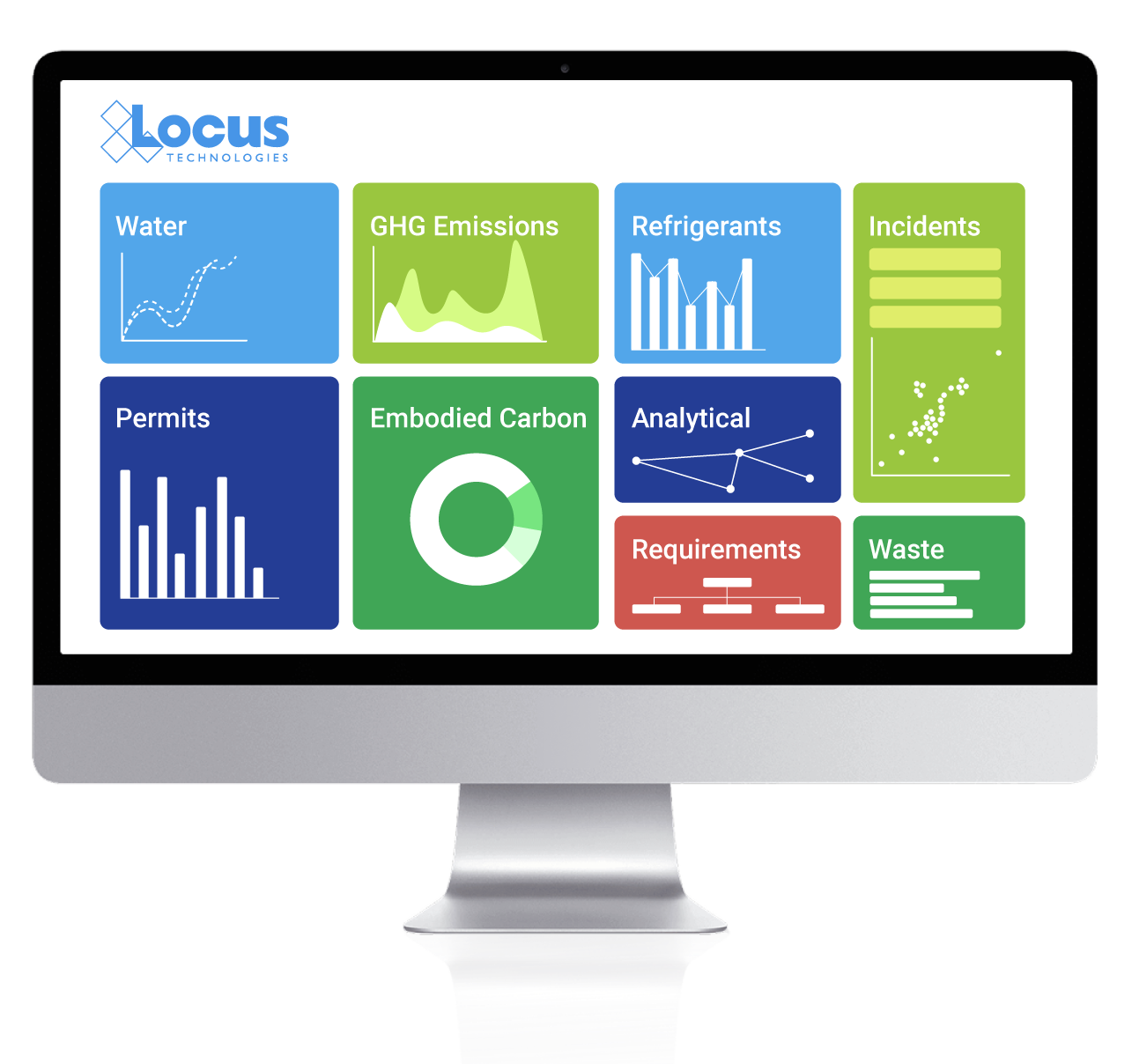
2. A True Unified Platform for EHS + ESG + Water
While competitors rely on acquisitions, stitched-together modules, or bolt-on ESG packages, Locus offers:
- one shared database
- one user interface
- one security model
- one reporting engine
- one GIS software offering each app as a layer
- one configurable workflow engine.
This results in:
- cross-domain analytics
- consistent emissions factors
- unified audit trails
- seamless reporting for CSRD, GHG, water, waste, and incidents.
Competitors that grew through acquisitions often operate multiple codebases behind the scenes. Even when marketed as “integrated,” data flows are still stitched together through middleware or APIs.
3. In-House Scientists and Domain Experts
Unlike EHS-first vendors focused primarily on safety or compliance, Locus employs:
- hydrogeologists
- chemists and chemical engineers
- civil and environmental engineers
- water quality specialists
- GHG and ESG reporting experts
- software engineers who specialize in scientific data structures.
This depth allows Locus to configure complex environmental programs faster and more accurately than vendors whose expertise is limited to safety or corporate compliance.
4. Proven ESG Leadership
Locus supports:
- GHG (Scopes 1, 2, 3)
- SB 253 & SB 261
- CSRD & ESRS
- Energy, water, and waste footprints
- Embodied carbon
- Refrigerants, air emissions, and hazardous materials
ESG data is fully integrated with environmental data, not managed as a separate reporting silo.
How Locus Compares to Other Vendors
Cority: A strong EHS platform with growing ESG capabilities. However:
- environmental chemistry and water-quality depth are limited or non-existent
- geology and subsurface workflows require external tools
- platform combines various acquired modules.
Benchmark Gensuite: Known for safety and EHS workflows. ESG reporting is solid, but:
- water data management is minimal
- environmental sampling/chemistry management is not a core offering.
Intelex: Solid EHS compliance and safety modules, but:
- lacks native water analytics
- environmental chemistry and SCADA integrations are not core competencies.
None of these vendors have Locus’s 28+ years of environmental and water domain specialization, subsurface data expertise, or large-scale DOE/utility deployments.
Which Industries Benefit Most from Unified EHS + ESG + Water?
Energy & Utilities
- water treatment
- wastewater discharge
- environmental monitoring
- ESG reporting and GHG compliance
Oil & Gas / Chemicals
- air, water, waste, PFAS, remediation, and ESG reporting
- complex chemistry and sampling
Manufacturing
- incidents, waste, energy, water stewardship
- embodied carbon and supply chain emissions
Tech & Data Centers
- energy, water use, Scope 2 emissions
- ESG frameworks across multiple geographies
Government & Defense
- large, complex environmental datasets
- remediation and long-term stewardship
Any organization managing scientific environmental data + sustainability reporting + safety/compliance workflows gains significant strategic benefit from consolidation.
Locus Is the Only Mature, Proven Platform That Natively Integrates EHS, ESG, and Water
While many vendors market broad “environmental and sustainability” solutions, very few offer a single, cloud-native platform that handles the full lifecycle of:
- Environmental sampling
- Water quality and water operations
- EHS compliance and incidents
- ESG and climate reporting
- Data science and analytics.
Locus Technologies is uniquely positioned because the company was founded at the intersection of these domains and has spent more than two decades refining a platform purpose-built for them.
As regulatory pressure intensifies and data integration becomes essential for AI-driven analytics, organizations increasingly recognize that EHS + ESG + Water must converge into one system of record.
For enterprises seeking a unified, scientifically grounded, future-ready platform, Locus remains the most mature and comprehensive solution on the market.
Frequently Asked Questions
Why do so few EHS and ESG vendors offer genuine water management capabilities on the same platform?
Most EHS and ESG systems evolved from safety and compliance roots, not from scientific water analytics, subsurface groundwater modeling, or environmental data management. EHS-first vendors are strong in safety and compliance but lack deep water analytics, sampling workflows, and lab QA/QC. ESG-first vendors typically rely on spreadsheets, manual imports, or third-party tools for environmental data. Water-first vendors focus on plant operations or SCADA, not enterprise ESG or EHS. Water, environmental chemistry, and geoscience data require specialized expertise including sampling plans, laboratory analytical data, chain-of-custody, geospatial and subsurface modeling, complex water hydraulics and hydrology calculations, and regulatory QA/QC, and that very few vendors have built this backbone.
Why does cross-domain reporting require a unified platform rather than connected systems?
Siloed architecture becomes a liability when regulators and investors require cross-domain reporting that spans GHG plus energy plus water, water quality plus chemical use plus permit compliance, waste streams linked to ESG materiality, and incident data tied to sustainability KPIs. Only a truly unified platform can ensure consistency, auditability, and defensible reporting across these intersecting datasets. Modern AI tools including predictive analytics, anomaly detection, and autonomous reporting agents require clean, structured environmental datasets, and AI cannot deliver value if EHS, ESG, and water data are spread across incompatible or disjointed systems.
What does Locus Technologies mean by a truly unified platform for EHS, ESG, and water?
A truly unified platform means one shared database, one user interface, one security model, one reporting engine, one GIS offering with each application as a layer, and one configurable workflow engine, as opposed to multiple codebases stitched together through middleware or APIs. This results in cross-domain analytics, consistent emissions factors, unified audit trails, and seamless reporting for CSRD, GHG, water, waste, and incidents. Some vendors grew through acquisitions and operate multiple codebases behind the scenes, where even platforms marketed as integrated still connect data through middleware rather than sharing a single underlying database.
Locus is the only self-funded water, air, soil, biological, energy, and waste EHS software company that is still owned and managed by its founder. The brightest minds in environmental science, embodied carbon, CO2 emissions, refrigerants, and PFAS hang their hats at Locus, and they’ve helped us to become a market leader in EHS software. Every client-facing employee at Locus has an advanced degree in science or professional EHS experience, and they incubate new ideas every day – such as how machine learning, AI, blockchain, and the Internet of Things will up the ante for EHS software, ESG, and sustainability.