By Staff Writer
Reading Time: 8 minutes, 49 seconds
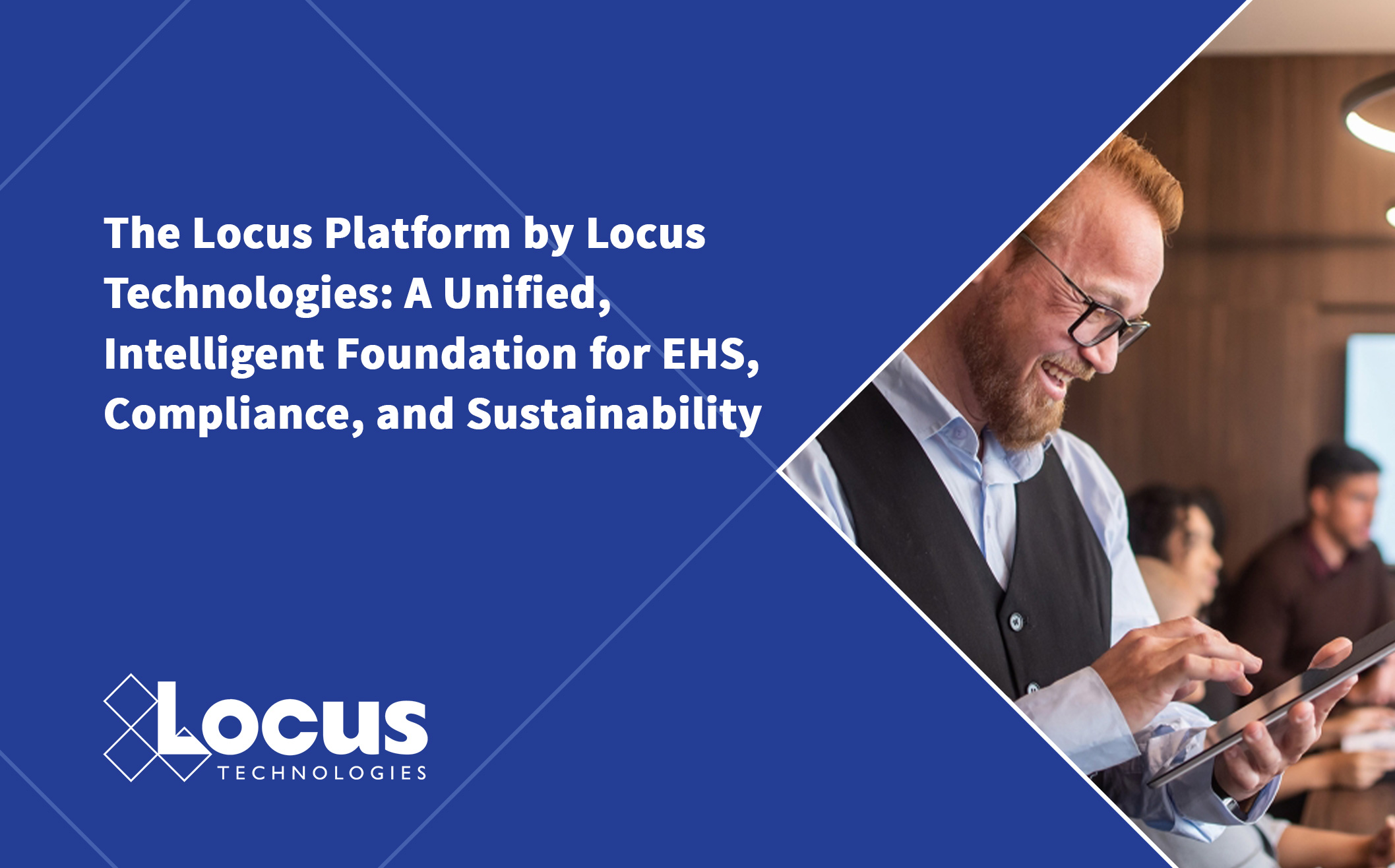
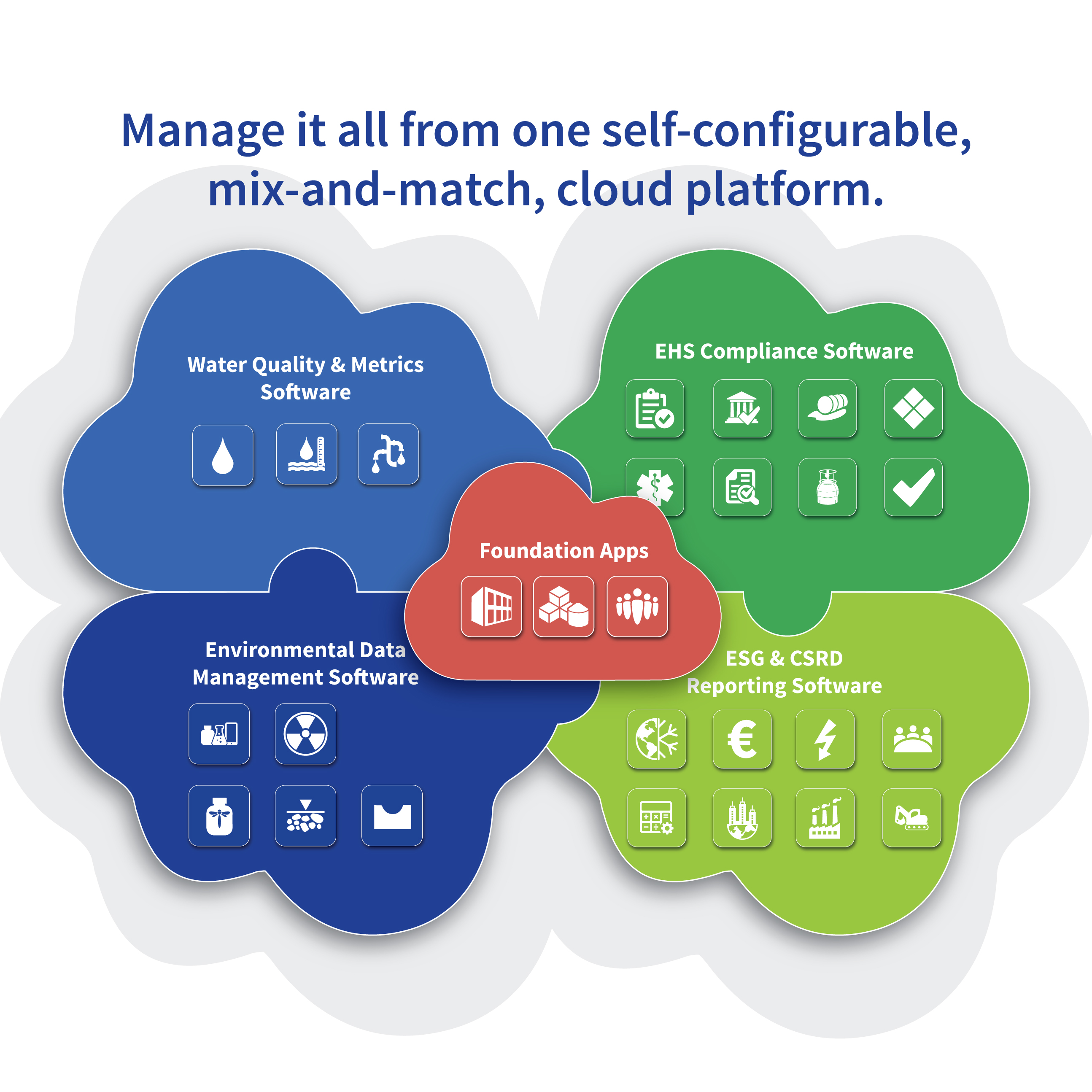
The Locus Platform by Locus Technologies is a cloud-native, enterprise-grade SaaS platform purpose-built to manage environmental, health & safety (EHS), compliance, sustainability, water, and operational risk data across highly regulated industries in the United States. While Locus Technologies is often recognized for its extensive portfolio of domain-specific applications, the real differentiator lies in the platform architecture itself — a modern foundation that combines multitenancy, metadata-driven configuration, and deep functional services such as workflow automation, calculation engines, analytics, GIS, and connected data ingestion.
This platform approach enables organizations to scale, adapt, and innovate without sacrificing data integrity, regulatory defensibility, or IT governance.
1. Multitenant SaaS Architecture: Scalable, Secure, and Always Current
The Locus Platform is built on a true multitenant SaaS architecture, in which all customers operate on a single, continuously evolving code base and shared cloud infrastructure, with strict logical separation of data, configurations, workflows, and security controls. Locus does not rely on customer-specific forks, version pinning, or parallel deployments, ensuring consistent behavior, predictable upgrades, and platform-wide integrity across all tenants.
Why Multitenancy Matters
- Lower Total Cost of Ownership (TCO) – Shared infrastructure and standardized release cycles eliminate custom deployments, environment sprawl, and upgrade projects, reducing operational overhead, validation effort, and long-term technical debt.
- Continuous, Safe Innovation – Platform enhancements, regulatory updates, and security improvements are delivered automatically and uniformly, enabling rapid adoption of new capabilities without disrupting configured application
- Enterprise-Grade Security and Governance – Centralized security controls, consistent audit mechanisms, and enforced tenant isolation support regulatory scrutiny while maintaining a governed, defensible system of record. Importantly, Locus’s multitenant model is designed to support deep configuration and application extensibility without compromising the shared architecture. Data models, workflows, calculations, and user experiences can be adapted to enterprise-specific needs while remaining upgrade-safe and fully governed.
For enterprise architects, IT leaders, and compliance stakeholders, this architecture eliminates version drift, simplifies global rollouts, and provides a controlled balance between standardization and flexibility, delivering the scalability of a modern application platform with the rigor required for regulated, mission-critical operations.
2. Metadata-Driven Platform: Built for Regulatory Change
At the core of the Locus Platform is a metadata-driven architecture in which data models, workflows, validation rules, calculations, permissions, and user experiences are defined through configuration rather than hard-coded logic. This allows applications to evolve as requirements change, without destabilizing the underlying platform or introducing upgrade risk.
Why Metadata-Driven Design Is Critical
- Rapid Response to Regulatory Change – New reporting obligations, permit conditions, and policy updates can be implemented through governed configuration, avoiding software rewrites, regression risk, and lengthy validation cycles.
- Consistency Across Domains and Applications – Shared metadata enforces common definitions, units, calculations, and business logic across EHS, environmental, water, and sustainability use cases, reducing data fragmentation and reconciliation effort.
- Governance Without Rigidity – Organizations retain control over how data behaves and flows through the system, while avoiding brittle custom code that increases audit risk and long-term maintenance cost.
Unlike general-purpose low-code platforms, Locus’s metadata model is designed to operate at enterprise scale in regulated environments. Changes are traceable, auditable, and upgrade-safe—supporting defensible system behavior even as rules evolve across federal, state, and local jurisdictions. This enables organizations to adapt quickly to regulatory change while maintaining data integrity, consistency, and compliance over time.
3. Configurability and App Builder Sandbox: Controlled Flexibility at Scale
The Locus Platform provides a no-code / low-code App Builder and sandbox environment that enables organizations to configure existing applications or build new, domain-specific solutions on the same governed, multitenant platform. This capability allows teams to extend the platform beyond delivered applications while preserving architectural consistency, security, and upgrade safety.
Strategic Benefits
- Business-Specific Workflows and User Experiences – EHS, sustainability, and operational teams can tailor forms, workflows, approvals, and calculations to reflect real-world processes without custom code.
- Governed Experimentation and Change Management – Sandbox environments enable IT and engineering teams to design, test, and validate changes independently before promotion to production, reducing operational and compliance risk.
- Reduced Vendor and Development Dependency – Organizations can evolve applications internally, responding faster to business and regulatory needs without relying on bespoke development cycles or platform forks.
Unlike unconstrained low-code tools, Locus enforces platform-level governance, security, and data integrity controls across all configurations. This ensures that flexibility scales responsibly, supporting innovation while maintaining the reliability, traceability, and compliance required for enterprise and regulated operations.
4. Workflow Engine: Automating Compliance and Operational Processes
The Locus Platform includes a robust, configurable workflow engine that orchestrates tasks, approvals, escalations, and notifications across the full data and application lifecycle. Workflows are defined through governed configuration and tightly integrated with the platform’s data model, security, and audit framework.
Why Workflow Automation Matters
- Standardized and Enforceable Compliance Processes – Automates critical workflows such as permit reviews, incident management, corrective and preventive actions, and reporting approvals, ensuring consistent execution across sites and jurisdictions.
- Audit-Ready Traceability and Accountability – Every workflow action is time-stamped, attributable, and retained as part of the system of record, supporting defensible audit trails and regulatory review.
- Improved Operational Efficiency – Reduces manual handoffs, ad hoc email coordination, and spreadsheet-driven processes, accelerating cycle times while lowering operational risk.
Unlike generic workflow tools, Locus workflows operate natively within regulated data models, security controls, and audit frameworks, which ensures that automation strengthens, rather than compromises, data integrity and compliance. For EHS, compliance, and operational leaders, this enables consistent execution, clear accountability, and scalable process control across distributed teams and complex regulatory environments.
5. Calculation Engine: Defensible, Repeatable, and Transparent
Accurate, consistent calculations are foundational to regulatory compliance and sustainability reporting. The Locus Platform includes a centralized, metadata-driven calculation engine that applies governed logic consistently across applications, datasets, and reporting outputs.
Key Advantages
- Standardized Regulatory and Sustainability Calculations – Supports emissions, water quality metrics, waste classifications, ESG indicators, and other regulated calculations using shared, reusable logic.
- Transparent and Auditable Methodologies – Calculation rules are explicitly defined, versioned, and traceable, enabling regulatory review, internal validation, and third-party assurance.
- Rapid Adaptation to Evolving Standards – Calculation logic can be updated through configuration as regulations and methodologies change, without system rewrites or downstream disruption.
Because calculations are embedded directly within the governed platform—rather than implemented in spreadsheets or custom code—results remain consistent, explainable, and defensible. This capability is critical for ESG, air emissions, and water compliance programs, where methodological credibility and repeatability are essential.
6. Rules Engine: Enforcing Policy, Logic, and Controls at Scale
The Locus Platform includes a centralized rules engine that governs how data behaves across applications, workflows, and calculations. Business rules are defined through metadata and executed consistently, ensuring that regulatory requirements, internal policies, and operational controls are enforced system wide.
Key Advantages
- Consistent Policy Enforcement – Rules control validations, thresholds, conditional logic, alerts, and exceptions across EHS, environmental, and sustainability use cases, reducing reliance on manual checks or user discretion.
- Explainable and Auditable Logic – Rule definitions are explicit, versioned, and traceable, supporting audits, compliance reviews, and internal governance.
- Rapid Policy Changes Without Code – As regulations or internal standards evolve, rules can be updated through configuration without custom development or platform disruption.
By embedding rules directly into the governed platform rather than dispersing logic across forms, workflows, or spreadsheets, Locus ensures consistent system behavior and defensible outcomes. This is especially critical in regulated environments, where enforcing policy uniformly across sites, teams, and data sources is essential for compliance, risk management, and operational integrity.
6. Data Validation and Quality Controls: Trustworthy Data at Scale
The Locus Platform embeds data validation rules and quality controls directly into data capture, processing, and downstream usage. Validation is enforced consistently across applications, integrations, workflows, and calculations, ensuring that data quality is maintained throughout the entire data lifecycle.
Why Data Validation Is Essential
- Early and Enforced Error Detection – Prevents invalid, incomplete, or out-of-range data from entering the system, reducing the risk of downstream reporting errors and compliance issues.
- Reduced Rework and Audit Friction – Minimizes late-stage corrections during audits, disclosures, and regulatory reviews by enforcing quality controls at the source.
- Increased Confidence in Reported Data – Builds trust in EHS, sustainability, and compliance data among internal teams, regulators, and third-party assurance providers.
By treating data quality as a platform-level capability—rather than an afterthought—Locus ensures that enterprise and regulatory reporting is built on accurate, consistent, and defensible data. For highly regulated organizations, this foundation is essential to scaling operations without compromising credibility or compliance.
7. Analytics, Reporting, and Visualization: From Raw Data to Insight
The Locus Platform provides integrated analytics, reporting, and visualization capabilities that transform governed operational data into actionable insight. Dashboards, reports, and analytical views operate directly on validated, audit-ready data, ensuring consistency between operational execution and reported outcomes.
Core Capabilities
- Configurable, Role-Based Dashboards – Tailored views support executives, EHS and sustainability leaders, utility managers, and engineers, aligning insight with decision-making responsibility.
- Regulatory and ESG Reporting – Enables internal performance management as well as external disclosures, leveraging consistent calculations, rules, and data quality controls.
- Trend, Risk, and Performance Analysis – Supports proactive identification of emerging risks, performance gaps, and improvement opportunities over time.
By embedding analytics within the same governed platform that manages data capture, validation, workflows, and calculations, Locus eliminates reconciliation gaps and reporting ambiguity. This shifts compliance and sustainability data from a reporting obligation to a trusted, strategic decision-support asset.
8. Spatial Analysis and GIS: Location-Aware Intelligence
Environmental, water, and operational risk data are inherently spatial. The Locus Platform embeds GIS and spatial analytics directly into its core data model, enabling location-aware insight without relying on external mapping tools or disconnected systems.
Why GIS Matters
- Asset and Site-Based Visualization – Geographically map permits, facilities, sampling locations, infrastructure, and incidents to understand conditions and performance in context.
- Spatial Risk and Pattern Analysis – Identify geographic trends, exposure areas, and cumulative impacts across regions, watersheds, and asset networks.
- Regulatory and Jurisdictional Alignment – Associate data with regulatory boundaries, land-use constraints, and environmental conditions to support compliant decision-making.
By integrating GIS as a native platform capability, Locus connects operational, regulatory, and environmental data to physical location. This is especially valuable for utilities, energy, and industrial operators managing distributed assets, where spatial context is essential for risk management, compliance, and strategic planning.
9. Field and Mobile Support: Capturing Data Where Work Happens
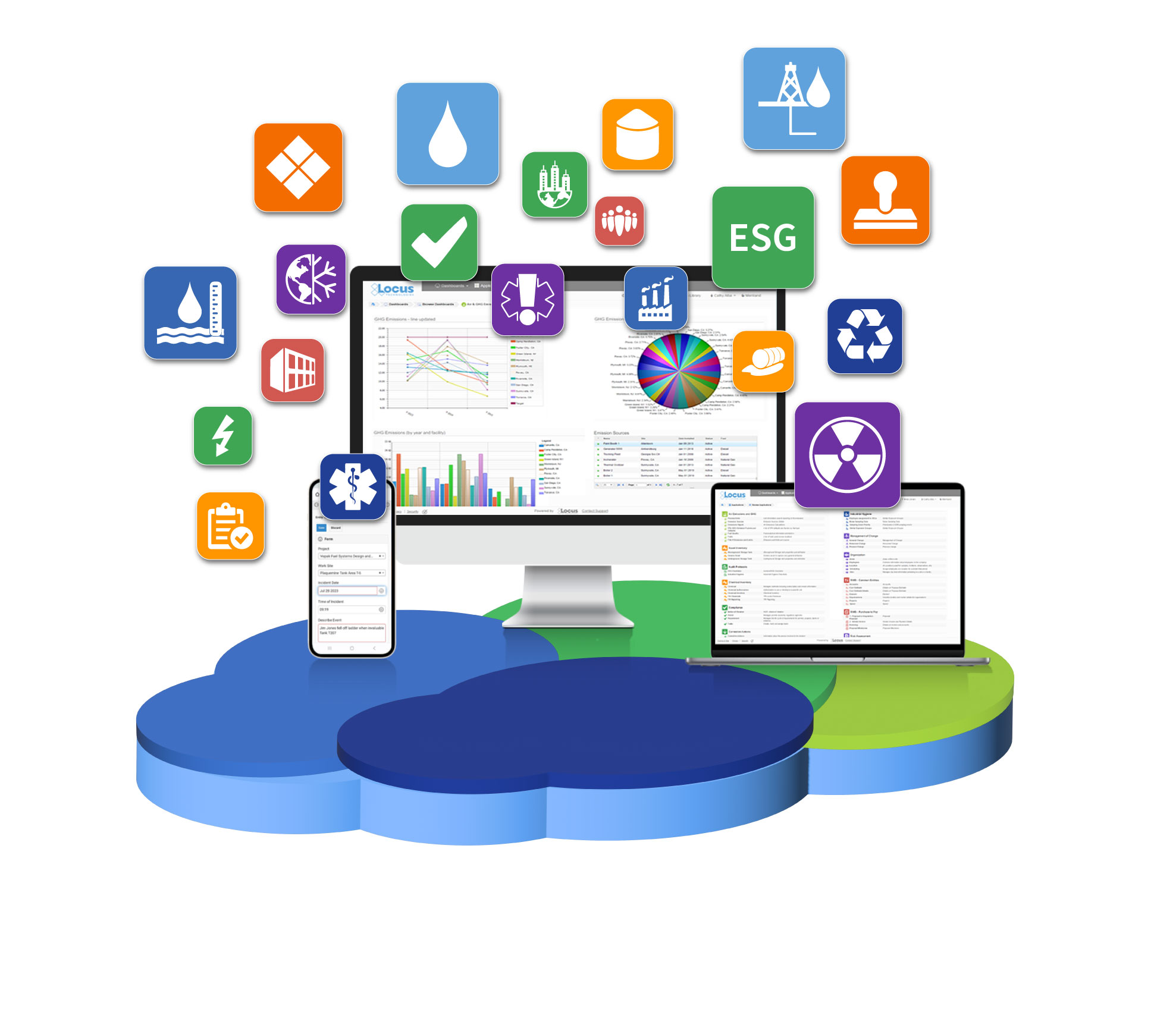
The Locus Platform supports mobile and field-based data collection, enabling teams to capture inspections, samples, observations, and corrective actions directly at the point of work. Mobile capabilities are fully integrated with the governed platform, ensuring data quality, security, and traceability from the moment of capture.
Key Benefits
- Reduced Data Latency – Field data flows directly into the system of record without manual re-entry, accelerating visibility and response.
- Improved Accuracy at the Source – Digital forms, validation rules, and guided workflows reduce transcription errors and incomplete records.
- Enhanced Operational Visibility – Near-real-time data availability improves oversight, prioritization, and decision-making across distributed operations.
By extending governed data capture into the field, Locus closes the gap between operational activity and enterprise reporting—an essential capability for organizations with geographically dispersed and asset-intensive operations.
10. Connected Data Fabric: From Sensors to Systems of Record
The Locus Platform functions as a connected data fabric, integrating diverse internal and external data sources into a unified, governed environment. This ensures that operational, environmental, and compliance data are captured consistently, validated centrally, and managed as a trusted system of record.
Connectivity Includes
- IoT Devices and Sensors – Continuous ingestion of monitoring data for water quality, emissions, and environmental conditions.
- Structured Data Ingestion – Support for electronic data deliverables (EDD), environmental and product declarations (EPD), and other standardized data submissions.
- APIs and Enterprise Integrations – Seamless exchange with ERP, LIMS, SCADA, and other operational and business systems.
By unifying high-frequency sensor data, operational systems, and regulatory datasets within a single governed platform, Locus eliminates data silos and supports end-to-end transparency from source data through reporting, analytics, and regulatory disclosure.
Bottomline: A Platform Built for Regulatory Reality and Enterprise Scale
The Locus Platform is a comprehensive, metadata-driven, multitenant enterprise application platform designed to operate in complex, highly regulated data environments. By unifying workflow automation, rules and calculation engines, data validation, analytics, GIS, mobile capabilities, and a connected data fabric, Locus enables organizations to manage regulatory obligations while unlocking operational insight and scalability.
Unlike general-purpose platforms adapted for compliance after the fact, Locus embeds regulatory rigor, traceability, and data defensibility directly into its core architecture. This allows organizations to extend beyond point solutions and build governed, enterprise-grade applications without sacrificing audit readiness or control.
For EHS, compliance, sustainability, engineering, and IT leaders in regulated U.S. industries, the Locus Platform provides a future-ready foundation aligning regulatory confidence with enterprise agility and supporting growth from compliance execution to strategic operational intelligence.
Frequently Asked Questions
Q: What does it mean that the Locus Platform is metadata-driven?
Answer: Most enterprise software encodes its logic directly into the application — change a regulation, rewrite the code. The Locus Platform defines data models, workflows, validation rules, and calculations through configuration instead. When a new permit condition or reporting obligation arrives, teams update the configuration rather than submitting a development ticket. Every change remains traceable, auditable, and safe to deploy without disrupting the broader system — a meaningful distinction in industries where a bad software update carries real compliance consequences.
Q: How does the Locus Platform handle data validation and quality control?
Answer: The Locus Platform enforces data validation at the point of capture, not at the end of the reporting cycle when fixing errors is expensive. Validation rules apply consistently across applications, integrations, workflows, and calculations, so incomplete or invalid data never quietly enters the system. For compliance teams, this matters because regulators and third-party assurance providers scrutinize methodology as much as outcomes — and data that is clean and traceable from collection through disclosure is considerably easier to defend.
Q: What is the role of the Locus Platform’s calculation engine in regulatory compliance?
Answer: Regulated calculations (e.g. emissions factors, water quality metrics, waste classifications, ESG indicators) need to produce the same result every time, with a clear record of how that result was derived. The Locus Platform centralizes this logic in a metadata-driven calculation engine where rules are carefully defined, versioned, and traceable. Unlike calculations embedded in spreadsheets or custom scripts, platform-level logic is auditable, consistently applied, and updatable when standards change without reprocessing historical data or rewriting downstream reports.
Q: Does the Locus Platform support field and mobile data collection?
Answer: Yes. Field teams can capture inspections, samples, observations, and corrective actions through mobile interfaces fully integrated with the governed platform, which means that validation rules, security controls, and audit records apply from the moment data is entered. This removes the manual re-entry step responsible for most transcription errors in field-to-office workflows. For organizations managing operations across multiple sites or watersheds, the result is fewer data gaps, faster reporting cycles, and a more complete system of record.
Q: How does the GIS integration work within the Locus Platform?
Answer: Environmental and operational data is inherently spatial; a permit applies to a specific location, a water sample comes from a specific point in a watershed. The Locus Platform embeds GIS directly into its core data model rather than treating mapping as a separate tool. Permits, sampling locations, assets, and incidents can be visualized in geographic context and associated with regulatory boundaries and jurisdictional conditions. For utilities and industrial operators managing distributed infrastructure, this native spatial layer connects compliance data to physical reality in ways that bolted on mapping tools typically cannot replicate.
Q: What types of external systems and data sources does the Locus Platform integrate with?
Answer: The Locus Platform integrates with IoT sensors and continuous monitors for water quality and emissions, structured laboratory submissions via electronic data deliverables (EDD), and enterprise systems including ERP, LIMS, and SCADA through standard APIs. The goal is a single governed environment where sensor readings, operational records, and regulatory datasets coexist without manual reconciliation. End-to-end traceability from raw source data through regulatory disclosure is difficult to establish when those sources live in separate, loosely connected systems.
Q: How does the Locus Platform support workflow automation for compliance processes?
Answer: Compliance work is largely process work (e.g. permit reviews, incident investigations, corrective actions, reporting approvals), and much of it still runs on email threads and spreadsheets in organizations that haven’t modernized their operations. The Locus Platform moves these processes into a configurable workflow engine embedded within the same data and security framework that manages the underlying compliance records. Every action is time-stamped and attributable, producing an audit trail that exists by design rather than reconstruction.
Locus is the only self-funded water, air, soil, biological, energy, and waste EHS software company that is still owned and managed by its founder. The brightest minds in environmental science, embodied carbon, CO2 emissions, refrigerants, and PFAS hang their hats at Locus, and they’ve helped us to become a market leader in EHS software. Every client-facing employee at Locus has an advanced degree in science or professional EHS experience, and they incubate new ideas every day – such as how machine learning, AI, blockchain, and the Internet of Things will up the ante for EHS software, ESG, and sustainability.