Powering Global Operations: Locus’ Multilingual Platform for Enterprise-Scale Localization
The Need for Multilingual Capability in Enterprise Operations
By Karlo Ivusic
Reading Time: 2 minutes 30 seconds
In today’s global business environment, enterprises are responsible for managing complex and distributed operations that span multiple continents, cultures, and languages. Locus recognizes that to truly support global organizations, a platform must communicate effectively with every team member, partner, and customer, regardless of location or language. For this reason, Locus has developed a flexible, scalable, and future-proof multilingual architecture specifically designed to meet the unique challenges faced by global, multi-site organizations.
Why Language Matters for Multinational Companies
For multinational corporations, language is much more than a convenience—it plays a crucial role in driving platform adoption, ensuring compliance, boosting efficiency, and fostering collaboration across geographically dispersed teams. Local personnel require user interfaces that are intuitive in their native languages, regional managers need precise localization to standardize processes, and corporate leaders expect a platform that functions seamlessly across all sites without the need for costly customizations or parallel systems. A single-language platform can create barriers to these critical objectives, slowing organizational progress. Locus addresses these challenges with a multilingual infrastructure built to support operations in diverse linguistic environments, including regions from Europe to Asia-Pacific and beyond.
Locus’ Localization Strategy for Global Scale
Multilingual capabilities are central to Locus’s product strategy and are not treated as an afterthought. The localization approach is driven by these key principles:
- Consistency across all sites.
- Every module, field, workflow step, and user interface element is translated across the platform, ensuring a consistent and standardized experience for all teams, regardless of location.
- Easy and fast rollout of new languages.
- Locus enables rapid language onboarding. Adding a new language is a very quick process with minimal code changes required.
- Enterprise-Grade Flexibility
Supported Languages
Locus’s multilingual engine already accommodates a broad array of global languages:
- English
- German
- French
- Spanish
- Croatian
- Chinese
- Polish
- Portuguese
- Ukrainian.
Support continues to expand in response to customer demand, with the flexible translation infrastructure making the addition of new languages efficient and straightforward.
Effortless Language Integration on the Locus Platform
The Locus Platform is designed to make the process of adding a new language as simple and efficient as possible. Users can easily export a translation template in Excel format, which serves as the foundation for localizing platform content.
Once the Excel template is exported, users have the flexibility to insert their translations. This can be done by leveraging AI-powered translation tools or any other preferred translation service. After all required translations are entered into the Excel file, users need only to import the updated file back into the Locus Platform.
This streamlined method ensures that the process of expanding language support remains straightforward, enabling organizations to quickly and efficiently adapt the platform for diverse user bases.
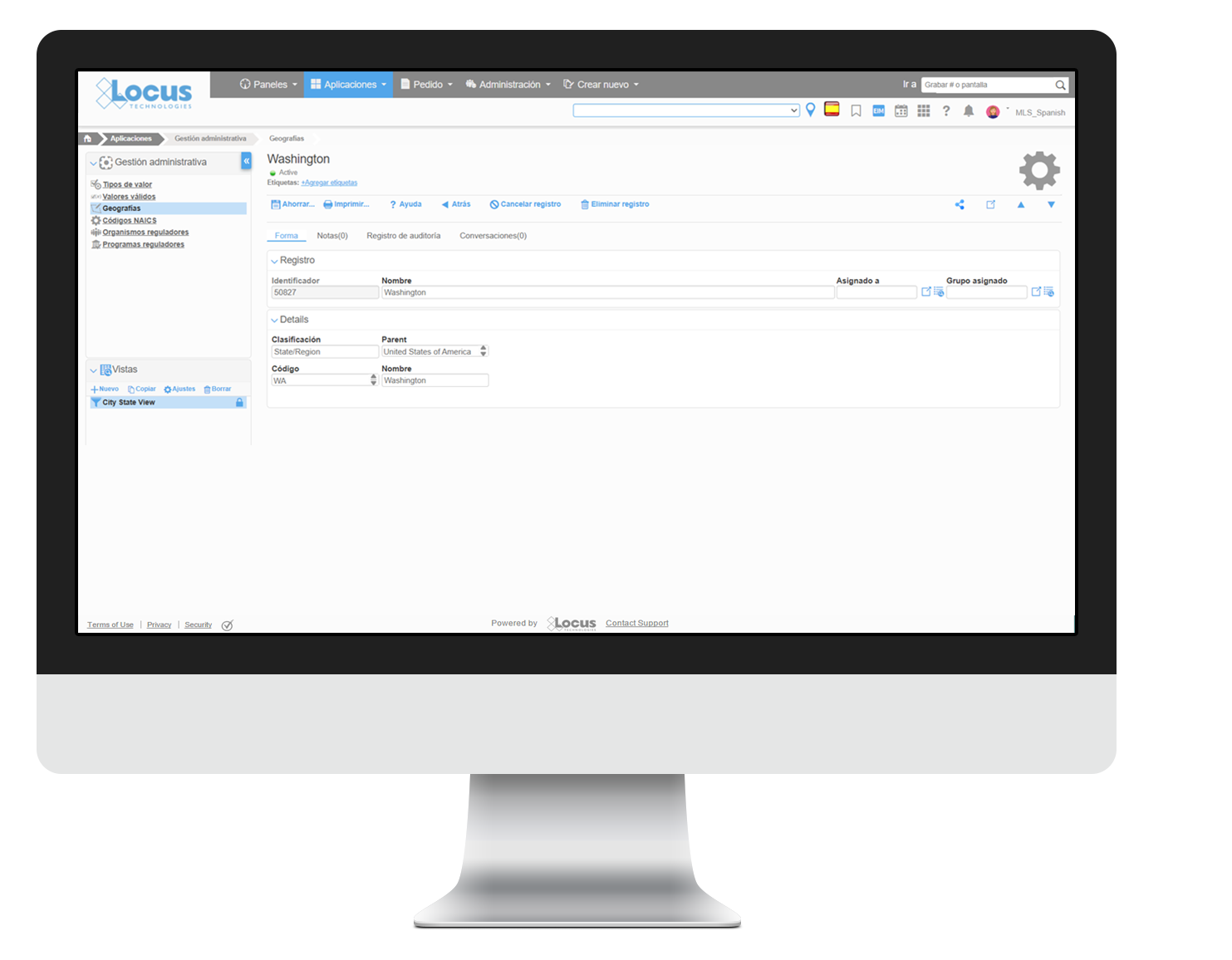
The following is an example of a screen in English and translated to Spanish:
English:
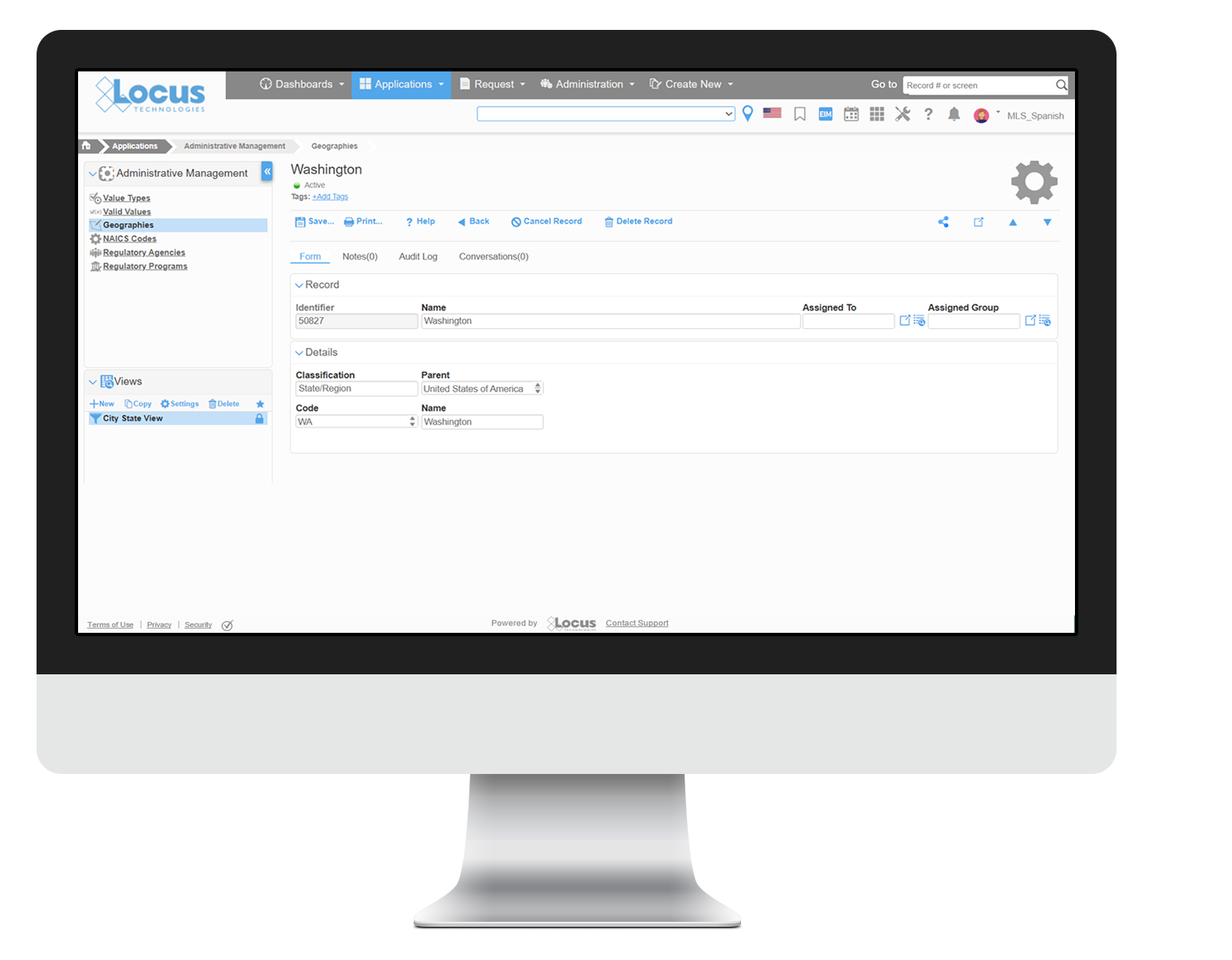
Spanish:
Why Enterprises Choose Locus
Global enterprises demand more than just software; they require a platform that performs reliably wherever their operations are based. Locus’s multilingual capabilities enable organizations to deploy a unified platform worldwide, improve user adoption, reduce training requirements, ensure operational consistency, scale quickly into new markets, and create inclusive, accessible workflows for all teams. In essence, Locus empowers global companies to operate as truly global organizations.
Locus is the only self-funded water, air, soil, biological, energy, and waste EHS software company that is still owned and managed by its founder. The brightest minds in environmental science, embodied carbon, CO2 emissions, refrigerants, and PFAS hang their hats at Locus, and they’ve helped us to become a market leader in EHS software. Every client-facing employee at Locus has an advanced degree in science or professional EHS experience, and they incubate new ideas every day – such as how machine learning, AI, blockchain, and the Internet of Things will up the ante for EHS software, ESG, and sustainability.