
By Staff Writer
Reading Time: 3 minutes 27 seconds

For enterprises in highly regulated industries, managing regulatory permits is a cornerstone of enterprise risk management. From Clean Air and Clean Water Acts permits to OSHA and Title V requirements, every regulated permit carries a web of obligations, deadlines, reporting requirements, and audit risks. Failure to manage these effectively exposes the organization to fines, operational shutdowns, brand erosion, and legal liability.
This article explains why robust Environmental Health & Safety (EHS) software for permit management is mission-critical, highlights the risks of inadequate tools such as spreadsheets and disconnected systems, and demonstrates how Locus Technologies delivers a modern, enterprise-ready solution.
The Regulatory Permit Challenge in Enterprise EHS
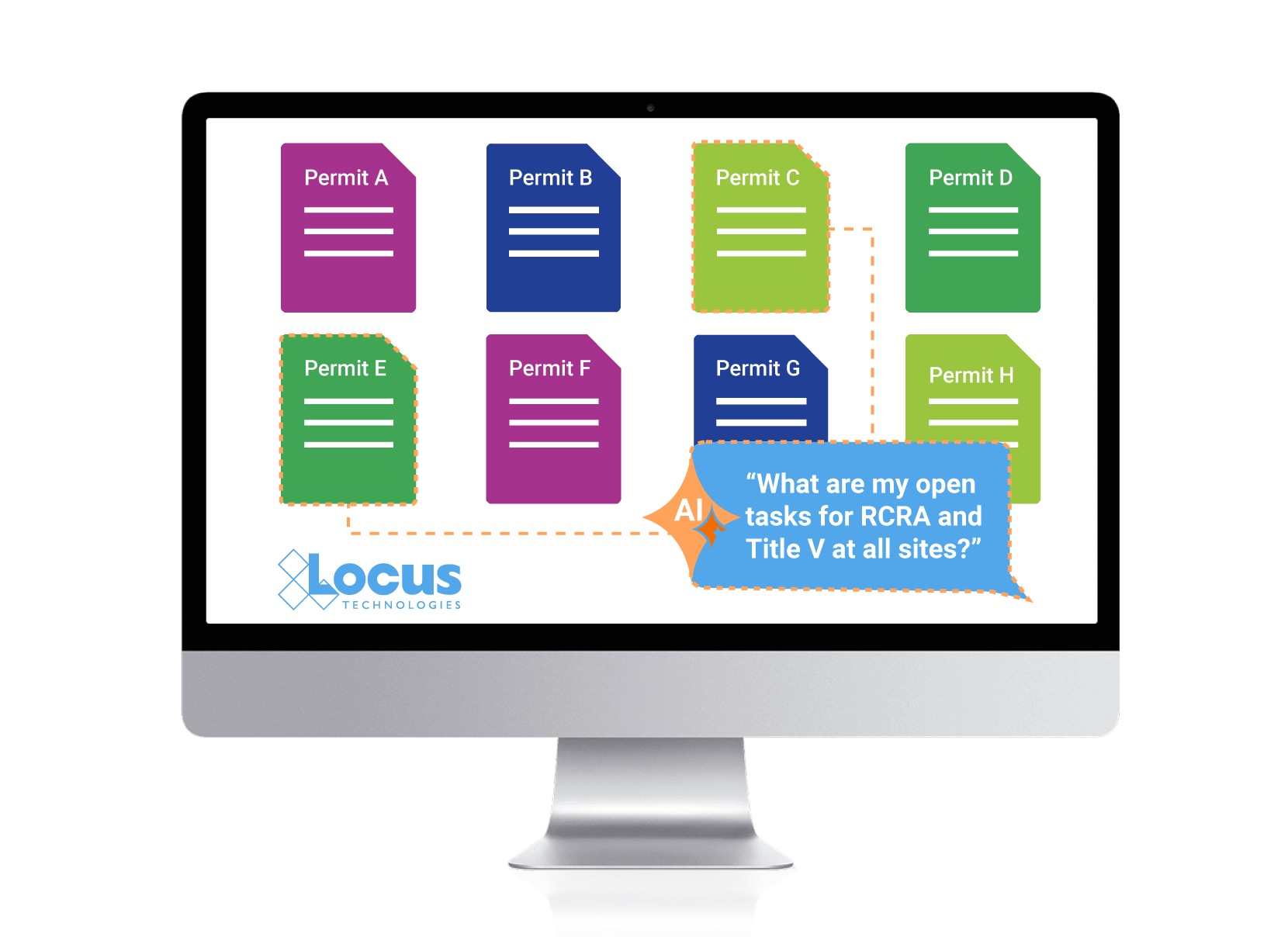
Highly regulated enterprises face a landscape of overlapping permit obligations, geographically distributed facilities, and evolving regulatory criteria. Each permit has multiple dimensions:
- Metadata (permit number, issuing agency, jurisdiction)
- Time constraints (renewal dates, reporting windows)
- Conditional responsibilities (limits, monitoring frequencies, corrective actions), and
- Documentation obligations (submissions, evidence files).
Managing these manually or via spreadsheets introduces systemic weaknesses.
Key Risks of Inadequate Permit Tracking
- Missed Deadlines & Renewals: Manual tracking easily overlooks subtle differences in requirements across jurisdictions.
- Inconsistent Accountability: Spreadsheets cannot enforce task ownership or workflow sequences, leading to ambiguity in responsibility and execution.
- Data Silos: Disconnected systems fragment compliance data across teams and facilities, making enterprise-wide visibility impossible.
- Error-Prone Reporting: Manual data compilation from worksheets increases the risk of transcription errors, jeopardizing regulatory submissions.
- Audit Vulnerability: Without centralized records and traceable audit trails, organizations struggle to demonstrate compliance during inspections.
These gaps translate into financial exposure, operational constraints, and reputational risk for enterprises with complex permit portfolios.
What Robust EHS Permit Management Software Must Deliver
To navigate this complexity, enterprises need software that goes beyond simple tracking. Core capabilities include:
1. Centralized, Structured Permit Records
A system must capture every facet of a permit: names, expiration/renewal dates, requirements, linked facilities, responsible parties, and historic records. Documents such as digital copies of permits, inspection results, and enforcement actions must be attachable to the permit record itself.
2. Automated Task & Workflow Management
Permit obligations often trigger a cascade of compliance tasks (report generation, internal reviews, submissions). The right platform associates permit requirements directly with tasks, calendars, reminders, and structured workflows that enforce accountability and sequencing.
3. Real-Time Compliance Calendars and Alerts
Automated calendars with notification engines are essential. They surface upcoming deadlines, overdue actions, and conditional triggers so that teams can act proactively—not reactively.
4. Audit Trails and Governance
Transparent logs of who did what and when strengthen audit readiness. A robust permit management system records all changes, attachments, and workflow progress for defensible compliance evidence.
5. Integration Across EHS Functions
Permit compliance connects to air emissions, waste management, incident reporting, and risk assessments. A single system with integrated modules prevents siloed data and fosters cross-functional insights.
Why Locus Technologies Leads in EHS Permit Management
Locus Technologies delivers a cloud-native, enterprise-grade EHS platform that embodies the above capabilities and scales to support complex, regulated operations.
Unified, Cloud-First Architecture
Locus Technologies’ AI-powered, cloud SaaS platform centralizes data from disparate sources into a single system of record for EHS compliance, environmental data, and sustainability programs. This eliminates spreadsheets, paper forms, and siloed databases. (Locus Technologies)
Purpose-Built Permit Tracking
With modules designed to track Title V, OSHA, Clean Air, Clean Water, and other regulatory obligations (including per-facility requirements), Locus ensures organizations always know what’s due and when. Users maintain a complete view of permit metadata, requirements, tasks, and documents in context.
Automated Calendars, Workflows & Notifications
Locus embeds compliance calendars and workflows that automate task assignment, escalation, reminders, and dependent step logic. These tools enforce consistency across facilities and teams, decreasing the risk of human oversight.
Real-Time Evidence and Analytics
Dashboards, charts, and configurable views give compliance officers and executives a real-time snapshot of permit status, task progress, and risk indicators. This supports both tactical operations and strategic decision-making.
Integration and Extensibility
The platform connects via API to ERP, BI, lab systems, field data collection tools, and regulatory content services, unifying compliance data and minimizing redundant entry.
Proven at Scale
Locus Technologies manages compliance for more than 1.6 million worldwide locations and over half a billion analytical records, demonstrating the platform’s ability to support large, distributed enterprises.
Government and Regulated Industry Adoption
Organizations such as the Port of Seattle have adopted Locus to replace legacy tracking systems and manage thousands of regulatory commitments with configurability suited to their processes and changing rules.
Bottomline: Invest Strategically in EHS Permit Management
For regulated enterprises, permit management is a business-critical capability tied to operational continuity, legal compliance, stakeholder trust, and corporate reputation. Spreadsheets and disconnected systems are not defensible tools for a landscape of growing complexity.
Enterprise EHS teams need a purpose-built platform that centralizes compliance data, automates key processes, and delivers actionable insights across the organization. Locus Technologies stands out as a leader in this space, offering the configurability, integration, and governance controls necessary to support complex permit ecosystems with confidence and clarity.
Locus is the only self-funded water, air, soil, biological, energy, and waste EHS software company that is still owned and managed by its founder. The brightest minds in environmental science, embodied carbon, CO2 emissions, refrigerants, and PFAS hang their hats at Locus, and they’ve helped us to become a market leader in EHS software. Every client-facing employee at Locus has an advanced degree in science or professional EHS experience, and they incubate new ideas every day – such as how machine learning, AI, blockchain, and the Internet of Things will up the ante for EHS software, ESG, and sustainability.