By Todd Pierce
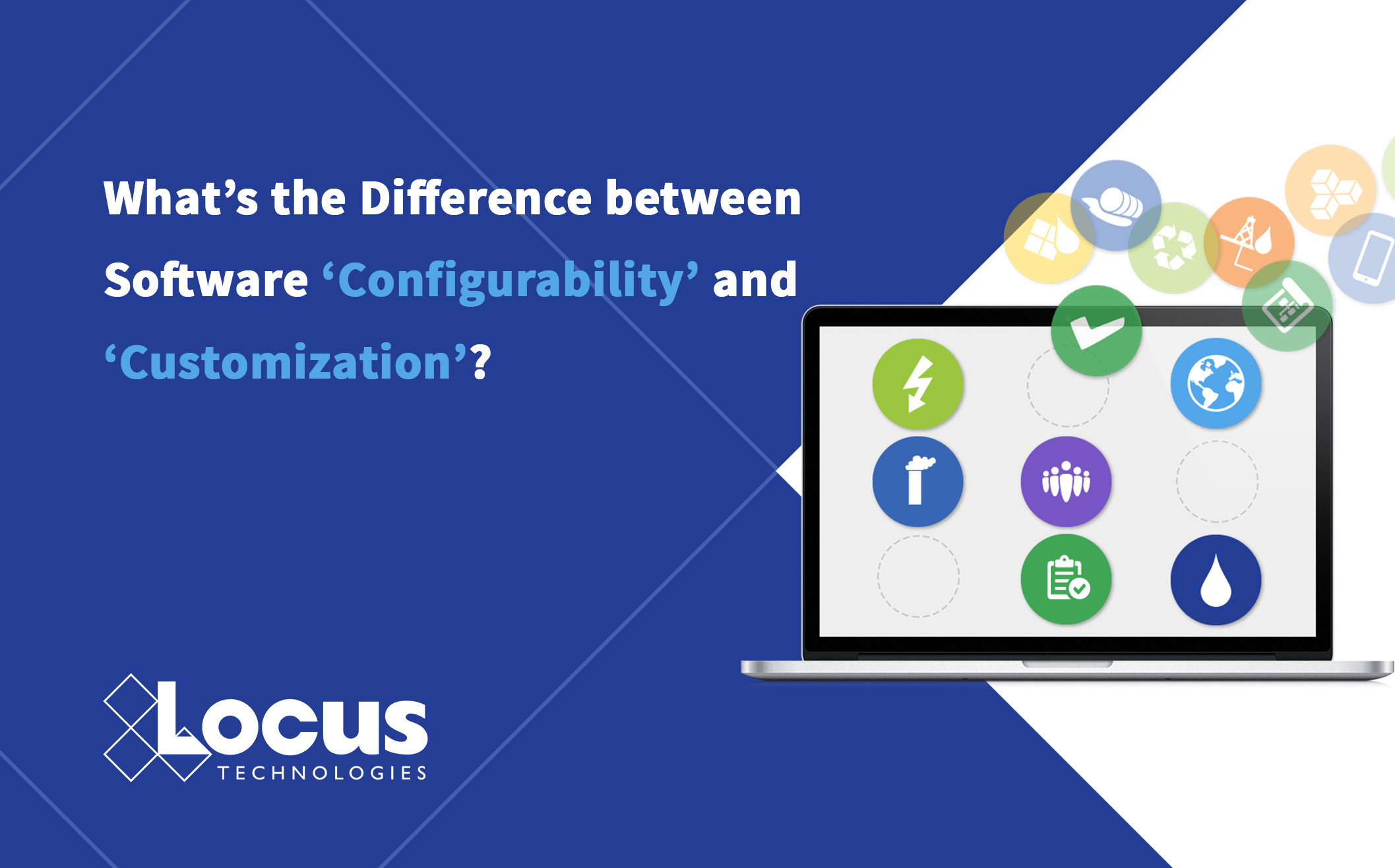
TL;DR: Many EHS software vendors use the word configurable when they mean customizable. The difference matters significantly: configurable software lets your team build workflows, forms, reports, and apps without writing code or paying the vendor for development work. Customizable software requires vendor involvement and generates ongoing costs every time regulations change or your operations evolve. Locus EHS compliance software is built on user configurability from the ground up, covering the Locus Platform, Locus EIM, Locus GIS+, and the Locus Mobile app.
There’s a Looney Tunes cartoon, ‘Design for Leaving,’ where Daffy Duck sells Elmer Fudd a collection of home improvements. The customizations aren’t quite what Elmer expected, such as a wallpaper remover that removes the paper AND the wall, or a garbage disposal that is just a pig in a box. At the end, Elmer presses a red button marked “in case of tidal wave” that lifts the house high into the air. Daffy then flies by and offers to sell Elmer the “blue button to get you down.”
When I hear Locus’s competitors claim their software is configurable, I am reminded of this cartoon. For many EHS compliance software companies, when they say ‘configuration’ they mean ‘customization.’ Anything in the software can be customized, but only by the vendor and for a price. When you buy their software, you must adapt your processes to fit its constraints, or you must buy another button or two to get the functionality you want.
In contrast, Locus EHS compliance software is built around the principle of USER configurability. When you buy software from Locus, you’re able to create the exact workflow that you need – without involvement or invoices from us.
- The Locus Platform lets you configure custom forms, reports, dashboards, surveys, and exports, to complement and extend Locus pre-built applications. You also can easily build your own apps in the Platform to manage a wide range of data such as waste, safety, assets, compliance, incidents, sustainability, refrigerants, human resources, emissions, and produced water.
- The Locus EIM and GIS+ applications let you create your own queries, reports, maps, and export formats within the Locus framework for analytical data.
- The Locus Mobile app lets you design your own data collection forms for mobile devices.
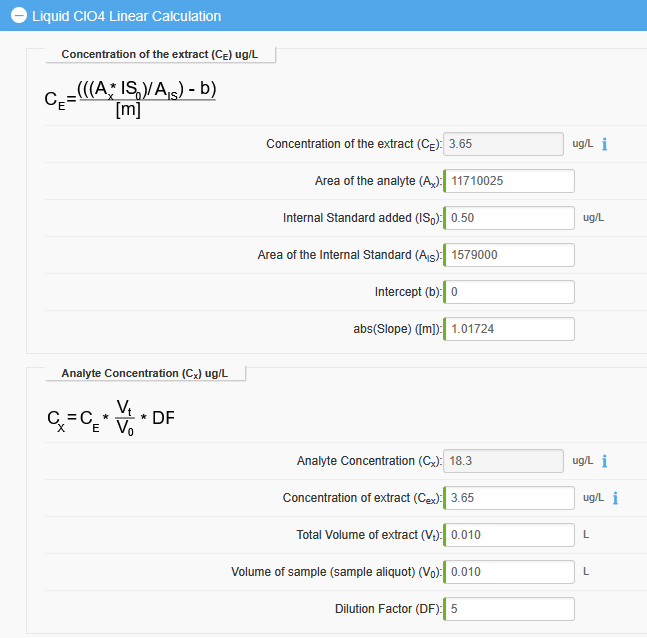
User configurability is a key component of Locus software and is always built into new Locus apps. As an example, the recently added Calculation Sheet Module uses metadata to define and execute spreadsheet calculations such as formulas used for chemical analysis. New sheets and calculations can quickly be added by users without the need for custom software development. Below is an example of a calculation sheet for liquid perchlorate analysis.
In summary, when buying environmental software, particularly EHS compliance software, make sure it is truly configurable and not merely customizable. Don’t keep buying buttons. For a closer look at how configurability affects implementation timelines and long-term compliance readiness, see Implementation Excellence in Environmental and ESG Software. For a broader overview of what the Locus platform can be configured to do, visit the User Configuration overview.
Frequently Asked Questions
What is configurable EHS software? Configurable EHS software lets your organization’s own team build and adapt workflows, forms, reports, and dashboards without writing code or purchasing additional vendor services. The article contrasts this with customizable software, where anything can be changed but only by the vendor and for a price, meaning you must adapt your processes to fit the software’s constraints or buy additional functionality. With truly configurable software, users create the exact workflow they need without vendor involvement or invoices.
Can EHS software be customized without code? Yes, if the platform is built around user configurability. Locus EHS compliance software lets users configure custom forms, reports, dashboards, surveys, and exports through the Locus Platform; create their own queries, reports, maps, and export formats through Locus EIM and GIS+; and design their own data collection forms through the Locus Mobile app. The article also describes the Calculation Sheet Module as a specific example where new spreadsheet-style calculations for chemical analysis can be added by users at any time without software development.
What is the difference between configurability and customization in EHS software? The difference is who does the adapting and who pays for it. With configurable software, the user adapts the platform to their processes at no additional cost. With customizable software, the vendor adapts the platform to the user’s processes, typically for a fee, and the user must buy additional functionality whenever their needs change. The article uses the analogy of a Looney Tunes cartoon where Elmer Fudd must keep buying additional buttons from Daffy Duck to get the functionality he needs, describing this as the experience of buying EHS software that is customizable but not truly configurable.
Locus is the only self-funded water, air, soil, biological, energy, and waste EHS software company that is still owned and managed by its founder. The brightest minds in environmental science, embodied carbon, CO2 emissions, refrigerants, and PFAS hang their hats at Locus, and they’ve helped us to become a market leader in EHS software. Every client-facing employee at Locus has an advanced degree in science or professional EHS experience, and they incubate new ideas every day – such as how machine learning, AI, blockchain, and the Internet of Things will up the ante for EHS software, ESG, and sustainability.