Reading time: 2 minutes
TL;DR: PFAS regulations for industrial and municipal wastewaters are actively evolving. While national primary drinking water standards were finalized in 2024, discharge limits for industrial and POTW effluents remain under development as states implement their own PFAS monitoring requirements. Locus Technologies manages more than 4.5 million validated PFAS records across tens of thousands of global sites, providing purpose-built tools for industrial pretreatment management, discharge monitoring, and PFAS data compliance across all matrices.
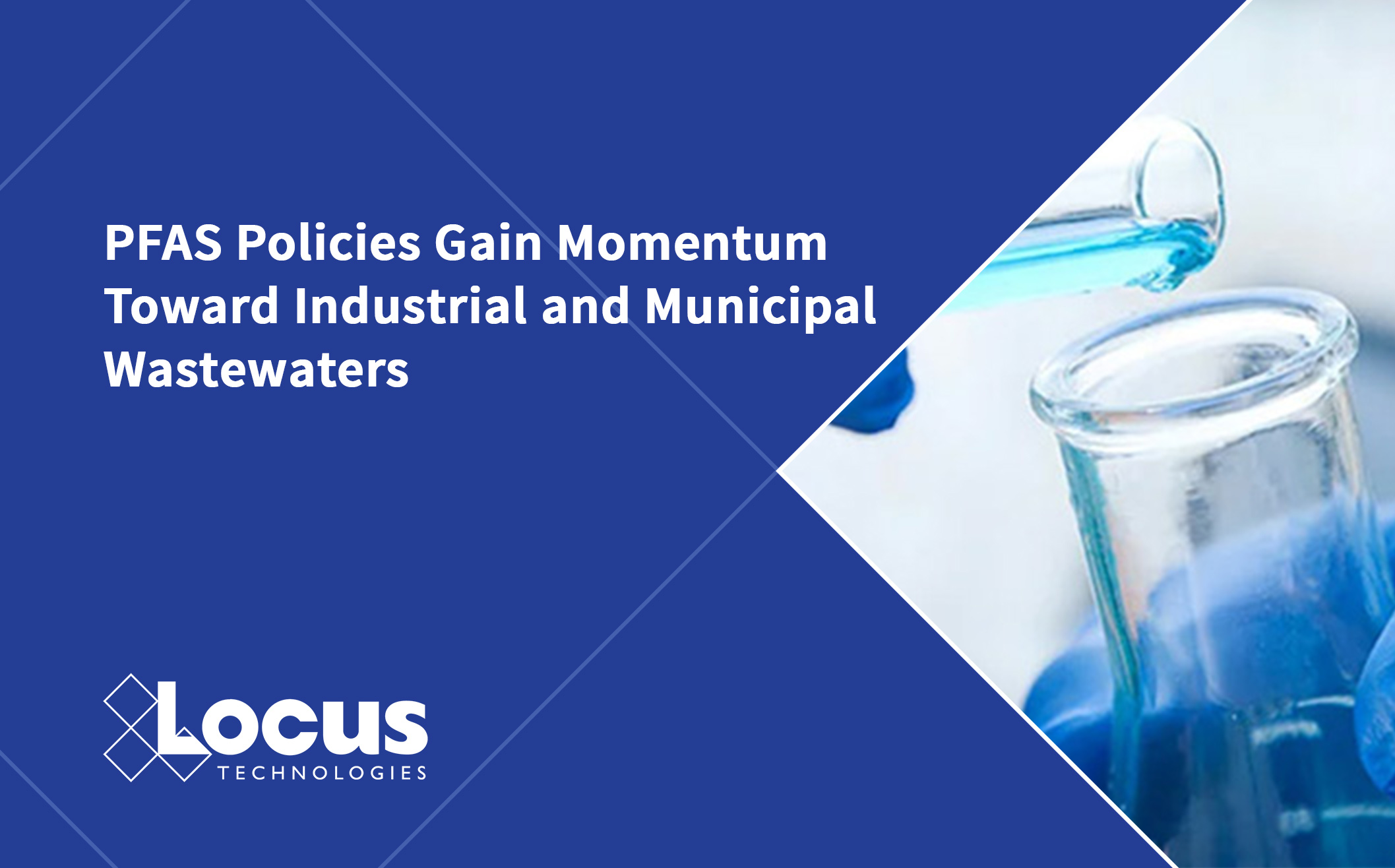
Summary: The EPA set a course of action for addressing PFAS in drinking waters. Attention is turning to industrial and municipal wastewaters. This article outlines these forces and how water management software flexes to the evolving challenges of industrial and POTW discharge monitoring requirements.

PFAS and Drinking Water
Editor’s note (June 2026): EPA PFAS enforcement priorities for industrial and municipal wastewaters have continued to evolve since this article was published. The framework described below reflects the regulatory direction as of mid-2025. Readers should consult current EPA guidance for the latest effective dates and any modifications under current administration policy.
Per- and polyfluoroalkyl substances (PFAS) have been widely used for various industrial processes since the 1940s and today are found in a wide array of household products. However, the finalization of national primary drinking water standards under the Safe Drinking Water Act in 2024 marked a significant shift in the regulation of these compounds on a national level. These regulations were part of a larger strategic roadmap by the EPA focused on (1) conducting additional PFAS research, (2) broadening the efforts to clean-up existing contaminated PFAS sites, and (3) restricting the further release of PFAS compounds into the air, land, and water where they could adversely impact the environment and public.
PFAS and Industrial and Municipal Wastewater
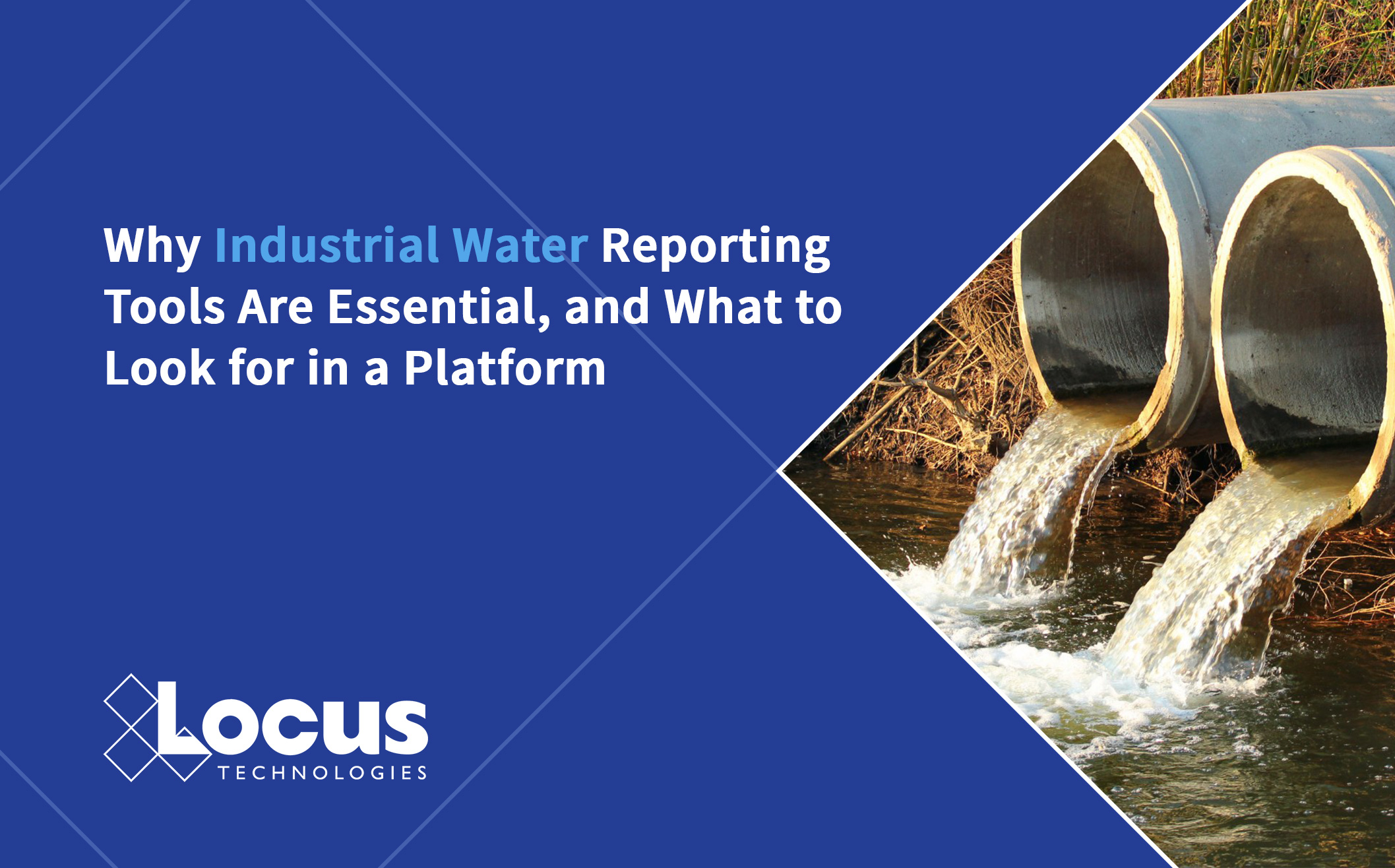
With the course of action set in drinking waters, the EPA has turned its attention more fully to industrial and municipal wastewaters. Under the Biden administration, the EPA proposed a set of effluent limitation guidelines (ELGs) targeting PFAS discharges from select industrial categories (organic chemicals, plastics, synthetic fibers, and metal finishing) and distributed memos to state pretreatment coordinators urging these entities to begin implementing PFAS monitoring requirements in publicly owned treatment works (POTWs) and industrial discharge NPDES permits. Later in the final quarter of 2024, the EPA released aquatic life criteria and benchmarks for several PFAS compounds and issued draft human health water quality criteria for two PFAS compounds (PFOA, PFOS). These actions provide a pathway for primacy agencies to establish enforceable discharge limits for select PFAS compounds, thus limiting their respective discharge to drinking and non-drinking water bodies.
The Importance of Water Management Software to Handle PFAS Monitoring
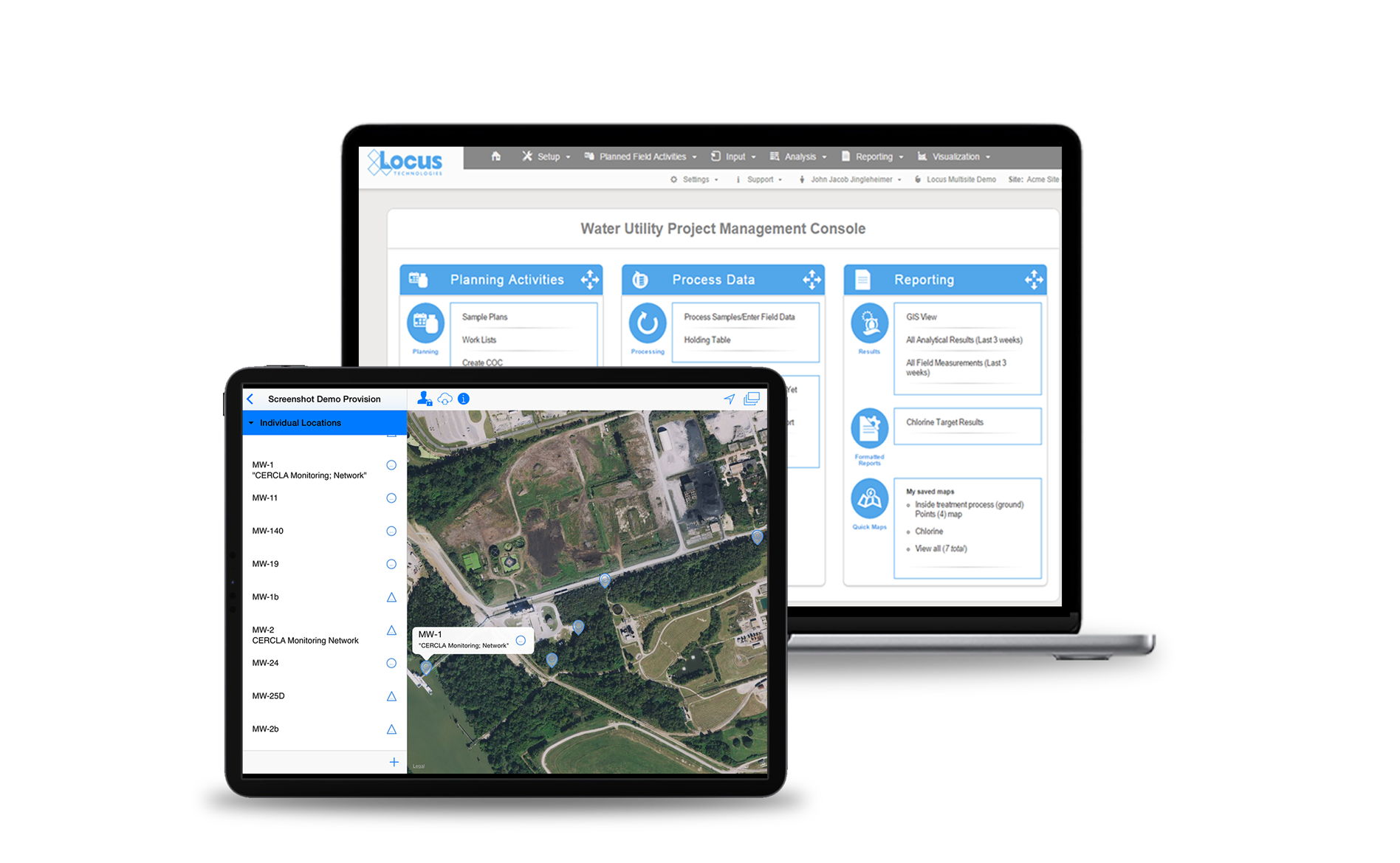
Comprehensive data management strategies will play a key role, as states continue to issue new and revised PFAS monitoring requirements for industrial and POTW discharges and as these entities establish new standard operating procedures to effectively manage the analytical data and its potential impacts to their treatment operations. Locus Technologies suite of water applications is perfectly tailored to address both industrial and POTW discharge monitoring requirements. For a deeper look at how PFAS monitoring intersects with NPDES compliance programs for industrial dischargers, see Managing NPDES Compliance for Industrial Wastewater. Locus’ Industrial Pretreatment Management application, in particular, can help POTWs with PFAS related administration such as customizable industrial site surveys, industrial discharge sample scheduling and results collection, and permit compliance monitoring features.
If you would like to learn more about Locus’ suite of applications for industrial or municipal wastewater systems or more broadly for environmental, health, and safety data management please feel free to visit us at https://www.locustec.com/
Frequently Asked Questions
Are PFAS discharge limits now required for industrial wastewater? According to this article, enforceable national PFAS discharge limits for industrial wastewaters are not yet finalized. Under the Biden administration, the EPA proposed effluent limitation guidelines targeting PFAS discharges from select industrial categories including organic chemicals, plastics, synthetic fibers, and metal finishing, and issued memos to state pretreatment coordinators urging implementation of PFAS monitoring in NPDES permits. The EPA also released aquatic life criteria and draft human health water quality criteria for PFOA and PFOS, providing a pathway for primacy agencies to establish enforceable discharge limits. Organizations should treat current monitoring requirements as the baseline and prepare for more stringent limits as these are finalized.
What software can track PFAS across multiple industrial sites and matrices? According to this article, Locus Technologies’ suite of water applications is specifically tailored to address both industrial and POTW discharge monitoring requirements. The Locus Industrial Pretreatment Management application can help POTWs with PFAS-related administration including customizable industrial site surveys, industrial discharge sample scheduling and results collection, and permit compliance monitoring.
How does PFAS monitoring connect to NPDES compliance programs? According to this article, the EPA has been directing state pretreatment coordinators to begin implementing PFAS monitoring requirements in NPDES permits for publicly owned treatment works and industrial dischargers. As states issue new and revised PFAS monitoring requirements, comprehensive data management strategies will play a key role in helping industrial dischargers and POTWs manage the analytical data and its potential impacts to treatment operations. Locus Technologies’ water applications are designed to handle both monitoring requirements and compliance reporting within a single platform.

Laura Underwood, PhD
Director of Digital Water Services, Locus Technologies
Dr. Underwood brings over two decades of leadership in the water and environmental sectors, most recently serving as Senior Director of Strategy & Innovation at Veolia. She has also held key roles in water utility management, including serving as the Director of Water Quality & Environmental Compliance for a Municipal Water business unit. A long-time contributor to the American Water Works Association (AWWA) and a passionate advocate for digital transformation, Laura has built a national reputation for advancing smart, sustainable water practices across the utility and industrial landscapes.
Locus is the only self-funded water, air, soil, biological, energy, and waste EHS software company that is still owned and managed by its founder. The brightest minds in environmental science, embodied carbon, CO2 emissions, refrigerants, and PFAS hang their hats at Locus, and they’ve helped us to become a market leader in EHS software. Every client-facing employee at Locus has an advanced degree in science or professional EHS experience, and they incubate new ideas every day – such as how machine learning, AI, blockchain, and the Internet of Things will up the ante for EHS software, ESG, and sustainability.