
01 // Blog
Clean Data as the Cornerstone of Digital Transformation

Why Locus’s Approach Matters More Than Ever
Data quality has always been a critical factor in environmental management and regulatory compliance. Six years ago, discussions about “dirty data” focused on the cost inefficiencies associated with the long-term stewardship of contaminated sites. Today, the stakes are even higher. With the rise of artificial intelligence (AI), large language models (LLMs), and predictive analytics, clean and reliable data have become the most critical factor in determining whether organizations can successfully leverage modern technology.
Locus Technologies, with its pioneering cloud-native, multitenant architecture, has long recognized this truth. Locus’s Environmental Information Management (EIM) and Locus Platform (LP) applications were designed from the outset to ensure data integrity, eliminate silos, and enable organizations to transform information into actionable intelligence. As competitors have merged into roll-ups or maintained fragmented on-premise systems, Locus has consistently invested in delivering a unified SaaS platform where clean, trustworthy data is the foundation for every decision.
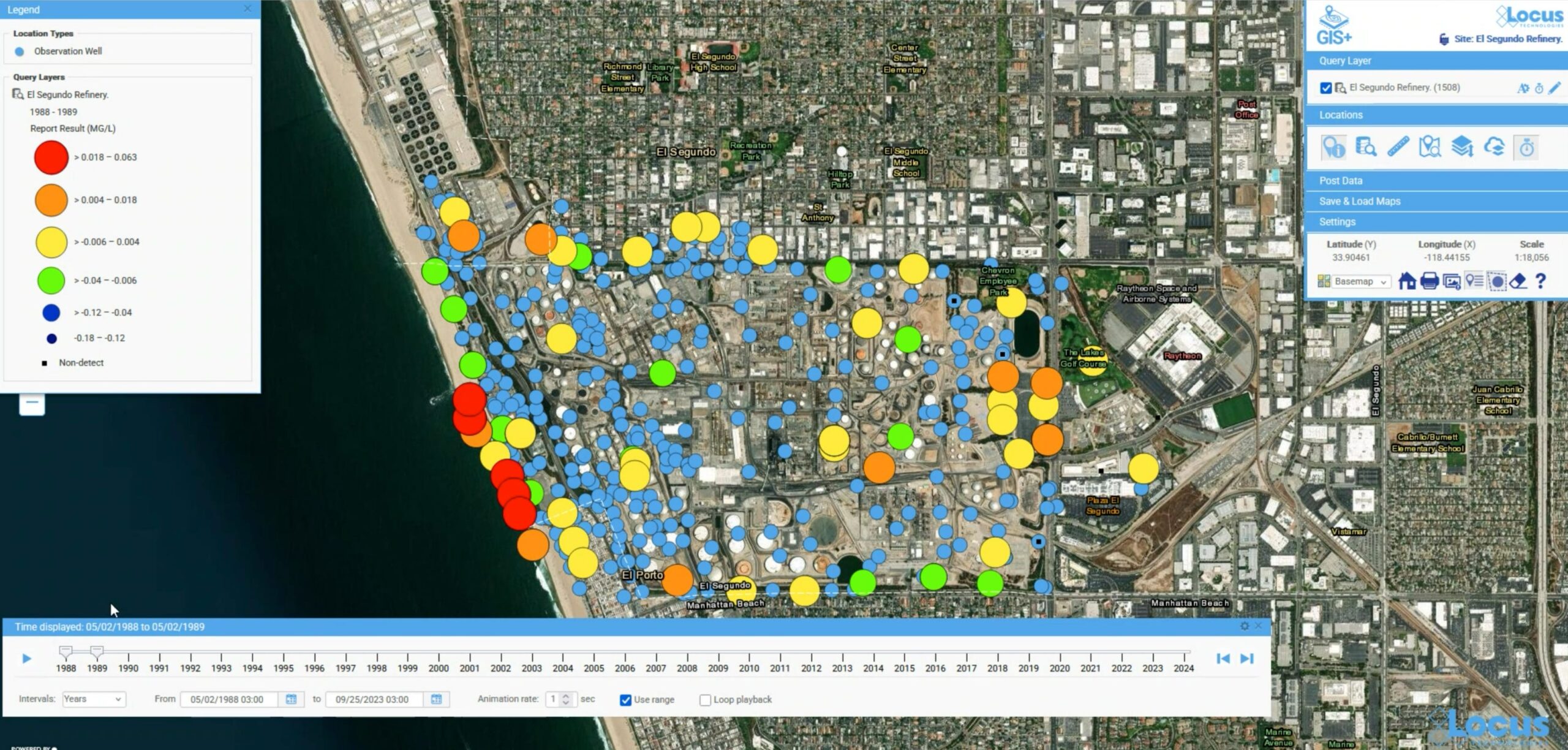
This paper updates the argument presented initially in “Dirty Data Blights the Bottom Line,” demonstrating how Locus’s approach is even more relevant today. It examines why clean data is essential to AI and LLM adoption, explores the significant costs associated with poor information management, and outlines the advantages Locus delivers to customers seeking long-term value.
Dirty Data, Dirty Costs
When Locus first deployed its EIM platform for a Fortune 100 customer, the expectation was that the main challenge would be migrating vast datasets—millions of records spanning decades and hundreds of sites. Instead, the most pressing discovery was that almost every legacy system was riddled with serious data quality problems. Redundant entries, inconsistent naming conventions, missing values, and inaccurate results were widespread. Yet these flawed datasets had been the basis for multimillion-dollar cleanup and monitoring decisions.
The lesson remains: poor data quality doesn’t just create inefficiency, it undermines confidence in science, compliance, and ultimately business outcomes. Gartner has long estimated that bad data costs organizations an average of 15–25% of their revenue. In the environmental sector, where decades of monitoring, sampling, and regulatory reporting are the norm, these costs accumulate to billions of dollars annually.
Organizations often fail to control this problem because they outsource both sampling and data management to consultants. While consultants may focus on field or lab innovations, they have little incentive to modernize information management, since inefficiencies generate more billable hours. Companies, meanwhile, fail to demand better systems, assuming monitoring is less expensive than cleanup. In reality, as Locus has documented, long-term monitoring costs often dwarf initial remediation, especially when compounded by poor data management practices.
Why Clean Data Is the Bedrock of AI and LLMs
Six years ago, the urgency of data quality was framed around regulatory compliance and operational cost. Today, the conversation must be expanded: clean data is the fuel for AI and large language models.
LLMs, such as ChatGPT and domain-specific AI agents, are only as good as the data on which they are trained or fine-tuned. If organizations feed these models incomplete, inconsistent, or inaccurate environmental data, the resulting insights will be flawed at best and dangerously misleading at worst. Clean data enables:
- Trustworthy AI outputs – AI cannot reason around corrupted or inconsistent records.
- Advanced analytics – Trend detection, anomaly identification, and predictive modeling all require structured, validated datasets.
- Regulatory defensibility – AI-driven reporting must be transparent and verifiable to meet the requirements of regulators and stakeholders.
- Efficiency in model training – High-quality, normalized data reduces costs in preparing datasets for machine learning.

Without rigorous data management, investments in AI will fail—just as earlier generations of CRM and ERP projects collapsed under the weight of dirty data. Locus anticipated this challenge decades ago, and its platform is designed to centralize, standardize, and validate data at scale, making it uniquely ready for the AI era.
Locus’s Technology Advantage
Locus’s approach delivers three clear advantages in the modern landscape:
- Cloud-Native Multitenancy
From its founding in 1997, Locus has been fully SaaS and multitenant—unlike competitors who started with siloed, on-premise systems and later patched them for the cloud. This architecture ensures continuous improvement, lower costs, and seamless integration of new tools like AI, without requiring disruptive migrations. - Centralized, Configurable Data Management
EIM and LP consolidate information across consultants, labs, and sites into a single repository. Standardized workflows, validation tools, and metadata-driven configurability ensure that data is consistent and clean. Customers gain control of their data rather than being locked into consultant databases. - AI-Ready Platform
With OneView, Locus has introduced AI-enabled dashboards, natural language queries, and predictive modeling, all powered by high-quality datasets. This positions Locus customers to leverage generative AI and digital twins with confidence—something competitors cannot deliver without major reengineering.

Industry Trends Confirm the Urgency
The environmental, social, and governance (ESG) reporting landscape highlights the need for Locus’s model. Regulatory regimes, such as the EU’s CSRD and SEC climate disclosure rules, as well as emerging water and waste regulations, all demand defensible, auditable data. Organizations cannot comply with these standards, let alone layer AI onto their workflows, if their datasets are fragmented or unreliable.
At the same time, companies are under pressure to improve their long-term stewardship of contaminated sites, manage complex water systems, and integrate sustainability into their core operations. Each of these challenges requires not just technology, but clean and consistent data as its foundation.

Conclusion: Data Quality as a Strategic Imperative
The original lesson remains: dirty data blights the bottom line. But in today’s environment, the consequences extend further. Without trustworthy data, organizations cannot deploy AI responsibly, effectively comply with ESG regulations, and capture the long-term efficiencies necessary for competitiveness.
Locus’s approach—centralized, cloud-native, multitenant, and AI-ready—offers customers a proven solution to this challenge. By prioritizing clean data as the cornerstone of environmental and sustainability information management, Locus enables customers not only to save money and improve compliance but also to unlock the full potential of AI and digital transformation.
The future of environmental management and ESG reporting will belong to the companies that recognize this truth. Locus has been preparing for it for nearly three decades.
For more information, please visit www.locustec.com.


As Founder and CEO of Locus Technologies, Dr. Duplan spent his career combining his understanding of environmental science with a vision of how to gather, aggregate, organize, and analyze environmental data to help organizations better manage and report their environmental and sustainability footprints. During the 1980’s, while conducting research as a graduate student at Carnegie Mellon, Dr. Duplan developed the first prototype system for an environmental information management database. This discovery eventually lead to the formation of Locus Technologies in 1997.