
01 // GHG Management

Your GHG numbers only count if they can be verified.

02 // Purpose-built Software

GHG management software for regulatory reporting, carbon accounting, and emissions compliance

Greenhouse gas reporting has moved from voluntary to mandatory across multiple regulatory jurisdictions simultaneously. GHGRP, CARB Mandatory Reporting, LCFS, SB 253, and an expanding set of state programs each require accurate emissions data, calculation methodologies that regulators can follow, and records that survive third-party verification.

Locus GHG Management software was built with certified GHG verifiers on staff — professionals who have completed hundreds of verifications and understand exactly what examiners look for. As carbon emissions management software, Locus automates data collection, performs Scope 1, 2, and 3 calculations, and generates regulatory and voluntary GHG reports from a single validated emissions record.

Built on Locus Platform

Locus GHG Management runs on the same platform as our Air Quality, Refrigerant Management and ESG Reporting applications. Air quality and refrigerant data already in Locus feed GHG calculations directly — no extraction, no redundant data entry. The validated GHG inventory flows to ESG Reporting and CSRD disclosures on the same platform. For organizations managing air permit compliance and GHG reporting simultaneously, the two programs share the same data foundation.

Platform Overview

Why compliance teams choose Locus GHG reporting software

GHG Verification

Submit regulatory GHG reports with confidence the methodology will hold up.

Locus GHG software was built with certified GHG verifiers on staff — professionals who have completed hundreds of regulatory submissions and know exactly where methodologies fail under scrutiny. Generate EPA XML and CARB XML reports to submit into e-GGRT and Cal-eGGRT systems.

Trace every reported number back to its source data, factor, and formula.

Capture the provenance of every figure. The raw activity data, emission factors applied at each level, and the calculation logic connecting them are all at your fingertips so any auditor can follow the same path.

Connect all your emissions data sources without building a custom integration.

Energy meters, ERP systems, SCADA, IoT devices, and air monitoring data all feed the GHG calculation environment through built-in integration tools, reducing manual input and the consistency problems that come with it.

Report to multiple programs from one data entry effort.

Every regulatory and voluntary program draws from the same validated Locus GHG record, so there is no parallel tracking, no reconciliation, and no risk of version discrepancy between what was reported to one agency and another.

AI and computer engineering reviewing environmental data and AI models

Adapt immediately when new GHG programs are implemented.

Standard built-in calculation methodologies get a program up quickly, and facility-specific methodologies are configurable. When a new state program launches or an existing one adds requirements, the platform adapts.

From activity data to
regulatory submission

05 // Lifecycle

  • Collect

    Activity data arrives from connected sources (energy meters, ERP, SCADA, IoT, air quality monitoring, refrigerant records) automatically and without re-entry. What cannot be connected directly enters through structured facility-level forms on the intervals your programs require.

  • Calculate

    The calculation engine applies the right methodology to every emission source — standard built-in methods for established programs, facility-specific configurations where your operations require them. Every factor, formula, and input is visible and traceable at every step.

  • Verify

    Automated validation catches problems before they enter the calculation environment. When potential non-conformance is detected, alerts are issued and corrective action workflows begin, giving compliance teams time to act before a deadline becomes a violation.

  • Report

    Every applicable program, including e-GGRT, CARB ARB, LCFS, CDP, TCR, SB 253, and CSRD draws from the same validated record. The calculation documentation and audit trail that verification requires is already attached.

Locus GHG Management software simplifies reporting

06 // Feature Highlights

Locus Greenhouse Gas Emissions

GHG Calculation Engine

The calculation engine makes GHG methodology completely transparent. Organizations can verify the sources of any raw data, emission factors, and formulas used to generate GHG figures without digging through spreadsheets. Start quickly with standard, built-in calculations covering GHGRP, CARB ARB, and other major program source categories. Configure facility-specific methodologies for operations with unique source categories, proprietary processes, or program-specific requirements. Emission factors are sourced from EPA, CARB, and country-specific published factor sets. When regulatory agencies publish factor revisions, those updates are reflected in the platform on the agencies' published timelines, which may differ from academic publication cycles. The same engine that calculates regulatory submissions produces the voluntary framework outputs that ESG disclosures require, with no reconciliation between the two.

ESG Reporting →

Automated Data Collection and Resource Management

Locus GHG software pulls real-time emissions data from energy meters, ERP systems, SCADA, IoT devices, and spreadsheets automatically. Air monitoring data from the Air Quality app and refrigerant release records from the Refrigerant Management app feed GHG calculations without re-entry. The Resource Management Module captures electricity, fuel, and water consumption, waste and wastewater quantities and quality, air emissions, and production output at the facility or plant level on monthly, quarterly, or annual intervals. Built-in statistical outlier warnings, transparent calculations, and data quality status flags catch problems before they enter the calculation environment. Production output data enables GHG intensity calculations — emissions per unit of output — which SASB sector-specific metrics and ESG rating agency questionnaires routinely require. RegScan content provider integration can bring current regulatory updates into the platform as programs evolve.

Air Quality →
Refrigerant Management →
ESG Reporting →

Regulatory and Voluntary GHG Reporting

Locus software generates regulatory GHG reports and voluntary disclosure outputs from the same validated emissions record. Regulatory programs include EPA GHGRP reporting via e-GGRT, CARB Mandatory Reporting Rule submissions, California LCFS reporting, Oregon Clean Fuels Program, and Washington state GHG reporting. Voluntary and mandatory disclosure frameworks include CDP, The Climate Registry, GRI, California SB 253, CSRD, SEC climate disclosures, and TCFD-aligned reporting. Input data once. Report in parallel to every applicable program. When requirements change, the platform adapts without a custom development engagement.

ESG Reporting →
CSRD Disclosures →
Air Quality →
ESG and Sustainability Frameworks →

Dashboards, Alerts, and Emissions Analytics

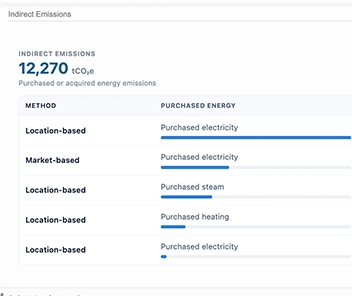
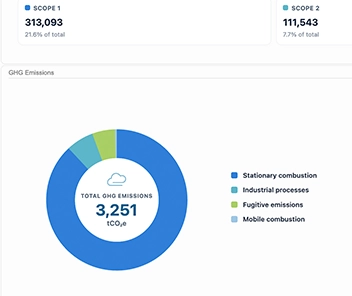
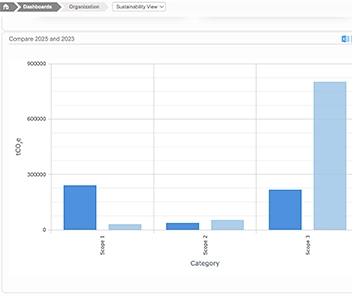
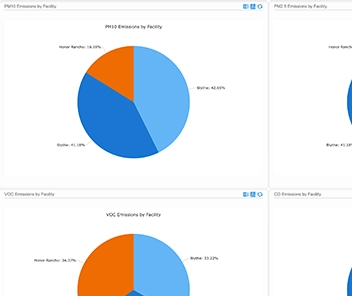
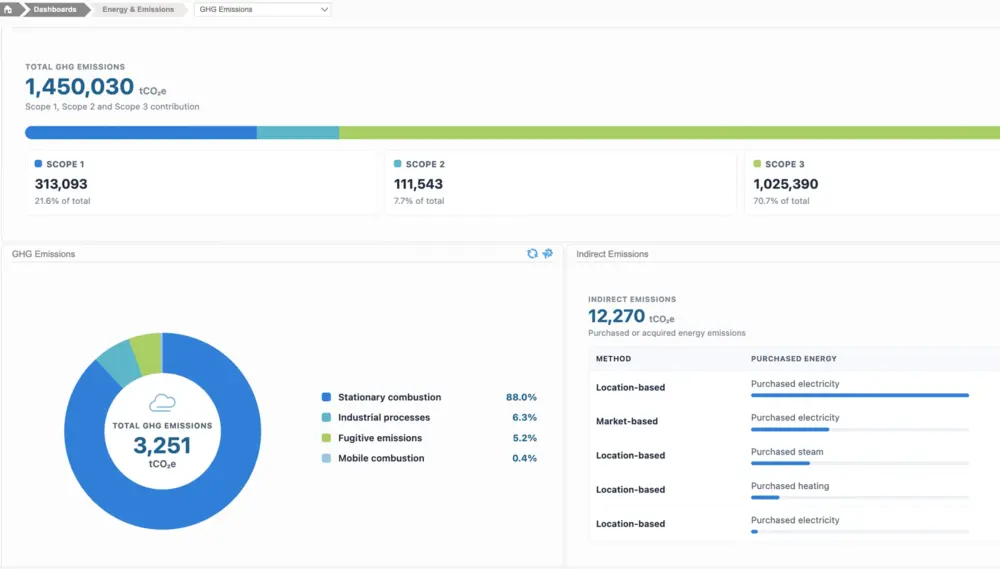
Locus Technologies’ configurable dashboards give compliance teams and management a real-time view of emissions performance across all facilities. Compare the latest emissions data against prior periods, track progress against reduction targets, and monitor KPI performance at the facility and enterprise level. Built-in automatic alerts fire when potential non-conformance is detected, giving compliance teams the opportunity to investigate and correct issues before a regulatory deadline arrives. Configurable workflows route corrective action assignments to responsible owners and track them to completion. For organizations managing active decarbonization programs, trend analysis connects current emissions performance to the longer-term trajectory that investors, lenders, and regulatory bodies increasingly require.

Task and Compliance Module →
ESG Reporting →

Third-Party Verification Support

GHG verification failures are less about emissions errors; they often relate to calculation methodologies that cannot be followed, the emission factor source cannot be confirmed, or the activity data cannot be traced to its origin.

Locus software generates the complete documentation trail that verifiers require — methodology references, emission factor source attribution, data transformation records, and version-controlled calculation history — as a property of how the platform stores data. Locus Environmental consultants are certified by California, Oregon, and Washington to provide third-party GHG and LCFS verifications. Their team, previously part of Locus Technologies, have completed over 500 GHG verifications without a single finding overturned, and the institutional knowledge from that verification practice shaped the Locus GHG software from the beginning.

07 // Neno Duplan, Founder and CEO, Locus Technologies

"Carbon management and reporting in various legal jurisdictions in the U.S. and around the world is getting complicated

... by the rapid introduction of new legislation. Spreadsheets or even specialty databases will not work anymore. Locus's approach of deploying a universal web-based platform where multinational companies can input carbon data once and report many times and in many different formats is exactly the concept the market needs."

Locus GHG is one app on a platform built for your entire EHS and ESG program

08 // Truly Unified Platform

Locus = No Data Silos

The greenhouse gas inventory Locus GHG Management software produces is the primary input for every major sustainability disclosure program. When that inventory is calculated in Locus, it flows to ESG Reporting, CSRD, CDP, SB 253, and SEC climate disclosures without extraction or reconciliation.

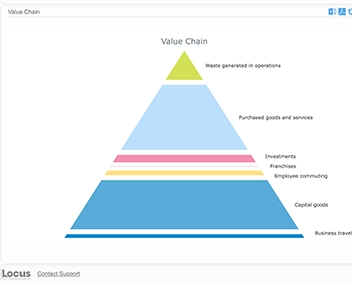
Air quality monitoring data feeds Scope 1 calculations. Refrigerant release records contribute to Scope 1. Embodied carbon from Sustainable Construction connects to Scope 3. Water consumption from Industrial Water feeds resource intensity metrics. GHG management is not an isolated program — it is the calculation engine at the center of a connected environmental and sustainability data ecosystem.

All Locus apps share a unified data layer

09 // Locus Ecosystem

Air Quality Air Emissions Management Software for Title V, NSR, NESHAP, and Permit Compliance
Refrigerant Management Manage compliance, chronically leaking systems reporting, and ESG reporting
ESG Reporting ESG Reporting Software for Organizations That Need Their Disclosures to Hold Up
CSRD Disclosures CSRD Compliance Software for Double Materiality, ESRS Data Collection, and Assurance-Ready Reporting
Sustainable Construction Sustainable construction software for embodied carbon tracking, clean construction compliance, and material circularity
Industrial Water Industrial Water Management Software for Manufacturers and Industrial Facilities
Waste Management Water quality monitoring software for utilities and industrial operators
Full Locus Ecosystem Browse the complete collection of pre-built applications

10 // Software Demonstration

See Locus GHG Management in action

GHG reporting programs vary significantly by jurisdiction, source category, and calculation methodology. Talk to a Locus specialist with direct GHG consulting or verification experience who can show you how the platform handles your specific programs, emission sources, and reporting obligations.
Request a Personalized Demo

Frequently Asked Questions

11 // FAQ

Locus GHG Management supports EPA GHGRP reporting via e-GGRT under 40 CFR Part 98, CARB Mandatory Reporting Rule submissions, California LCFS pathway reporting, Oregon Clean Fuels Program, and Washington state GHG reporting. Voluntary and mandatory disclosure frameworks include CDP, The Climate Registry, GRI, California SB 253, CSRD, SEC climate disclosures, and TCFD-aligned reporting. All pull from the same validated Locus data layer.

Emission factors are sourced from EPA, CARB, and country-specific published factor sets. Locus updates these factors as regulatory agencies publish revisions. This ensures the platform reflects the factor sets that regulatory programs actually require, rather than factors that have not yet been formally adopted by the relevant authority.

Energy meters, ERP systems, SCADA, IoT devices, and spreadsheets connect through built-in integration tools. Air quality monitoring data from the Air Quality app and refrigerant release records from the Refrigerant Management app are available without re-entry. The Resource Management Module captures electricity, fuel, and water consumption, waste and wastewater quantities, air emissions, and production output at the facility level on monthly, quarterly, or annual intervals, with statistical outlier warnings and data quality status flags built in. Content provider integrations can bring current regulatory updates into the platform.

Locus generates complete calculation documentation including methodology references, emission factor source attribution, data transformation records, and version-controlled calculation history built into how the platform stores data. Locus Technologies’ partner firm, Locus Environmental, is certified by California, Oregon, and Washington for third-party GHG and LCFS verifications and has completed over 500 verifications without a single finding overturned.

The validated GHG inventory produced in Locus GHG Management feeds the ESG Reporting and CSRD Disclosures apps directly without extraction or reconciliation. Organizations reporting under CSRD, SB 253, CDP, or SEC climate rules can draw Scope 1, 2, and 3 emissions data from the same validated Locus record used for regulatory GHG program submissions. Data is entered once and serves every program simultaneously.