
01 // DRINKING WATER QUALITY

Every sample. Every deadline. Every report. One system.

02 // Purpose-built Software

Drinking Water Quality Software for SDWA Compliance, Monitoring, and Regulatory Reporting

Water quality compliance never stops, and the platform behind it should be as serious as the work itself. Locus Drinking Water Quality software automates the full compliance cycle — from sample planning and field collection through lab data validation, MCL tracking, and regulatory report generation — bringing drinking water quality data management onto the same cloud platform that holds analytical records for utilities, government agencies, and regulated industries worldwide. Built and supported by environmental scientists and water quality professionals, Locus Technologies scales from the smallest township to the largest investor-owned utility, connects drinking water data natively to EHS compliance and ESG reporting, and adapts when regulations change without waiting for a software update.


Built on EIM & Locus Platform

Locus Drinking Water Quality runs on our robust EIM engine and the same cloud platform as the full Locus Water collection of apps for Cross Connection Control and more. The data for those programs resides in the same system, accessible through the same interface, secured under the same SOC 1 Type 2 and SOC 2 Type 2 certification, with role-based permissions controlling access for engineers, field crews, lab personnel, water quality staff, and administrators. More than 527 million analytical records live in Locus's cloud, including 4.8 million validated PFAS records across 38,500-plus global sites, with 99.99%+ or better uptime since 2014.

Solutions for Water Utilities

Why municipalities and utilities choose Locus Drinking Water software

Generate monthly compliance reports and CCR data tables without the manual assembly.

Built-in statistical calculations streamline CCR data table preparation. Manage parameter selection through intermediate QA steps to final outputs with a single click.

Know when a result is out of range before your lab report arrives on paper.

Automated exceedance alerts are triggered the moment analytical data enters the system via EDD loading or mobile field upload. Teams can act before they depart the sampling site.

Eliminate paper forms and shared spreadsheets from field sampling.

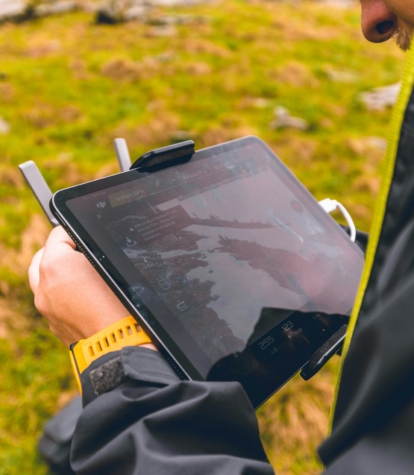
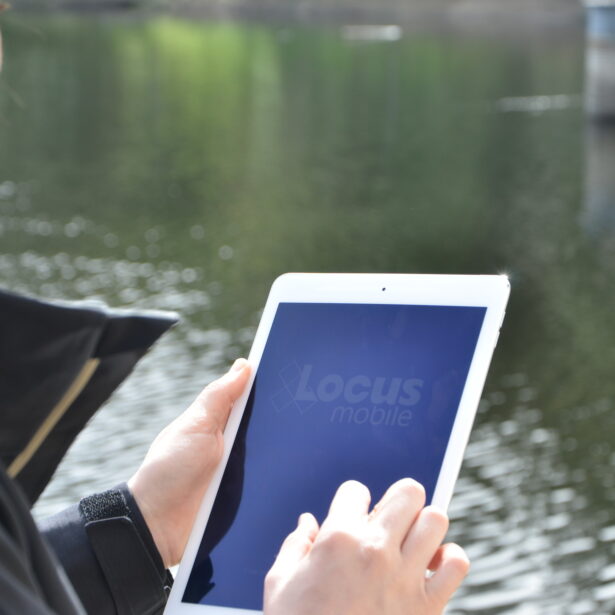
Locus Mobile gives field teams the ability to capture parameters, notes, and GPS location on iOS and Android devices — syncing results to the compliance record in real time and eliminating manual data entry back at the office.

Stay current on every new contaminant requirement.

Locus can manage UCMR sampling schedules, laboratory chain-of-custody documentation, and analytical data. Locus has the data management depth that municipal water systems require.

See your entire distribution system's compliance status at a glance.

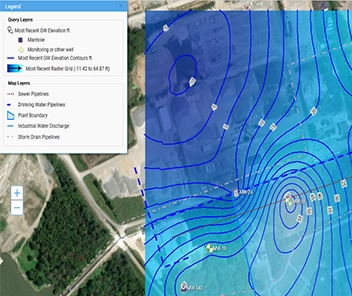
Locus GIS maps sample locations and displays analytical results across the service area. Share with operations staff in near-real time so teams can visually identify areas where action may be needed.

Connect drinking water data to EHS reporting and incident management on the same platform.

When water quality compliance data shares a platform with EHS applications so the relationships between them are native — no separate integrations, no manual data bridging, no reconciliation between systems at reporting time.

04 // Sarah Honious, Water Quality Program Coordinator, City of Hillsboro

"Locus EIM allows us to easily plan, record, QA/QC, and manage our water quality data

... collected from many different labs and routine field sampling. We are excited to have a software that helps us to quickly make data-based decisions to ensure safe and reliable drinking water for our rapidly growing community."

From sample plan to filed report

05 // Lifecycle

  • Plan

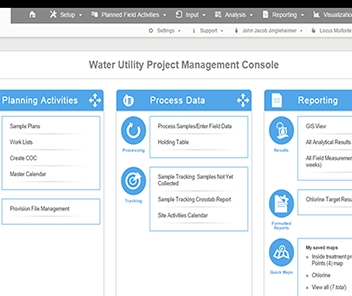
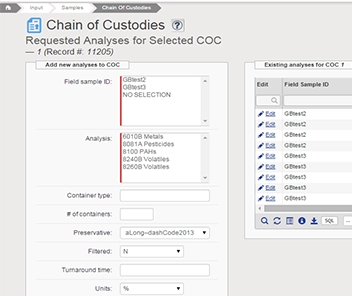
    Build monitoring schedules for RTCR, Lead & Copper Rule, DBPs, Radionuclides, VOCs, PFAS, and all other contaminants. Configure notification rules for late or missing samples. Generate chains of custody, bottle labels, and field work lists from the same schedule.

  • Collect

    Field teams log parameters on Locus Mobile, syncing results in real time. Laboratories upload analytical data and QA/QC metrics via EDD, with new parameters added automatically. IoT and smart meter connections bring continuous monitoring data without manual entry.

  • Validate

    Every incoming result is compared against configured limits. System-embedded validation controls flag exceedances, data incongruities, and QC issues before data enters the permanent record.

  • Monitor

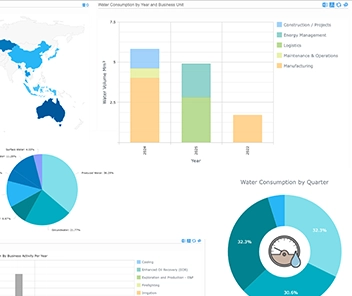
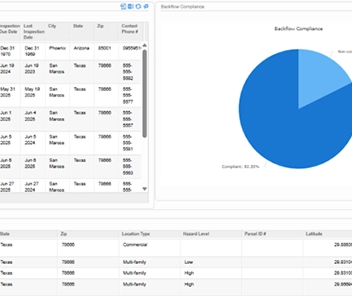
    User-configured KPI dashboards surface compliance status across all monitoring programs in real time. Audit-ready records of every sample, validation step, and submission are accessible from the software at any point.

  • Report

    Generate RTCR of LCR monitoring reports or generate annual CCR data tables by water system.

Tested and proven by municipalities and utilities

07 // Feature Highlights

environmental sampling data in the field

Sample Planning and Monitoring Schedule Management

Drinking water sampling schedules span coliform and daily turbidity measurements to the nine-year Asbestos monitoring cycle. Each is governed by different rule requirements, site selection criteria, and frequencies that depend on system size, source water type, and prior monitoring history. Locus sample planning accommodates this complexity. Build routine and ad hoc sampling plans for any duration or schedule. Monitoring schedules connect to permit conditions, so when permit terms change, sampling requirements update accordingly. Print work lists for field crews, generate chains of custody, and produce bottle labels integrated with mobile data collection. Receive automated alerts when samples are approaching a non-compliance date, when scheduled collections are missed, or when laboratory results are outstanding.

Sample Planning →
Locus Mobile →

In-House Lab Management

Locus digitizes bench and rounds sheets. Capture sample processing metrics, calibration records, reagent and supply traceability, proficiency sample results, and control charts for test method-specific QA/QC. Capture calibration status and equipment usage for on-site labs.

Digitizing Bench Sheets →

Mobile - Managing Drinking Water Quality Data and Compliance

Mobile Field Data Collection

Locus Mobile integrates directly with the sample planning module, so field teams arrive at each sampling location with their schedule, required parameters, and chain-of-custody information already loaded on their device. Work orders and sampling forms open on devices in the field. Field parameters, notes, photos, and GPS-tagged observations sync to the compliance record. Locus Mobile works offline in areas without connectivity, syncing automatically when a connection is restored, so remote sampling locations never create a data gap. Field teams return from sampling with a complete, validated record already synced to the compliance system — no manual re-entry, no paper forms to reconcile later. Automated exceedance alerts fire the moment an out-of-range result is logged, giving teams the opportunity to act before leaving the sampling location.

Because Locus Mobile connects to the same data layer as the rest of the platform, results are immediately available on shareable GIS maps so water operations staff can see chlorine residuals, bacteriological findings, and other key parameters across the distribution system as data arrives from the field. The same mobile interface that supports drinking water compliance field work also opens inspection forms, work orders, and surveys for other programs in the Locus Water suite. One app, one login, every field program your utility runs.

Sample Planning →
Locus Mobile →

Lab Data Integration and Validation

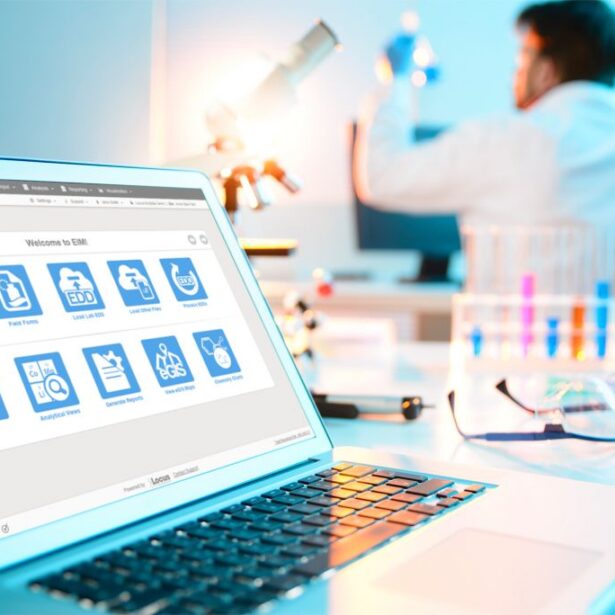
Locus connects directly to your LIMS for automatic EDD loading, with support for standard and custom EDD formats used by most laboratories. Lab QA/QC metrics import automatically alongside analytical results. System-embedded data validation controls flag exceedances, data incongruities, and duplicate data before they reach the permanent compliance record, ensuring data remains clean and reliable at every stage. Every incoming result is compared against MCLs and action levels and exceedance alerts. Out-of-range results are flagged in real time. The complete record of sample collection, laboratory analysis, validation steps, and submission history is maintained as an audit-ready record for water quality staff and regulators to review. Data remains accessible from the platform at any point, without reconstructing documentation from email threads or shared files.

Locus EIM →
Data Validation→

EHS manager working on desktop computer with AI and environmental data

Simplified Workflow & Regulatory Reporting

Locus generates formatted crosstab outputs for all major drinking water compliance reports from the same validated dataset. The built-in CCR module walks through parameter selection and runs required calculations, including system-wide and location-based rolling annual averages. Every intermediate step is displayed so calculations are traceable and defensible under state review. Final data tables are organized by water system and ready for insertion into the annual CCR. RTCR monitoring reports and LCR monitoring reports are produced with the same simplicity, drawing from the same validated analytical records. Report templates are configurable by your own team. When a state agency updates its format requirements, your team updates the template without vendor involvement.

Analytical and Laboratory Data →
Streamline CCR Reports →
Configuration Workbench →

PFAS, UCMR, and Emerging Contaminant Monitoring

Locus manages UCMR sampling schedules, laboratory chain-of-custody documentation, and PFAS analytical data. With 4.8+ million validated PFAS records across 38,500-plus global sites, Locus has demonstrated data management experience for PFAS contaminant tracking at the scale that large water systems and government agencies require. When new contaminants enter a monitoring program, the software accommodates new analytical parameters without requiring changes to the database in advance.

PFAS Policies for Municipalities →

GIS Mapping and Data Visualization

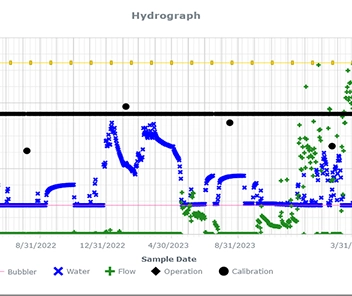
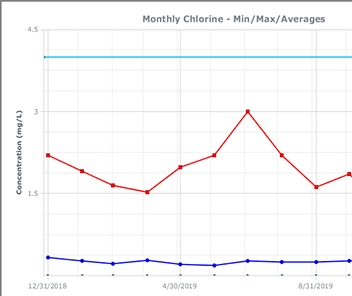
Locus built-in GIS, powered by Esri ArcGIS Online, makes the spatial dimension of drinking water compliance immediately accessible. Map sample locations and overlay analytical results across the distribution system to quickly assess areas needing attention. Share GIS map views with operations staff and other departments in real time. Locus GIS+ adds deeper spatial analysis — buffering, spatial queries, contouring, and integration with your own ArcGIS map layers — for programs requiring more advanced geographic analysis. Beyond mapping, Locus generates configurable visualizations including time series charts, scatter plots, bar graphs, tree maps, and regression charts, so teams monitoring water quality can trend results over time. Statistical correlation tools, year-over-year comparisons, and histograms give engineers the water quality data analysis depth to spot trends before they become compliance problems. User-configured dashboards surface KPIs and compliance status across monitoring programs.

Locus GIS+ →

Locus Water is one solution on a platform built for your entire water, EHS, & ESG program

08 // Truly Unified Platform

Locus = No Data Silos

A water utility's compliance obligations extend well beyond drinking water monitoring. For utilities that also manage wastewater operations or wastewater compliance programs like Industrial pretreatment, FOG, or MS4 Stormwater, Locus connects those programs to the same system without separate integrations or data migrations.

For utilities navigating staff transitions and retirements, centralized cloud-based compliance records mean that institutional knowledge (e.g. monitoring histories, permit conditions, sampling rationale, and audit documentation) lives in the platform rather than in the heads or hard drives of individual team members.

All Locus apps share a unified data layer

09 // Locus Ecosystem

Cross-Connection Control (CCC) & Backflow Prevention Backflow Device Management Software for Water Utilities
Industrial Pretreatment & FOG Programs Industrial Pretreatment and FOG Program Management Software for POTWs
Stormwater MS4 Stormwater Compliance Software
Wastewater Wastewater Management Software for NPDES Compliance, Effluent Monitoring, and Regulatory Reporting
Locus EIM Environmental Information Management Software Protecting Field Sample and Analytical Data
Full Locus Ecosystem Browse the complete collection of pre-built applications for water, EHS, and ESG.

10 // Software Demonstration

See Locus Drinking Water Quality in action

Water compliance programs vary by system size, source water type, state primacy requirements, and monitoring history. Talk to a Locus water specialist who understands the specific sampling frameworks, reporting formats, and regulatory cycles that govern your program and how Locus handles them.
Request a Personalized Demo

Frequently Asked Questions

11 // FAQ

Locus supports monitoring schedules and compliance reporting for RTCR, Lead and Copper, Disinfection Byproducts, Radionuclides, VOCs, PFAS, and all other regulated contaminants under the Safe Drinking Water Act. When new contaminants are added to a monitoring program, Locus accommodates new analytical parameters when laboratory data arrives via EDD.

The built-in CCR module walks through parameter selection, runs required calculations including system-wide and location-based rolling annual averages, displays intermediate calculation steps for quality assurance, and generates final data tables by water system ready for insertion into the annual Consumer Confidence Report. The process supports single and multiple water systems in one database and can publish CCR data online in real time for community transparency.

Locus generates Consumer Confidence Report data tables, Monthly Coliform Reports, Lead and Copper Rule reports, and RTCR monitoring reports, all pulling from the same validated dataset, with no re-entry or parallel data management required.

Locus manages UCMR sampling schedules, laboratory chain-of-custody documentation, and PFAS analytical data. The platform holds 4.4 million validated PFAS records across 38,500-plus global sites. When new analytical parameters arrive in a laboratory EDD, Locus adds them to the system automatically; no advanced configuration of the database is required.

Locus Mobile integrates directly with the sample planning module. Field teams open work orders and sampling forms on mobile devices, log field parameters, capture notes and photos, and sync results to the compliance record in real time. Field results are immediately available on shareable GIS maps for operational decision-making across the distribution system.

Yes. A single Locus database supports one or multiple public water systems simultaneously. Grouping options for locations, parameters, sampling programs, and water quality systems simplifies compliance reporting across complex utility portfolios. The City of Hillsboro Water Department uses Locus to manage four public water systems serving nearly 500,000 customers in Oregon.

Locus Drinking Water Quality runs on the same platform as the full Locus Water suite with apps for Cross Connection Control Management. Drinking water compliance data, backflow device records, and stormwater data share the same system under unified SOC 1 and SOC 2 Type 2 security. Utilities that manage wastewater operations, IPP, FOG, MS4 Stormwater programs, can connect those programs to the same database without separate integrations.