






01 // AI & Agents

AI for EHS, ESG, and water confidence depends on validated data

AI works wonders when your data is sound.

Most EHS software vendors claim AI capabilities. Very few can deliver it in a way that adds value. Meaningful AI in regulated environments requires clean, structured, consistently validated data at scale -- and an architecture designed to use it. Locus Platform has been building that foundation since 1999. With more validated environmental data than any competitor, and a true multitenant architecture that shares learning across customers, Locus AI produces outputs that are accurate, auditable, and actionable.

Young EHS and ESG professionals working on AI and environmental data

02 // Sophisticated architecture behind Locus AI

Most products on the market today attach AI features to architectures that were never designed to support them.

Fragmented databases, inconsistent data structures, and acquired modules that share a login page but not a data model mean that AI on those platforms can only summarize and suggest. It cannot reason, automate, or learn at scale.

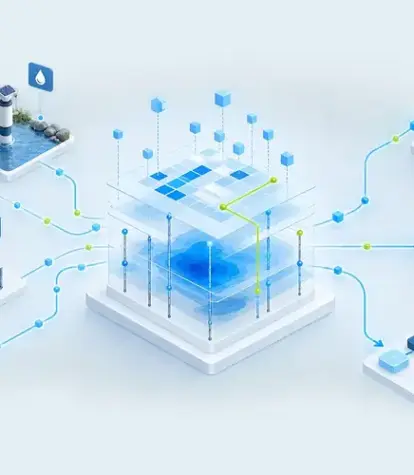
Locus Technologies’ roots are in Carnegie Mellon, one of the recognized thinktanks for AI research. Long before AI became a marketing term, Locus was building the architectural foundation that makes real AI possible: a true multitenant cloud platform where all customers share the same metadata model, workflow engine, rules engine, calculation engine, and reporting framework. That shared foundation means Locus AI is learning from a continuously growing, harmonized and anonymized dataset curated across industries and decades, not from a single customer's isolated records.

The result is AI that can reason across your entire compliance program, trigger automated actions based on what it observes, and improve over time as the underlying dataset grows.

03 // Why Locus AI

What sets Locus AI apart from competitors

  • Built on 30+ years of validated, multitenant environmental data
  • AI trained on domain-specific data, not generalized internet data
  • Reasons across air, water, waste, ESG, and safety simultaneously
  • Triggers automated actions, not just advisory suggestions
  • Powered by OpenAI technology with Locus-validated data as the input
  • Every AI output is traceable to a validated source record
  • Anomaly detection that improves as your dataset grows
  • Natural language querying across your entire compliance program

Putting Locus AI into practice

04 // Key Capabilities

Man working on laptop as demonstration of AI for EHS and ESG

Natural Language Querying with Locus AI

Locus AI lets users ask questions about their compliance data in plain language and receive answers grounded in the underlying validated records. A user can ask "What sites had the highest air emissions last quarter?" or "Which corrective actions are overdue across my facilities?" and receive a response drawn from validated platform data rather than a static report. Locus AI is powered by OpenAI technology applied to Locus's structured, multitenant data model.

Analytics, Reporting & Dashboards


Anomaly Detection and Early Warning

Locus AI monitors incoming data streams and identifies readings that fall outside expected ranges, including subtle anomalies that threshold-based alerts alone would miss. When an anomaly is detected, the platform generates an alert to the responsible team member with the specific data point, the site context, and the historical baseline for comparison. This gives compliance teams time to investigate before an anomaly becomes an exceedance or a regulatory event.

WORKFLOW AUTOMATION & RULES

Automated Compliance Intelligence

Locus AI does not wait to be asked. It continuously monitors the data in the platform and generates compliance insights automatically: trends approaching permit limits, reporting deadlines requiring near-term action, data patterns that suggest equipment performance degradation, and ESG metric trajectories relative to disclosed targets. These automated intelligence outputs appear in dashboards and are delivered through the platform's notification system to the users who need them most.

Analytics, Reporting & Dashboards

AI-Ready Data Architecture

Every Locus AI capability depends on the platform's foundational data architecture: ingestion-point validation, a shared multitenant data model, consistent unit conversions, and a calculation engine that applies the same formulas across all facilities. This architecture is not something that was added to support AI — it was the architecture Locus built from day one. The same validation and structure that makes Locus compliance data defensible is what makes Locus AI outputs reliable.

Data Quality & Validation

API Integration for Third-Party AI Tools

Organizations that have invested in their own AI and BI tools can connect those tools to Locus validated data through the Locus API. IoT sensors, SCADA systems, ERP platforms, and external AI engines all become more effective when they operate on Locus-validated data rather than raw or unverified inputs. The API makes Locus the trusted data source for AI programs that extend beyond the platform itself.

Data Connectivity & Integrations

Agentic AI and the Locus Roadmap

Locus is developing the next generation of AI capability: agentic AI that can take multi-step actions autonomously based on what it observes in the data. Where today's Locus AI alerts and informs, tomorrow's agentic AI will initiate workflows, open corrective actions, draft regulatory reports, and escalate issues with minimal human intervention. The foundation — validated data, shared metadata model, workflow engine, rules engine — is already in place. Agentic AI is the next layer.

AI and computer engineering reviewing environmental data and AI models

05 // Key Capabilities

AI & Intelligent Automation

  1. Natural language querying via Locus AI, powered by OpenAI
  2. Anomaly detection across incoming data streams and historical records
  3. Automated compliance intelligence delivered to dashboards and notifications
  4. AI trained on validated, domain-specific EHS, ESG, and Water data
  5. Outputs traceable to validated source records for audit defensibility
  6. API access for integration with third-party AI and BI tools
  7. Agentic AI capabilities on the active Locus development roadmap
  8. Works across air, water, waste, ESG, and safety data simultaneously.

06 // Software Demonstration

See what AI looks like when the data is actually ready for it.

Schedule a live demo of Locus OneView and watch AI work on your real compliance data.
Schedule a Demo

Frequently Asked Questions

08 // FAQ

Locus Platform applies AI to validated, multitenant environmental data accumulated since 1999. Current capabilities include natural language querying via Locus AI, anomaly detection across incoming data streams, and automated compliance intelligence delivered to dashboards and notifications. Because Locus AI operates on validated data from a shared platform — not siloed modules — it can reason across air, water, waste, ESG, and safety programs simultaneously.

Most EHS vendors attach AI features to fragmented architectures with separate databases per customer and inconsistent data structures inherited from acquisitions. Their AI can summarize and suggest but cannot automate or reason at scale. Locus AI operates on a true multitenant platform where all customers share one metadata model, one workflow engine, and one validated data foundation -- enabling automation and reasoning that competitors cannot match architecturally.

Yes. Every data point that Locus AI reasons from has passed through ingestion-point validation before entering the system of record. Unit conversions, format checks, range validations, and scientific calculations all run at the point of ingestion. This means AI outputs are grounded in data that has already met your organization's quality standards, making them appropriate for regulatory reporting, executive disclosure, and audit review -- not just internal analysis.

All data entering Locus Platform from IoT sensors, laboratory EDDs, ERP systems, mobile field entry, and file uploads passes through the same validation layer before it is available to AI. Locus APIs also allow third-party AI tools to query Locus-validated data directly. When AI operates on this unified, validated dataset, it can identify patterns and correlations across data sources that would be invisible in siloed systems.

“Agentic AI” refers to AI that can take multi-step actions autonomously based on what it observes; not just alert a human but initiate a workflow, draft a report, or open a corrective action without being prompted. Locus is actively developing agentic AI capabilities. The required foundation, including validated data, shared metadata model, workflow engine, and rules engine, is already in place, making Locus one of the few EHS vendors architecturally capable of delivering genuine agentic AI.