





01 // SCIENTIFIC DATA

Environmental sampling and lab data management software

From sample planning to regulatory submittal — no gaps, no spreadsheets.

From sampling programs, laboratory data deliverables, field measurements, and regulatory thresholds to PFAS, radionuclides, and vapor intrusion, environmental data is complex, the stakes are real, and spreadsheets do not cut it. Locus EIM is the platform that environmental professionals trust to manage that complexity without losing control. It handles water, soil, air, biological, geological, and radionuclide data from sample planning through regulatory reporting, for programs of every size and regulatory context.

02 // Trusted & Proven

The science-based engine beneath every environmental program

Locus EIM software is distinct from EHS compliance software and ESG reporting software. While EHS software manages compliance tasks and ESG software summarizes sustainability efforts, EIM is the science-based engine underneath; it’s the place where actual environmental data lives, gets validated, and becomes defensible. Locus has been that engine since 1999. The Sample Planning module now in use at Los Alamos National Laboratory and San Jose Water Company was built by a team of environmental data management specialists with decades of combined experience in complex sampling programs.

Locus EIM gives administrators, consultants, and scientists far greater control over critical data than is possible with spreadsheets or conventional databases. The platform handles the most challenging data types like PFAS, radionuclides, vapor intrusion parameters, biological samples, and well construction records within the same interface used for routine water quality monitoring. No parallel system, no data migration between tools, and no loss of scientific rigor as programs grow in scope or regulatory complexity.

Locus EIM

03 // Benefits

Locus Sample Planning & Lab Data Management

  • Manages water, soil, air, biological, and radionuclide data
  • Sample planning automates complex multi-parameter programs
  • EDD imports from any lab format and validated before acceptance
  • Chain of custody generated, tracked, and linked to results
  • Over 530 million analytical records managed on the platform
  • Exceedance alerts fire automatically against regulatory limits
  • Statistical tools designed specifically for environmental data
  • Scales from small water utilities to national remediation programs

Every step of the analytical data lifecycle

04 // Solution Highlights

environmental sampling data in the field

Sample Planning and Scheduling

Setting up a complex sampling program is time-consuming work. A single program may require dozens of analyses at varying frequencies, multiple locations, overlapping compliance programs with different parameter requirements, and strict hold-time constraints. Locus EIM's Sample Planning module assembles all of these requirements into a concise sampling calendar, pre-prints chain of custody records, bottle labels, and work lists, and tracks sample collection from the field to the laboratory. As an added benefit, the automation ensures required samples are never missed.

Explore Mobile & Field Access

Chain of Custody Management

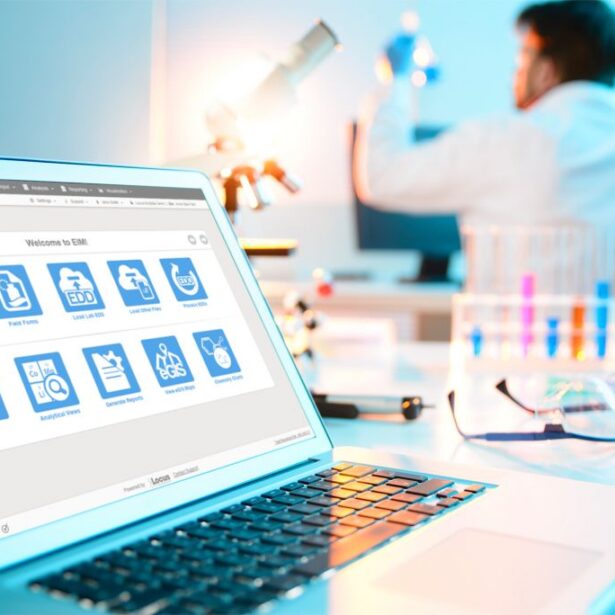
Locus EIM generates iOS-enabled chain of custody forms, bottle labels, work lists, and analytical group assignments directly from the sample plan. Field technicians collect samples against the pre-generated COC, confirming collection at each location. When samples reach the laboratory, the COC record links forward to the incoming EDD, maintaining an unbroken documentary chain from the moment of collection through the arrival of certified analytical results. This continuity is what makes laboratory data defensible in regulatory proceedings.

Explore Mobile & Field Access

EDD Import and Validation

Locus EIM accepts Electronic Data Deliverables from laboratory information management systems in multiple file formats (text, delimited, and zipped files) with hundreds of automated validation checks running at the point of import. The EDD loader checks for incorrect data types, missing required values, entries restricted by lookup tables, and duplicate records. Multiple labs can submit EDDs in different formats and the data still arrives in the same place in the database. Locus EIM's EDD loader processes and error-checks several thousand records in under a minute, and a dedicated lab interface allows laboratories to submit their own EDDs directly with your permission.

Explore Data Quality & Validation

Method and Analyte Tracking

For programs where regulatory compliance depends on specific analytical methods and confirmed analyte coverage, Locus EIM tracks laboratory results down to the method and analyte level. If a required EPA method was ordered but no result for a specific parameter arrived in the EDD, Locus EIM identifies the gap immediately — before the data manager assumes the deliverable is complete. When a laboratory substitutes one method for another, the system flags it for review. This level of traceability is essential for programs where method compliance is a permit condition.

Automated Exceedance Notifications

Locus EIM compares incoming analytical results against configured regulatory action limits, permit thresholds, and screening values automatically as results arrive. When a value exceeds a configured limit, the platform generates an alert to the responsible party with the specific parameter, location, measured value, and applicable limit identified. This transforms the data import workflow into an early warning system, giving program managers time to investigate and respond before a laboratory exceedance triggers a regulatory obligation.

Explore Workflow Automation & Rules

Statistical Analysis and Trend Reporting

Locus EIM includes statistical evaluation tools designed specifically for environmental data, not adapted from general-purpose statistics packages. Trend analysis, comparative regulatory limit reporting, statistical exceedance calculations, and groundwater statistical methods are built into the platform. Reports span all major data types stored in EIM: location and sample collection information, chain of custody records, analytical results, field measurements, well and borehole data, and regulatory limit comparisons. Enhanced formatted reports produce publication-ready outputs directly from the platform.

Explore Analytics, Reporting & Dashboards

Discharge Monitoring Report Automation

For organizations reporting to EPA NetDMR or state agencies, the Discharge Monitoring Report process is time-consuming, labor-intensive, and error-prone when managed manually. Locus EIM's DMR tool automates data assembly, regulatory calculations, and report formatting. DMRs can include analytical chemistry of pollutants, flow velocity, total maximum daily load calculations, and other parameters all assembled and formatted automatically from validated EIM data. Organizations that manage 100 to 1,000 permitted facilities can generate DMRs within minutes per reporting period, with all calculations completed to regulatory specifications.

Explore Analytics, Reporting & Dashboards

GIS and Mapping Integration

Locus EIM's sampling locations, monitoring wells, and field measurement points connect directly to the native GIS and GIS+ mapping capability in Locus software. Analytical results plot spatially across site maps, groundwater contour maps, and public geographic layers, giving scientists and regulators a complete picture of where results were collected and how they relate to the surrounding environment. Mobile field collection adds GPS coordinates to new sampling locations directly from the field.

Explore GIS & Spatial Intelligence

05 // Scales from EIM One to Enterprise

Locus EIM scales to fit the largest enterprises and smallest water utilities through EIM One,

a purpose-built configuration that provides all essential data management capabilities — sample planning, EDD loading, COC generation, exceedance reporting, GIS+ mapping, DMR automation, and regulatory deliverables — without the overhead of full enterprise deployment. The latest generation of the Sample Planning module is in active use at Los Alamos National Laboratory and San Jose Water Company, planning and scheduling thousands of samples per year across these very different program types.

06 // Feature Highlights

Robust tools for the most difficult work

  1. Sample planning calendar for multi-parameter, multi-location programs
  2. iOS-enabled COC, bottle label, and work list generation from the plan
  3. EDD imports from any laboratory format with hundreds of validation checks
  4. Method and analyte tracking against ordered analytical groups
  5. Automated exceedance notifications against permit limits and screening values
  6. Statistical tools designed for environmental data analysis
  7. DMR automation for EPA NetDMR and state agency reporting
  8. Native integration with Locus GIS and GIS+ for spatial visualization
  9. Over 30 forms for field data entry covering all major environmental data types
  10. Scales from EIM One for water utilities to full enterprise EIM deployment

07 // Software Demonstration

See what your program looks like with the right platform behind it.

Schedule a live demo of Locus EIM and explore the full analytical data lifecycle in action, including sample planning, EDD imports, and LIMS coordination.
Book a demo

Frequently Asked Questions

09 // FAQ

Locus EIM is environmental information management software that manages the full analytical data lifecycle (i.e., sample planning, chain of custody, laboratory EDD imports, data validation, statistical analysis, and regulatory reporting) for water, soil, air, biological, and radionuclide programs. While EHS software manages compliance tasks and ESG software reports sustainability data, EIM is the science-based engine where actual environmental measurements live, get validated, and become defensible for regulatory use.

Locus EIM accepts EDDs from laboratory information management systems in multiple file formats, running hundreds of automated validation checks at the point of import. Checks include data type verification, required field presence, lookup table compliance, and duplicate detection. Multiple labs can submit EDDs in different formats and the data lands in the same normalized database. The EDD loader processes and error-checks several thousand records in under a minute, and labs can submit directly via a dedicated lab interface.

cus EIM's Sample Planning module assembles all program requirements — sampling frequencies, parameter requirements, location groupings, hold-time constraints, and overlapping compliance programs — into a unified sampling calendar. The module pre-prints chain of custody records, bottle labels, and work lists from the plan. It tracks sample collection from the field through laboratory receipt. When a required sample is not collected, the system identifies the gap automatically, eliminating the missed-sample compliance failures that are common in manually managed programs.

Yes. Locus EIM compares incoming analytical results against configured regulatory action limits, permit thresholds, and screening values automatically as each EDD is processed. When a value exceeds a configured limit, the platform generates an alert to the responsible party identifying the specific parameter, location, measured value, and applicable limit. This turns the data import process into an active monitoring function, giving teams time to respond before an exceedance triggers a formal reporting obligation.

Yes. Locus EIM's DMR tool automates the data assembly, regulatory calculations, and formatted report output required for Discharge Monitoring Reports submitted to EPA NetDMR and state agencies. For parameters requiring flow calculations, pollutant load computations, or statistical averaging, the calculations run automatically from validated EIM data. Organizations managing multiple permitted facilities can generate DMRs within minutes per reporting period, eliminating the manual assembly work that makes DMR production a major compliance expense.

Locus EIM connects directly to Locus Mobile for field data collection and to Locus GIS and GIS+ for spatial visualization. Field technicians collect samples against EIM-generated COCs using Locus Mobile, confirming collection at each location. GPS coordinates captured in the field populate sampling location records in EIM and appear on GIS maps. Analytical results stored in EIM plot spatially across site maps, groundwater contours, and public geographic layers, giving scientists and regulators data in its full environmental context.