
01 // Facilities, Sites, Assets & People

Stop entering the same facility, asset, and person in five different systems

02 // Purpose-built Software

Sites, Assets, and People Management for EHS, ESG, and Environmental Compliance Programs

Locus Facilities, Sites, Assets, and People software manages the entities behind every compliance program: the regulated facilities, long-lived assets, and people who carry obligations that extend across decades, not quarters. For many regulated organizations, those obligations include financial and regulatory liabilities that outlast the operating life of the asset itself.

Locus Technologies provides a unified, configurable system of record purpose-built for complex, regulated environments, connecting assets, facilities, projects, environmental obligations, and financial exposure in a single audit-ready platform. And because it underpins every other Locus compliance application, data entered here never needs to be entered again. Every program draws from the same validated foundation.

Built on Locus Platform

Locus Facilities, Sites, Assets, and People Management powers most Locus Platform solutions. Facility records carry their associated permits and obligations. Asset records carry their maintenance history, environmental liabilities, and financial exposure. People records carry their roles, responsibilities, and credentials. Every compliance application on the platform — air quality, waste, water, GHG, safety, refrigerant — draws from these shared records without requiring separate entry. The platform provides enterprise-wide visibility while supporting facility-level workflows, enabling consistent governance across business units, sites, and geographies without sacrificing operational flexibility. Power users can configure organizational structures, approval chains, asset classes, and workflows without custom code.

Platform Overview

Why EHS and ESG teams choose Locus for facilities, sites, assets, and people

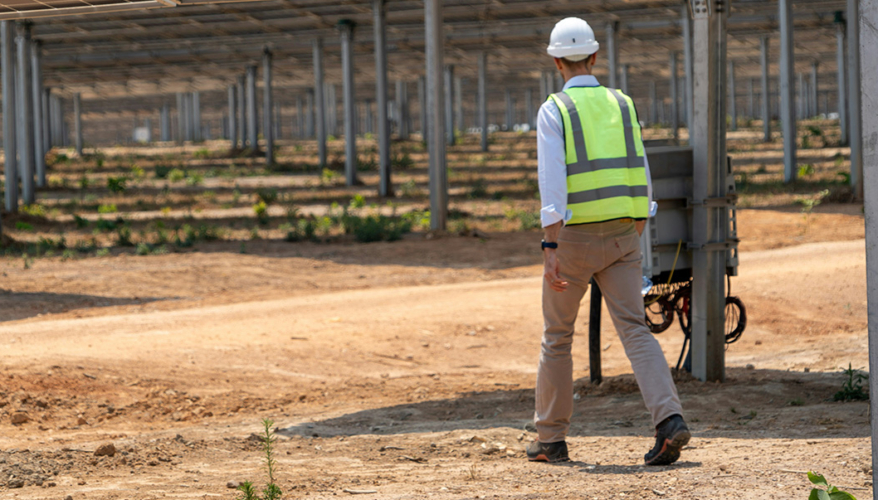
Engineer Overlooking Factory

Stop entering the same facility data in every compliance application.

Locus makes facility and site records the shared foundation for every compliance program — enter a location once and it is available everywhere, from air quality monitoring to waste tracking to water compliance, with no parallel maintenance required.

Manage the full lifecycle of regulated assets including the obligations that outlast active operations.

Locus connects assets to environmental obligations, remediation projects, Asset Retirement Obligations, and long-range financial exposure, providing defensible audit trails for assets managed over decades rather than years.

Give every compliance program accurate organizational context without maintaining separate people records in each tool.

Employee data, roles, business units, sector hierarchies, and product lines are managed once and referenced by every Locus application that needs to route tasks, assign responsibilities, or validate credentials.

Extend ERP controls into environmental and regulatory domains without rebuilding what you already have.

Locus integrates seamlessly with SAP and other ERP, financial, inventory, and business intelligence systems, eliminating duplicate data entry while connecting enterprise financial controls to the compliance obligations that regulated assets carry.

Maintain enterprise-wide governance without sacrificing operational flexibility at the site level.

Locus provides enterprise-wide visibility across business units, sites, and geographies while supporting the facility-level workflows and approval chains that local teams depend on. Consistent standards are enforced from the top, with the configurability that operations requires downstream.

Replace fragmented spreadsheets and the institutional knowledge they contain with a defensible system of record.

When facility hierarchies, asset histories, and organizational structures live in a configured cloud platform rather than in spreadsheets maintained by individuals, program knowledge survives staff changes and is accessible to everyone who needs it.

Working end-to-end, from
foundation to filed report

04 // Lifecycle

  • Define

    Establish the organizational and location hierarchy from enterprise down to individual sites, buildings, zones, and assets. Create facility records for plants, warehouses, exploration sites, addresses, and any location type your operations require. Build the asset inventory for equipment, machinery, pipelines, wells, vehicle fleets, and infrastructure. Set up the people and organization structure including employee roles, business units, sectors, and approval chains.

  • Connect

    Link facility records to permits, compliance obligations, remediation projects, and regulatory agencies. Associate assets with their environmental obligations, AROs, and financial exposure. Assign people to roles, credentials, and organizational units. Integrate with SAP, ERP, financial, and HRIS platforms via Locus APIs to synchronize enterprise data with the compliance foundation from the start.

  • Maintain

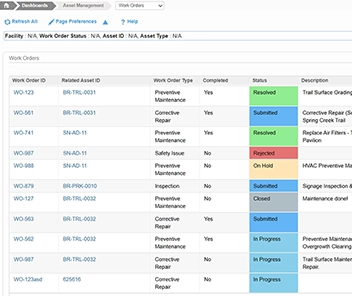
    Schedule and track preventive maintenance and work orders against asset records. Scan barcodes or QR codes in the field to access and update asset records instantly on mobile devices. Log consent decree milestones, long-term monitoring obligations, and capital project status. Store permits, inspection records, maintenance logs, and regulatory correspondence directly against the facility or asset they govern.

  • Share

    Every Locus compliance program draws from the shared records automatically. No application on the platform maintains a parallel version of a facility, asset, or person. The same foundation that tracks an active well also tracks its decommissioning program, its environmental reserves, and its post-closure obligations without switching systems or reconciling data.

Locus software simplifies compliance

05 // Feature Highlights

Facilities and Site Management

Locus manages data pertaining to facilities, locations, exploration sites, addresses, warehouses, plants, and any location type an organization needs to track. Facility records serve as the organizing context for compliance programs; permits attach to sites, monitoring obligations attach to locations, and inspection and audit schedules reference specific buildings or zones. When a new facility is added or an existing one is modified, every compliance program referencing that location reflects the change without requiring parallel updates. Integrated GIS and spatial intelligence display facility and asset locations on interactive maps, supporting geographic visualization for regulatory oversight, capital planning, and multi-agency reporting. Integrated document management stores permits, certificates, consent decrees, inspection findings, and compliance correspondence directly against the facility they govern, accessible at any point without reconstructing files.

Permit Management →
Task and Compliance Module →
Locus GIS+ →

Asset and Equipment Management

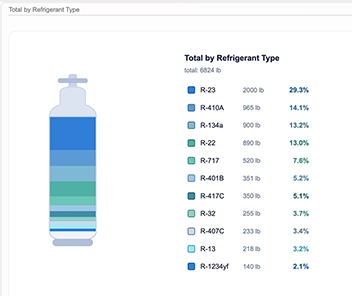
Locus Asset Management connects assets, facilities, projects, environmental obligations, and financial exposure in a single audit-ready platform, managing assets from active operations through idle status, retirement, and post-closure. Asset records include equipment type, asset class, lifecycle status, maintenance history, work order logs, environmental obligations, Asset Retirement Obligations, environmental reserves, and associated remediation projects. For oil and gas and energy organizations, Locus tracks upstream, midstream, and downstream assets including facilities, wells, pipelines, and terminals, linking environmental obligations and decommissioning programs to asset lifecycles. For utilities, Locus manages distributed infrastructure and capital programs under strict regulatory oversight, supporting GIS-driven planning and multi-agency audits. For public sector organizations, Locus supports consent decrees, long-term monitoring, and remediation site management with traceability and defensible reporting. Inventory management connects spare parts, materials, and supplies to the assets they support, maintaining a complete picture of what is on hand, what is needed, and what has been consumed across every regulated facility.

Refrigerant Management →
Air Management →
Unified Assets →

Field Operations and Lifecycle Continuity

Long-lived facilities align with time-bound projects including remediation, decommissioning, capital upgrades, and asset retirement, preserving lifecycle intelligence and historical context across programs so the transition from active operation to closure does not break the chain of documentation. Teams in the field scan barcodes or QR codes on assets to access and update records instantly on mobile devices, eliminating selection errors for organizations managing large asset inventories. Maintenance scheduling and work order management run within the same system, maintaining a continuous record of maintenance activity alongside the compliance and financial documentation that regulated assets require.

Locus Mobile →
Locus GIS+ →

People and Organization Management

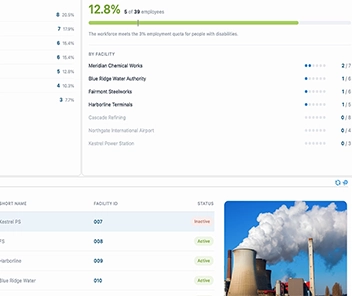
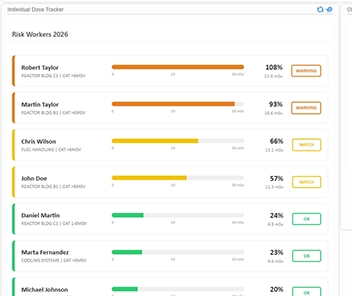
Locus manages organization-related information including employee data and roles, business units, sectors, hierarchies, and product lines. The organizational structure defined here is the same structure that every compliance program uses to route tasks, assign responsibilities, manage approval chains, escalate alerts, and identify the right contact for each obligation. When a task requires a specific role or a regulatory notification needs to reach a named individual, the people records in Locus determine routing consistently and automatically across every program. In compliance programs involving licensed or certified personnel — such as the CCC/Backflow Prevention program where licensed testers submit inspection results — Locus tracks individual credentials and qualifications, and validation prevents submission of work without current credentials on file. Document management stores role-specific qualifications, training records, and compliance-relevant documentation against individual people records.

Safety and Incident Management →
CCC/Backflow Prevention →
Audits and Inspections →

Financial and Regulatory Alignment

Traditional EAM and CMMS tools focus on maintenance but fall short when regulated assets carry financial obligations that span decades. Locus closes that gap by supporting environmental, regulatory, operational, and financial requirements in one platform. Asset Retirement Obligations, environmental reserves, service orders, compliance obligations, and long-range financial planning are tied directly to asset data, giving EHS, operations, finance, and executive teams a shared, current view of the organization's regulated asset exposure. Faster, better-informed decisions follow when the financial and regulatory picture is visible in the same system that manages the underlying assets. This capability is particularly valuable for organizations managing assets under consent decrees, remediation programs, or post-closure monitoring where the financial exposure outlasts the operational life of the asset by years or decades.

ESG Reporting →
Unified Assets →

Enterprise System Integration

Locus integrates seamlessly with SAP and other ERP, financial, inventory, and business intelligence systems — extending ERP controls into environmental and regulatory domains while eliminating duplicate data entry. When SAP or another enterprise system holds the system of record for facilities, equipment, or people, Locus APIs synchronize that data into the compliance platform so every program has current, accurate records. Data can also be loaded through mobile input forms, supply chain surveys, and file uploads in multiple formats including XLS, TXT, and EDD. Locus integrates with PowerBI and Tableau, enabling organizations to surface asset, facility, and people data in enterprise reporting environments alongside financial and operational data. Compliance outputs generated in Locus such as permit records, maintenance history, ARO documentation, and environmental reserves flow back to financial and enterprise systems through the same integration architecture.

Locus API Integrations →
Configuration Workbench →

Professional working on laptop beside servers

06 // Neno Duplan, Founder and CEO, Locus Technologies

"Locus OneView eliminates the blind spots

...and redundant efforts that prevent companies from transforming environmental data into business intelligence."

This is just one app on a platform built for your entire EHS and ESG program

07 // Truly Unified Platform

Locus = No Data Silos

A regulated asset does not have one program — it has many. An oil and gas facility may carry air quality permits, waste generation records, water discharge obligations, safety incident history, and remediation liabilities simultaneously. When all of these programs reference the same facility and asset records in Locus, the compliance picture across the enterprise is coherent and current rather than assembled from parallel datasets that require periodic reconciliation. The data that drives regulatory reporting is the same data that drives daily operations, because there is only one record. For organizations managing post-closure obligations, long-term monitoring commitments, or consent decree milestones, Locus maintains the connection between the specific asset or facility and the obligation it carries, giving compliance, finance, and executive teams a single, defensible source of truth for the organization's full regulated asset exposure.

All Locus apps share a unified data layer

09 // Locus Ecosystem

Air Quality Air Emissions Management Software for Title V, NSR, NESHAP, and Permit Compliance
Waste Management Standard and hazardous waste management software for regulated enterprises
GHG Management GHG Management Software for Regulatory Reporting, Carbon Accounting, and Emissions Compliance
Locus Water Software Water quality monitoring software for utilities and industrial operators
Safety & Incident Management Safety & incident management software for OSHA, FRA, and enterprise EHS compliance
Refrigerant Management Manage compliance, chronically leaking systems reporting, and ESG reporting
Audits and Inspections Audit and Inspection Management Software for Enterprise EHS Programs
ESG Reporting ESG Reporting Software for Organizations That Need Their Disclosures to Hold Up
Full Locus Ecosystem Browse the complete collection of pre-built applications

10 // Software Demonstration

See Locus Facilities, Sites, Assets, & People in Action

Regulated asset environments vary by industry, by asset class, by the length of the obligations they carry, and by the enterprise systems they already have in place. Talk to a Locus specialist who can show you how the platform handles your specific asset types, organizational structure, and compliance programs, and how it connects to the enterprise systems your organization already uses.
Request a Personalized Demo

Frequently Asked Questions

11 // FAQ

Locus software is purpose-built for organizations managing regulated assets over long lifecycles under environmental, safety, or financial reporting obligations. This includes oil and gas companies managing upstream, midstream, and downstream assets; utilities managing distributed infrastructure and capital programs; and public sector organizations managing remediation sites, consent decrees, and long-term monitoring obligations. The platform is also well suited to any multi-site organization managing assets whose compliance and financial obligations extend beyond active operations.

Locus manages data pertaining to facilities, locations, exploration sites, addresses, warehouses, plants, and any location type an organization needs to track. Facility records carry their associated permits, compliance obligations, consent decrees, and document archives. Every compliance application that references a location draws from these shared records.

Asset records include equipment type, asset class, lifecycle status from active operations through idle, retirement, and post-closure, maintenance history, work order logs, compliance obligations, Asset Retirement Obligations, environmental reserves, and associated remediation projects. Teams use mobile devices to scan barcodes or QR codes on assets to access and update records instantly in the field.

Locus supports Asset Retirement Obligations, environmental reserves, service orders, compliance obligations, and long-range financial planning tied directly to asset data. This gives EHS, operations, finance, and executive teams a shared view of the organization's regulated asset exposure — including obligations that extend well beyond the operational life of the asset — in the same system that manages daily compliance activity.

Locus manages employee data and roles, business units, sectors, hierarchies, product lines, and approval chains. The organizational structure in Locus is the same structure that compliance programs use to route tasks, validate credentials, and manage oversight across geographies. In programs involving licensed or certified personnel, Locus tracks individual credentials and ensures work cannot be submitted without current qualifications on file.

Locus integrates seamlessly with SAP and other ERP, financial, inventory, and business intelligence systems, extending ERP controls into environmental and regulatory domains while eliminating duplicate data entry. Data can be loaded through mobile input forms, supply chain surveys, and file uploads in formats including XLS, TXT, and EDD. Locus also integrates with PowerBI and Tableau for enterprise reporting. When SAP or another enterprise system holds the system of record for facilities, equipment, or people, Locus APIs synchronize that data into the compliance platform so every program has current, accurate information.

Yes. Locus adapts to complex organizational structures, approval chains, asset classes, and workflows through configuration. Power users can evolve models and processes without custom code or redevelopment. The platform provides enterprise-wide visibility while supporting facility-level workflows, enabling consistent governance across business units, sites, and geographies without sacrificing operational flexibility.