
01 // Safety & Incident Management

Report it fast. Investigate it thoroughly. Prevent it next time.

02 // Purpose-built software

Safety & incident management software for OSHA, FRA, and enterprise EHS compliance

Every workplace incident, from a minor first aid case to a serious injury, from a chemical spill to a near miss, carries the same obligation: document it completely, investigate it thoroughly, and act on what you learn.

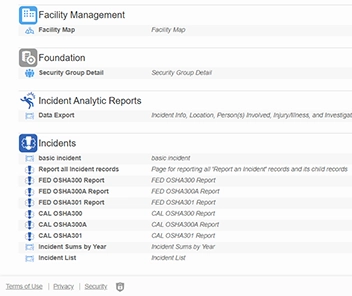
The Locus Safety & Incident Management app gives EHS teams a single, cloud-based platform for managing everything from spills and fires to injuries and illnesses. Unique workflows tailored to each incident type guide users through reporting, investigation, root cause analysis, corrective action, and regulatory disclosure — all the way to closure. And because the app runs on the Locus Platform, incident data connects natively to your full EHS program.
Built on Locus Platform

Locus Safety & Incident Management runs on the same metadata-driven platform that powers chemical inventory, waste management, spill management, audits, and ESG reporting. That means an incident is never an isolated record. The chemical involved is already in your inventory. The inspection that could have caught the condition is already in your audit program. The corrective work order that needs to be dispatched is already a service order.

The application integrates with ERP systems and monitoring tools to eliminate data silos and leverage facility and employee data without redundant entry. It is fully configurable by power users, meaning the workflows, notifications, forms, and dashboards all adapt to your incident types and organizational structure without custom development.

Platform Overview

Why EHS teams choose Locus Safety & Incident Management

Engineer working with tablet in the field

Track every incident type across all facilities in one system.

Occupational injuries, illnesses, spills, fires, property damage, near misses, bird strikes are all captured in one platform, cradle to grave, from any site.

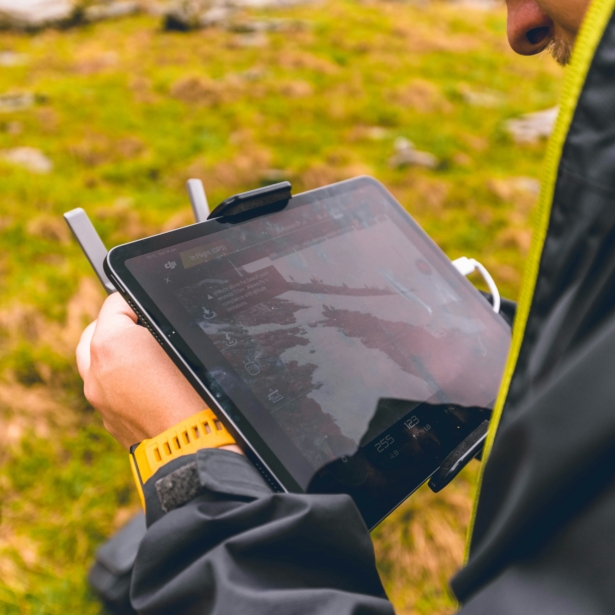
Report incidents from the field immediately, with photos and documents.

Mobile data collection means incident details are captured at the scene — not reconstructed hours later from memory or paper notes.

Safety Inspection

Investigate incidents with structured, multi-method root cause analysis.

5 Whys, Fishbone, Fault Tree, SCAT analysis, and job hazard analysis are built in, guiding investigators to the real cause, not just the proximate event.

Industry specific environmental data management & EHS software applications

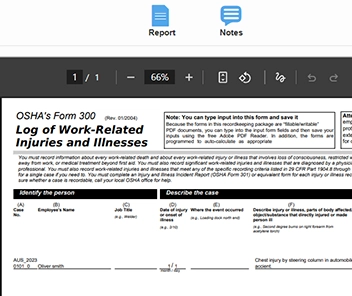
Auto-populate OSHA 300, 300A, and 301 forms with a single click.

No manual data transfer. No transcription errors. When it is time to submit, the forms are already populated from the same data driving daily operations.

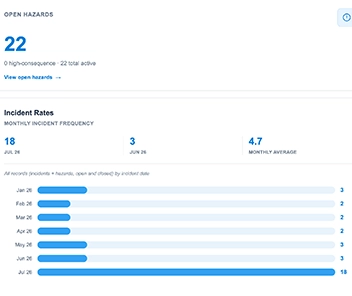
Monitor TRIR, DART, and other safety metrics in real time.

Filter dashboards by OSHA-reportable incidents, first aid cases at a specific plant, lost workdays across all facilities, or any other subset your safety program requires.

Assign and track corrective actions through to verified closure.

Every corrective action has an owner, a due date, and an automated notification. Nothing is considered complete until it is verified and linked back to the originating incident.

Connect incident data to your full EHS and ESG program.

Safety incidents involving chemicals, waste, spills, or regulated equipment all share data natively with the relevant Locus compliance programs.

05 // Neno Duplan, Founder and CEO, Locus Technologies

"When it comes to incident management, company managers should

... be able to have an easily accessible, all-encompassing view of what's occurring across all of their different facilities."

Managed from end-to-end

06 // Incident Lifecycle

  • Report

    Log the incident immediately from any device — in the field or at the office. Capture type, severity, affected personnel, equipment involved, and initial details. Attach photos and documents. Notify the right parties automatically based on incident level.

  • Investigate

    Assign investigators and action items. Use built-in root cause analysis tools including 5 Whys, Fishbone, Fault Tree, and others to document findings systematically. Questionnaires guide the team through every factor relevant to the incident type.

  • Act

    Create corrective actions from investigation findings, assign them to owners with due dates, and track completion with automated notifications. Tag incidents as OSHA Recordable or Not Recordable. Generate OSHA 300, 300A, and 301 forms or FRA reports with one click.

  • Prevent

    Analyze trends across incident types, root causes, facilities, and time periods. Identify systemic hazards. Schedule inspections and risk assessments. Use what you learn from every incident to strengthen the conditions that prevent the next one.

Locus software simplifies compliance

07 // Feature Highlights

Incident Capture and Classification

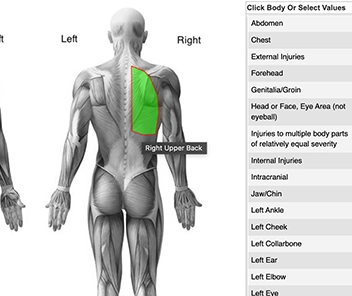
Since every incident is unique, generic intake forms cannot adequately capture the scene. Locus organizes incidents into categories — occupational injury and illness, spills, first aid cases, property damage, fire, bird strikes, near misses and great catches, and more — and displays the relevant sections of the record for each type automatically. An injury record prompts users for treatment location, body part, injury type, and lost time. A spill record connects to the Spill Management app and prompts users for material and quantity. A near miss record captures the hazard condition and location. Incidents are tagged as OSHA Recordable or Not Recordable from the moment of entry if desired, keeping your log current without a separate review step. Related claims, documents, and multimedia files attach directly to the record.

Spill Management →
Chemical Inventory →

Investigation and Root Cause Analysis

A thorough investigation is what separates a compliance record from an actionable insight. Locus makes it straightforward to involve multiple parties in an investigation, assign action items to team members, and track the investigation through to closure. Built-in questionnaires guide users through an effective crisis response that considers risk factors and root causes relevant to the specific incident type. Multiple root cause analysis methods are supported: 5 Whys, Fishbone, Fault Tree, and SCAT analysis, as well as job hazard analysis. Mobile access means investigation data and photos can be collected at the scene rather than reconstructed after the fact. Every step of the investigation is logged against an authorized user, date, and timestamp — creating an audit trail that is defensible under regulatory or legal scrutiny.

Audits and Inspections →
Service Orders →

Corrective Actions and Workflow Automation

Identifying the cause of an incident is only half the work. The other half is making sure something is done about it. After concluding investigation and analysis, users create corrective actions in Locus software, assign them to individuals or managers, and configure automated notifications at selected intervals before and after due dates. Optional configurable workflows automatically assign conditional tasks and subsequent reporting to responsible parties based on the incident type and outcome. When a corrective action requires a field technician, the platform's connection to Service Orders routes the dispatch natively. Every action is tracked to verified closure and linked back to the originating incident, which closes the loop between what happened and what was done about it.

Service Orders →
Task and Compliance Module →
Workflow Automation →

OSHA and FRA Regulatory Reporting

Regulatory reporting should not require re-entering data that already lives in your incident records. Locus auto-populates OSHA 300, 300A, and 301 forms with the relevant data from incident records — ready for submission, with impeccable records and compliance checklists providing rock-solid audit trails. For railroad operators, Locus auto-populates FRA forms 54, 55, 55a, 56, 57, 81, 97, and 98, reflecting the railroad-specific incident management module Locus introduced in 2013. State forms can also be generated with the relevant data. The same incident records that power daily operations are the source for every regulatory submission. There’s no version discrepancy, no manual transfer, no transcription errors.

EHS Compliance Solutions →
Task and Compliance →

Two women on a laptop

Safety Metrics, Dashboards, and Trend Analysis

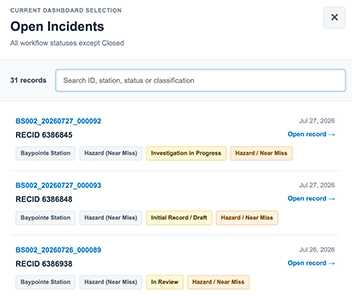
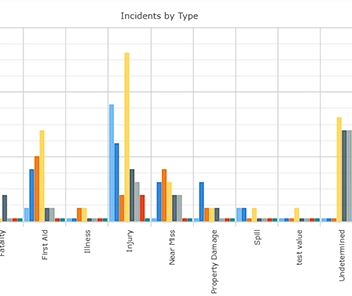
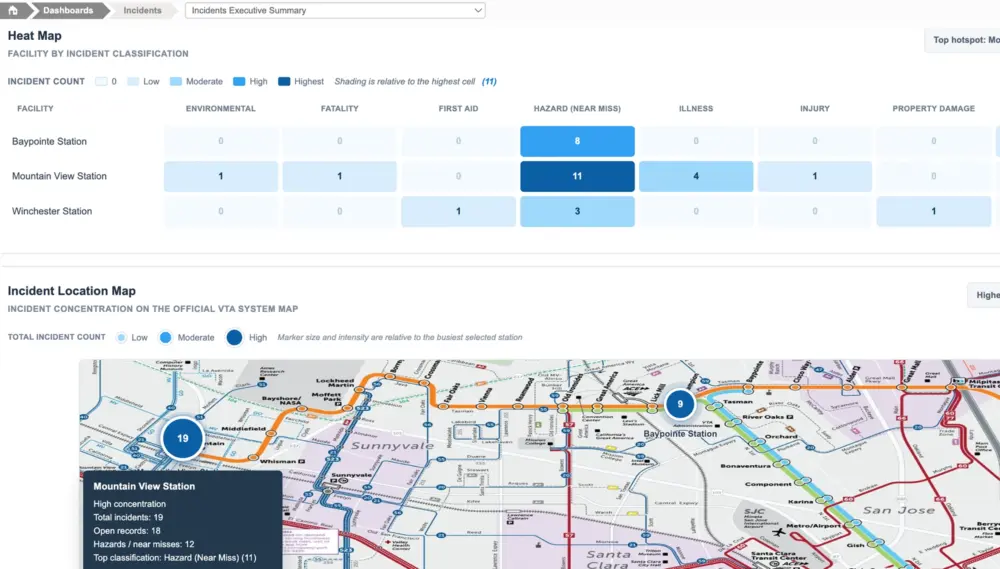
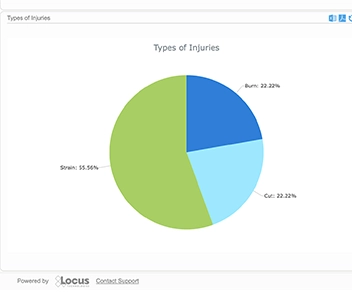
Locus configurable dashboards and tables provide clear views of all incident data, filterable by OSHA Recordable status, TRIR, all first aid incidents at a specific plant, lost or restricted workdays across all facilities, or any other subset your safety program requires. Trends are visible across incident types, root causes, response times, resolution effectiveness, team performance, and potential hazards. The data can be analyzed company-wide or drilled down by location, region, business group, or facility type. When it is time to present to management or respond to a regulatory inquiry, the data is organized, current, and ready.

Dashboards and Reporting →
Configuration Workbench →

Platform Integration and Proactive Risk Management

The most consequential benefit of running safety and incident management on the Locus Platform is not what the app does with an incident after it happens. It is what the rest of the platform does to help prevent it. Schedule and record regular inspections using results to complete risk assessments and create follow-up tasks. Connect to ERP systems and monitoring tools to leverage facility and employee data. Identify safety hazards, unsafe conditions, incident trends, and key compliance metrics with fully configurable EHS dashboards. When an incident does occur that involves a chemical spill, a regulated waste, or a refrigerant exceedance, the incident record connects natively to the relevant Locus compliance programs so the safety investigation and the environmental compliance response are part of the same unified system of record.

Data Connectivity & Integrations →

Locus Safety & Incidents is one app on a platform built for your entire EHS and ESG program

08 // Truly Unified Platform

Locus = No Data Silos

A safety incident rarely exists in isolation. The spill that became an environmental incident began as a chemical storage issue. The workplace injury that triggered an OSHA investigation was preceded by an inspection finding that was not followed up. The corrective action that closed an incident record required a field technician and a service order. In Locus, every one of those connections is native.

When an inspection identifies a hazardous condition, the finding connects to the incident program before anything escalates. When an incident involves a regulated chemical or a waste event, the relevant compliance records are already in the same platform. When a corrective action requires field work, Service Orders dispatches the technician and tracks the closure in the same system where the incident was recorded.

This is just a sample of what is possible. Locus supports an ecosystem of more than 30 purpose-built apps. Your Safety and Incident Management implementation can connect to new programs as your EHS needs grow — all on the same platform, and all sharing the same data.

All Locus apps share a unified data layer

09 // Locus Ecosystem

Audits & Inspections Audit and Inspection Management Software for Enterprise EHS Programs
Spill Management Spill Management Software for Incident Tracking, Compliance, and Corrective Action
Chemical Inventory Chemical Inventory Management software for Complex Operations
Waste Management Software Hazardous Waste Management Software for Regulated Enterprises
Refrigerant Management Refrigerant Management Software for Managing Compliance, Chronically Leaking Systems Reporting, and ESG Reporting
Service Orders Service Order Management Software for Field Operations, Compliance Response, and Beyond
ESG & Sustainability Reporting ESG Reporting Software for Organizations That Need Their Disclosures to Hold Up
Full Locus Ecosystem Browse the complete collection of pre-built applications.

10 // Software Demonstration

See Locus Safety & Incident Management in action

Safety incidents are consequential by definition. Evaluating the software that manages them deserves more than a recorded demo. Talk to a Locus EHS specialist who understands OSHA compliance, multi-site incident programs, and the regulatory demands of your industry. They will show you exactly how the platform handles your incident types, your investigation workflows, and your reporting requirements.
Request a Personalized Demo

Frequently Asked Questions

11 // FAQ

The app organizes incidents into multiple categories: occupational injury and illness, spills, first aid cases, property damage, fire, near misses and great catches, and more. Incidents can be tagged as OSHA Recordable or Not Recordable (and FRA Accountable or Reportable) at the point of entry. Different sections of the incident record appear automatically based on the type of incident, prompting users to capture exactly the information that is relevant to that specific event.

The app supports multiple structured root cause analysis methods, including 5 Whys, Fault Tree analysis, and others, as well as job hazard analysis. Built-in questionnaires guide investigators through each method, ensuring findings are documented systematically and linked back to the originating incident record.

Locus auto-populates OSHA 300, 300A, and 301 forms with incident data from the platform — ready for submission, with no manual re-entry. For railroad operators, the app auto-populates FRA forms 54, 55, 55a, 56, 57, 81, 97, and 98. State forms are also generated with the relevant data. Every submission is traceable back to a verified incident record, providing a rock-solid audit trail.

Configurable dashboards track TRIR, DART, lost workdays, restricted workdays, first aid incidents, and any other metric your safety program requires. Data is filterable by OSHA Recordable status, incident type, facility, region, business group, and time period. Trends in root causes, response times, resolution effectiveness, and team performance are all visible from the same dataset.

After completing an investigation and identifying what needs to change, users create corrective actions in Locus and assign them to individuals or managers with due dates. The platform generates automated notifications and reminders at configurable intervals. Optional workflows assign conditional tasks and subsequent reporting automatically based on incident type and outcome. Actions are tracked to verified closure and linked back to the originating incident record.

The app runs on the Locus Platform, sharing the same data layer as Chemical Inventory, Waste Management, Spill Management, Audits and Inspections, and Service Orders. An incident involving a chemical connects to Chemical Inventory. A spill incident connects to the Spill Management app. Corrective actions that require field technician dispatch connect to Service Orders. Inspection findings that escalate to incidents connect to the Audits and Inspections record. All connections are native with no custom integration required.

Yes. Incident data and photos can be collected on any mobile device while on site. The mobile experience works in the field for both initial incident reporting and investigation activities. Data captured on mobile syncs to the platform immediately, ensuring the record is current from the moment an incident is identified.