
01 // ESG Reporting

Sustainability reporting is no longer a ‘nice to have’

02 // Purpose-built Software

ESG reporting software for organizations that need their disclosures to hold up

Mandatory ESG disclosure has changed the data quality standard. CSRD, SEC climate rules, and California SB 253 require financial-grade GHG data, third-party assurance readiness, and audit trails that regulators and investors can actually follow. Locus Technologies ESG Reporting is an auditable, financial-grade solution that automates data collection, calculations, and sustainability disclosures across every major framework. It builds on Locus's robust environmental data management, EHS compliance, and water quality software, giving organizations a single system of record where sustainability data is validated before it reaches a report, and traceable long after it does.

Built on Locus Platform

Locus ESG Reporting runs on the same platform as Locus's 30+ apps for EHS compliance, water quality, and environmental data management. That architecture is the product's most important differentiator. When EHS compliance data, waste disposal records, discharge monitoring results, and water consumption data already live in Locus, they are available to the ESG Reporting application without extraction, reformatting, or reconciliation. The Scope 1 GHG emissions recorded in the Air Quality app flow directly into ESG calculations. Waste disposal quantities in the Waste Management app are immediately available for waste intensity disclosures. Water consumption tracked in Locus Water software support GRI 303, CDP Water, and CSRD E3 disclosures from the same validated record. Input data once. Report to every framework that needs it.

Platform Overview

Why sustainability teams choose Locus ESG Reporting software

Produce disclosures that survive third-party assurance review.

The audit trail in Locus software traces every reported figure back to its source — the meter reading, the fuel invoice, the waste manifest, the supplier survey — because that provenance is built into how the platform stores data, not generated on demand for auditors.

Stop re-entering data your EHS program already collected.

EHS compliance data, waste records, discharge monitoring results, and water consumption data already in Locus are available to ESG Reporting without extraction or reconciliation. The same validated record serves both programs.

Track exactly what matters for your organization's sustainability targets.

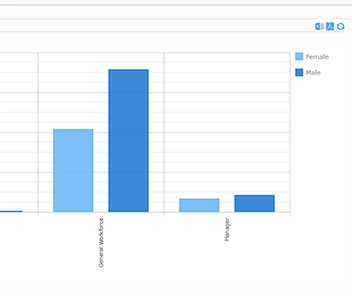
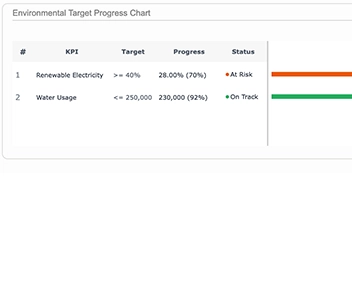
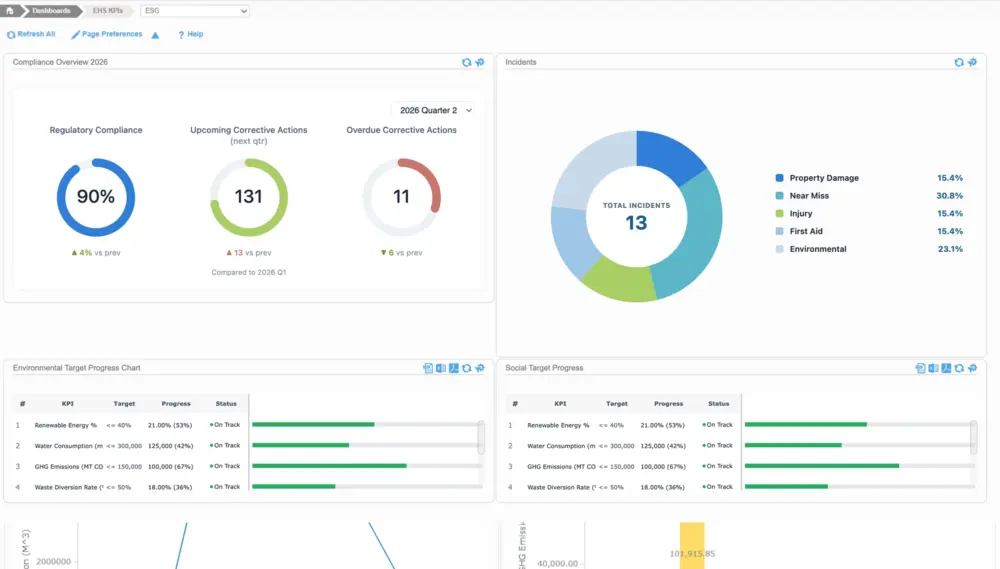
KPI dashboards and a materiality assessment module let organizations identify, rank, and track the ESG topics that are most material to their specific business, and compare stakeholder assessments across reporting periods.

Report to every framework from one data entry effort.

GRI, SASB, CSRD, CDP, SEC climate rules, California SB 253, TCFD, and ISSB all draw from the same validated Locus data set. Report templates are configurable by your team to match each framework's specific output requirements.

Collect Scope 3 data from suppliers without a separate process.

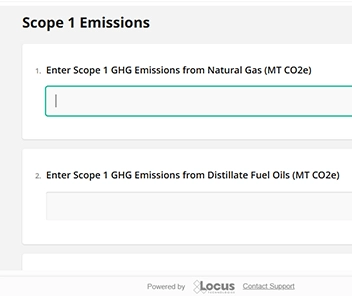
Configurable survey-style intake forms with automated reminders and conditional logic bring supplier emissions and sustainability data directly into the Locus GHG calculation environment, eliminating the manual collection and reconciliation cycle.

Adapt to new regulations without a software upgrade.

Report templates are configurable by your own team using Locus Configuration Workbench. When ESRS updates, when SB 253 reporting rules are finalized, or when a new framework is adopted, your team can update the template.

05 // Snetu Karania, Product Manager

"Locus is the only EHS/ESG software company whose GHG software development

...has been guided by certified GHG reviewers from the get-go. More than 14 years of emissions verification expertise is embedded in the software."

From Data Collection to Disclosure

06 // Lifecycle

  • Collect

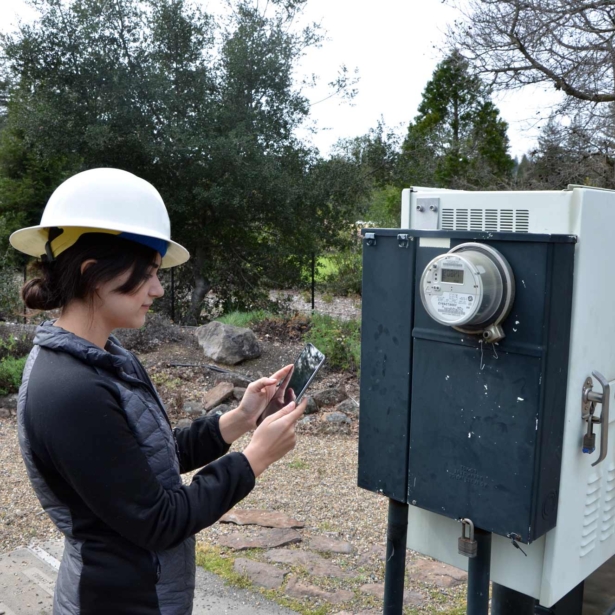
    ESG data flows into Locus from multiple sources simultaneously. EHS compliance programs, water management records, and waste tracking data already in Locus are available without re-entry. SCADA systems, ERP, finance, BI, and HR systems, IoT-enabled smart meters, mobile field devices, and laboratory imports are connected via API. Supplier Scope 3 data arrives through configurable survey-style intake forms.

  • Calculate

    Locus Technologies’ transparent, auditable calculation engine processes and summarizes data for reporting. GHG calculations apply standard or facility-specific methodologies using emission factor libraries that include US EPA, IPCC, and country-specific factors updated to the shifting global warming potential values. Every calculation step is documented with methodology references and emission factor sources.

  • Verify

    KPI dashboards surface milestones and areas requiring attention throughout the reporting period. Drill into GHG calculations to review or adjust methodology, conversion factors, and analytic models. Compliance calendars, task management, and automated reminders enforce accountability across the organization. The complete audit trail is accessible from the platform at any point.

  • Disclose

    Report templates accelerate ESG reports, sustainability disclosures, CSR reports, and GHG reports across all major frameworks. Organize by business unit, product line, facility type, geographic location, or any combination. Input data once and report to every applicable framework simultaneously (e.g. GRI, SASB, CSRD, CDP, SEC, and SB 253) without re-entry or reconciliation.

Locus ESG Reporting software simplifies disclosures

07 // Feature Highlights

GHG Verification

Scope 1, 2, and 3 GHG Data Collection and Calculation

Locus manages Scope 1, Scope 2, and Scope 3 GHG emissions in a single calculation environment. Scope 1 covers direct combustion, process emissions, and refrigerant releases. Scope 2 supports both location-based and market-based accounting for purchased electricity and heat. Scope 3 covers value chain categories defined in the GHG Protocol Corporate Value Chain Standard, with supplier data collected through the Locus ESG Survey Tool. Facility-level resource consumption data — electricity, fuel, water, waste, and production output — is managed through the Resource Management Module and flows directly into ESG calculations and disclosure outputs without manual bridging. All calculations are documented with methodology references and emission factor sources, giving third-party assurance providers the documentation trail they require. For the full description of Locus's GHG calculation engine, emission factor libraries, and regulatory GHG program support, see the GHG Management page.

GHG Management →
CSRD Disclosures →
ESG and Sustainability Frameworks →

Materiality Assessment

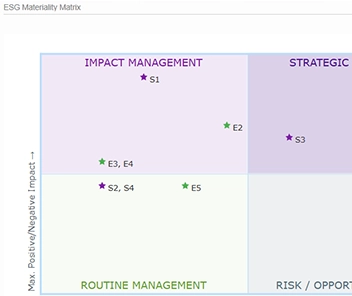
Understanding which ESG topics are most material to the business is the starting point for any credible sustainability program. Locus prompts stakeholders to rank ESG topics by their relative importance to the organization and their potential impact. Stakeholder input is aggregated and displayed graphically or in tabular form to help organizations prioritize their ESG initiatives with confidence. The double materiality assessment required under CSRD, which spans the company's financial performance and its impact on society and environment, can be handled by our ESG application and CSRD tools. Future assessments can be compared to historical input to demonstrate business transformation over time.

CSRD Disclosures →
ESG and Sustainability Frameworks →

Multi-Framework Reporting and Configurable Templates

Locus ESG reporting tools accelerate ESG reports, sustainability disclosures, CSR reports, and GHG reports across all major voluntary and mandatory frameworks. Organize reports by business unit, product line, facility type, geographic location, or any reporting hierarchy the organization requires. Templates adapt to different jurisdictions, frameworks, and stakeholder audiences. Input data once and report to federal, state, and voluntary programs simultaneously, including GRI, SASB, CSRD, CDP, SEC climate rules, and California SB 253. Templates are configurable by your own team using Locus Configuration Workbench; when framework requirements evolve, your team updates the template without waiting for a new release.

ESG and Sustainability Frameworks →
CSRD Disclosures →
GHG Management →
Configuration Workbench →

Data Collection from External Systems and Suppliers

The data required by ESG reports is rarely in one place. Locus collects it from everywhere it lives. API connectors link to SCADA systems, ERP, finance, BI, and HR systems. IoT-enabled smart meters provide real-time energy and utility data. Mobile devices support field data collection. Laboratory imports bring analytical results directly into the system. For Scope 3, supplier emissions and sustainability data arrives through the Locus ESG Survey Tool — configurable intake forms with multilingual support, conditional logic, and automated completion reminders— so supplier data flows directly into GHG calculations rather than arriving in spreadsheets that require manual consolidation. Supplier data flows directly into GHG calculations rather than arriving in spreadsheets that require manual consolidation. Social and governance data, including employee satisfaction, equal pay, DE&I metrics, community engagement, and corporate governance practices, connects via API connectors to HR and finance systems.

Locus Mobile →
GHG Management
CSRD Disclosures →
Sophare AI Partnership →

Audit Trail and Assurance Readiness

When a third-party assurance provider asks for documentation, it’s easily called up from Locus Platform. The answer doesn’t have to be reconstructed from spreadsheet archives or email threads. The calculation engine provides a single consolidated view of all input data, referenced factors, and calculations that produced every reported figure. Raw data is traceable back to the user input, integrated external database, utility API, supplier attestation, or any other source. Every data transformation is time-stamped and user-attributed. Compliance calendars, task management, and ESG auditing tools verify engagement, communication and training, performance improvements, and adherence to policies across the organization. The result is a disclosure that can be defended at any level of regulatory or investor scrutiny.

ESG and Sustainability Frameworks →
Task and Compliance Module →
Audits and Inspections →

08 // Grant Ferrier, President, Environmental Business Journal, on Locus Technologies

"As one of the early SaaS leaders in net-zero digital solutions for ESG reporting,

... Locus continues to provide value to companies that want to be credible with their carbon reporting and sustainability software."

Locus ESG software is one app on a platform built for your entire EHS and ESG program

09 // Truly Unified Platform

Locus = No Data Silos

The organizations that produce the most credible ESG disclosures are not the ones with the largest sustainability teams. They are the ones whose underlying data is structured, validated, and audit-ready before the disclosure deadline arrives. In Locus, that means the EHS compliance data, water quality records, waste tracking, and emissions inventory that operational programs generate every day are the same data that ESG reports draw from. Nothing is re-entered. Nothing is reconciled from disconnected systems. The sustainability director and the compliance engineer work from the same validated record.

For the frameworks that govern what goes into those disclosures (e.g. CSRD, SEC climate rules, GRI, CDP, SB 253, and others), see the Locus Solutions by Framework page, which describes each framework and how Locus addresses its specific requirements in detail.

All Locus apps share a unified data layer

10 // Locus Ecosystem

GHG Management GHG Management Software for Regulatory Reporting, Carbon Accounting, and Emissions Compliance
Air Quality Air Emissions Management Software for Title V, NSR, NESHAP, and Permit Compliance
Waste Management Standard and hazardous waste management software for regulated enterprises
Industrial Water Industrial Water Management Software for Manufacturers and Industrial Facilities
Refrigerant Management Manage compliance, chronically leaking systems reporting, and ESG reporting
Sustainable Construction Sustainable construction software for embodied carbon tracking, clean construction compliance, and material circularity
CSRD Disclosures CSRD Compliance Software for Double Materiality, ESRS Data Collection, and Assurance-Ready Reporting
Facilities and Asset Management Sites, Facilities, Assets, and People Management for EHS, ESG, and Environmental Compliance Programs
Full Locus Ecosystem Browse the complete collection of pre-built apps

11 // Software Demonstration

See Locus ESG Reporting in Action

Every Locus ESG demo is led by a team member with GHG experience who understands the frameworks without needing to be briefed. Tell them what you are reporting — CSRD, SB 253, CDP, GRI, SEC climate rules, or a combination — and they will show you exactly how Locus handles it.
Request a Personalized Demo

Frequently Asked Questions

12 // FAQ

Locus sustainability and ESG reporting software supports GRI Standards, SASB industry-specific metrics, the EU Corporate Sustainability Reporting Directive (CSRD and ESRS), CDP Climate Change and Water Security questionnaires, SEC climate disclosure requirements, California SB 253 and SB 261, TCFD and TNFD, and ISSB/IFRS S1 and S2. All of these frameworks draw from the same validated Locus data set. Organizations report to multiple frameworks simultaneously without maintaining separate data collections for each.

Locus manages all three GHG scopes in a single calculation environment. Scope 1 covers direct combustion, process emissions, and refrigerant releases. Scope 2 supports both location-based and market-based accounting for purchased electricity and heat. Scope 3 covers value chain categories defined in the GHG Protocol Corporate Value Chain Standard, with supplier data collected through the Locus ESG Survey Tool. All calculations are documented with methodology references and emission factor sources. For a full description of the GHG calculation engine, emission factor libraries, and regulatory GHG program support, see the GHG Management page.

Locus's calculation engine maintains a complete provenance trail from every reported figure back to its source — the raw data input, the emission factor applied, the calculation methodology used, and the user and timestamp at every step. This documentation is built into how the platform stores data, not reconstructed on demand.

Configurable survey-style intake forms with conditional logic and automated completion reminders bring supplier emissions and sustainability data directly into the Locus calculation environment. Supplier responses are validated before submission is accepted. Data flows directly into Scope 3 calculations rather than arriving in spreadsheets that require manual consolidation.

EHS compliance data, waste disposal records, discharge monitoring results, and water consumption data already in Locus are immediately available to the ESG Reporting application without extraction or reconciliation. The Scope 1 GHG data recorded in the Air Quality app, the waste quantities in Waste Management, and the water consumption tracked in Locus Water all feed ESG calculations and disclosure outputs from the same validated record that EHS compliance teams use daily.

Yes. Locus Configuration Workbench lets your team update report templates to reflect regulatory changes or new framework requirements without submitting a change request and without waiting for a software release. When ESRS disclosure formats are revised, when SB 253 implementing regulations are finalized, or when a new CDP questionnaire format is published, your team makes the change.

Locus prompts stakeholders to rank ESG topics by their relative importance to the organization and their potential impact. Input is aggregated and displayed graphically or as a table to help organizations prioritize their ESG initiatives. Historical assessments can be compared across reporting periods to demonstrate how priorities and performance have evolved.