
01 // Sustainable Construction

The actual carbon footprint of your construction project. Not an estimate.

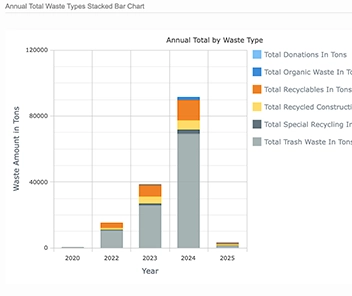
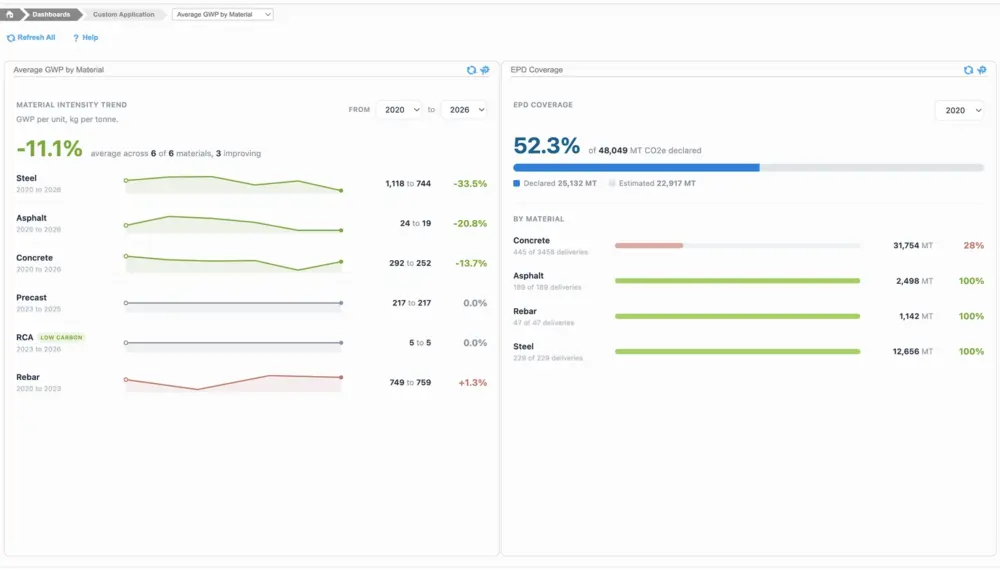
Locus Technologies clean construction and sustainable construction dashboard

02 // Purpose-built Software

Sustainable construction software for embodied carbon tracking, clean construction compliance, and material circularity

Buildings and infrastructure are among the largest sources of embodied carbon on the planet, and most of that carbon is locked in before the first day of operation. Locus Sustainable Construction software reveals the actual carbon footprint of development projects by tracking the Global Warming Potential and quantities of every building material used on site and calculating cumulative impacts across the full construction lifecycle. Armed with this clarity, contractors, materials engineers, and sustainability leaders can comply with low carbon targets, optimize material choices, demonstrate Buy Clean credentials, and build toward a greener future — project by project, material by material.
Built on Locus Platform

Locus Sustainable Construction sits at the nexus of voluntary and regulated emissions, operating in parallel with Locus apps for Scope 1 and 2 operational emissions, ESG reporting, waste management, water, and air quality all on the same unified platform. The application combines the advantages of off-the-shelf software with the Locus Platform's powerful configuration tools, so organizations get precisely the solution they need for their clean construction program without costly custom development. The app connects to EPD databases including the EPA and EC3 databases via API, and streams carbon data from construction equipment directly into the compliance record. SOC 2 Type 2 verified. Mobile-friendly. Built to scale from one project to an entire development portfolio.

Why construction and sustainability teams choose Locus

Calculate the actual CO2e of a project — not a prediction, not an average

Locus uses real EPD data and verified material quantities from electronic delivery tickets to produce as-built carbon footprints that hold up to regulatory scrutiny.

Manage EPD data for every carbon-intensive material entering the site.

Steel, glass, concrete mix constituents, Portland Cement, SCMs, coarse and fine aggregates, and asphalt — every material's GWP is connected to its actual quantity.

Track on-site emissions and noise for environmental and good-neighbor compliance.

Diesel and gasoline equipment emissions, fenceline particulate concentrations, real-time noise, and site water, fuel, and electricity consumption are all monitored from one platform.

Manage one project or an entire development portfolio in one system.

Contracts, permits, machinery, stakeholders, sites, emissions, and site surveys are aggregated in a secure, SOC 2 Type 2 verified cloud platform that is scalable from one project to 100-plus.

Demonstrate compliance with Buy Clean, LEED, Envision, and GSA programs.

Locus generates XLS, XML, and PDF compliance reports for third-party credentialing bodies including federal, state, county, and local program requirements.

Track material circularity and optimize construction waste diversion.

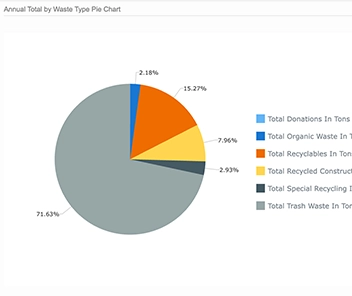
Locus calculates construction waste hauled to landfills, delivered to incinerators, or diverted to recycling — using EDD weight tickets to track the full circularity of construction materials.

Put preconstruction hazardous material surveys at your fingertips.

Lead and asbestos surveys, environmental site investigations, and other preconstruction monitoring records are centralized and accessible to every authorized team member.

Connect construction carbon data natively to Scope 1-2, ESG, and waste programs

Because the app runs on the Locus Platform, Scope 3 embodied carbon from construction feeds the same ESG reporting record as your operational emissions and waste disclosures.

05 // Neno Duplan, Founder and CEO, Locus Technologies

"The construction sector is one of the largest in the world economy, with about $10 trillion spent on construction-related goods and services every year.

...The construction and transportation sectors, when combined, generate the largest share of greenhouse gas emissions. We are happy that the Port Authority selected Locus Platform for the Port Authority's ambitious goal of leading the construction industry to reduce construction projects' carbon emissions."

From material delivery to
regulatory submission

06 // Lifecycle

  • Source

    Connect EPDs for chosen building materials from the EPA database, EC3, or supplier documentation via Locus API. Establish baselines for the GWP of every carbon-intensive material before it arrives on site.

  • Track

    Log electronic weight and site delivery tickets as materials enter the construction site. Track quantities of steel, glass, concrete mixes, Portland Cement, SCMs, aggregates, and asphalt against the connected EPD data in real time.

  • Calculate

    Locus calculates the actual CO2e for the project based on EPD data and verified material quantities. Construction stage emissions — diesel equipment, fenceline particulates, noise, fuel, and site utilities — are tracked simultaneously. End-of-life impacts from demolition and renovation are also captured.

  • Report

    Generate XLS, XML, or PDF compliance reports for Buy Clean, LEED, Envision, and GSA credentials. Run lifecycle stage analyses across Cradle to Gate, Cradle to Laid, or Cradle to Grave endpoints. Share results with design engineers, materials engineers, contractors, sustainability professionals, and regulators.

Locus Sustainable Construction simplifies embodied carbon tracking

07 // Feature Highlights

Environmental Product Declaration Management

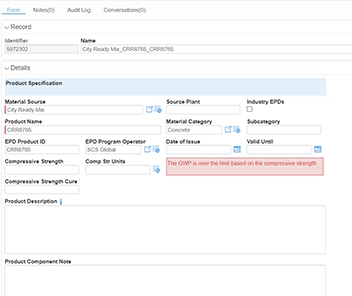
The foundation of any credible embodied carbon calculation is the Environmental Product Declaration. An EPD documents the Global Warming Potential of a single unit of a material — one cubic yard of concrete mix, one ton of structural steel, one square foot of glass — as produced by a specific manufacturer at a specific plant, reflecting the actual inputs to that material's production. Locus manages all EPD data for every carbon-intensive material entering the construction site: steel and glass products, concrete mix constituents including Portland Cement, Supplementary Cementitious Materials, coarse and fine aggregates, and asphalt. Construction contractors connect EPDs for their chosen materials into Locus directly, or source them from the EPA database or the EC3 database via Locus API. Locus then calculates the actual CO2e for the project based on that EPD data, electronic weight and site delivery tickets, and the verified quantities of incoming construction materials. The result is an as-built carbon footprint that reflects what actually happened — not an industry average, not a model estimate.

GHG Tracking →
ESG and Sustainability Metrics →

Construction Stage Emissions Tracking

The embodied carbon in materials is only part of the story. Construction activities themselves generate significant emissions and environmental impacts. Think of everything from the diesel engines on heavy equipment to the noise that affects surrounding neighborhoods to the particulate matter from excavation and material handling. Locus tracks all of it. Diesel and gasoline equipment emissions are captured with detailed engine and vehicle data. Fenceline particulate concentrations and real-time noise readings are monitored for compliance with local regulations and good-neighbor policies. Site water, fuel, and electricity consumption are logged as part of the construction stage record. This integrated view of both embodied and construction-stage impacts is what distinguishes a complete construction carbon program from a simple material-quantity spreadsheet.

Air Quality Management →
Spill Management →

Material Circularity and End-of-Life Tracking

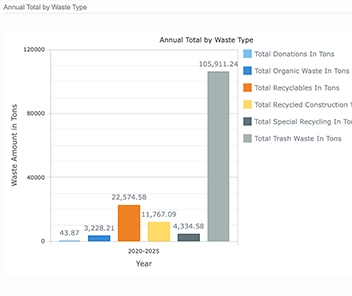
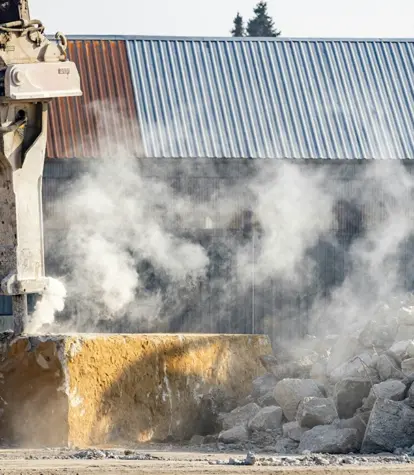
Embodied carbon impacts do not end when a building is complete. Demolition, renovation, and the processing of building materials at the end of their useful life (i.e., blasting, sorting, grinding, cleaning, and hauling) all carry carbon and environmental impacts that belong in a complete lifecycle account. Locus Sustainable Construction tracks those impacts through the end-of-life stage. It calculates the construction waste that is hauled to landfills, delivered to incinerators, or diverted to recycling centers, using contractors' EDD weight tickets as the source of record. The circularity of construction materials is tracked and reported. This yields the data required for programs that set minimum diversion targets, such as the Port Authority's Clean Construction Program, which requires diverting a minimum of 75 percent of concrete, asphalt, and steel construction waste from landfills.

Waste Management →

Lifecycle Stage Analysis

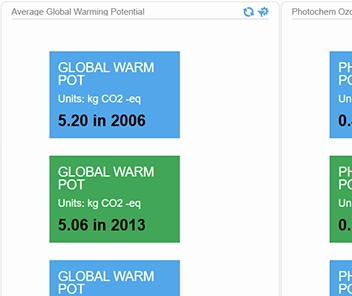
Lifecycle boundaries matter in embodied carbon accounting. A Cradle to Gate calculation stops at the factory exit. Cradle to Laid includes transportation and installation at the construction site. Cradle to Grave extends through end-of-life processing and disposal. Different programs, clients, and regulators require different endpoints. Locus is designed with the flexibility to manage EPD and GHG data from any of those endpoints: Cradle to Gate, Cradle to Laid, and Cradle to Grave. This allows for meaningful comparison among business-as-usual scenarios, low-carbon design alternatives, and actual low-carbon construction outcomes. The same platform that tracks what was specified in the design phase can demonstrate what was actually delivered in execution. This closes the loop between sustainable design and sustainable construction.

GHG Tracking →
ESG and Sustainability Metrics →
CSRD Disclosures →

Compliance Reporting for Buy Clean, LEED, Envision, and GSA

XLS, XML, and PDF compliance reports formatted for submission to third parties for Envision, Buy Clean, and LEED credentials, as well as for federal GSA programs and state and local clean construction requirements. Because the reports draw from the same verified material quantities, EPD data, and as-built calculations that power the daily compliance record, there is no separate report-building exercise when a submission deadline arrives. The data is already there, already organized, and already connected to the material and project records that auditors request. As the US EPA label program for low embodied carbon construction materials expands and reporting requirements grow more specific, the Locus Platform can be easily configured to keep pace.

ESG and Sustainability Metrics →
CSRD Disclosures →
Air Quality Management →

Centralized Project and Site Management

Sustainable construction programs involve more stakeholders, more data types, and more handoffs than almost any other compliance program. Design engineers, materials engineers, contractors, suppliers, sustainability professionals, regulators, and environmental consultants all need access to different parts of the same record. Locus aggregates all relevant information in one centralized, secure, cloud-based platform for contracts, permit requirements, machinery, stakeholders, sites, emissions, site surveys, and other environmental monitoring data. Authorized users log in from any device to view custom dashboards, run detailed reports, and audit calculations. Preconstruction surveys for hazardous materials — including lead and asbestos — are also kept within the same system. The platform facilitates communication among all parties, serving as a single source of truth for every aspect of environmental compliance and sustainability during construction.

Audits and Inspections →
Service Orders →
Task and Compliance Module →

08 // Dorian Bailey, Customer Success Director, Locus Technologies (former Chief of Clean Construction, Port Authority of NY and NJ)

"While the rollouts of the EPA label program will focus on A1 to A3 stages of a Life Cycle Assessment, Locus software is designed with flexibility

... to manage GHG and other EPD data from your choice of endpoints: Cradle to Gate, Cradle to Laid, and Cradle to Grave. Net zero ambitions are generally limited to operational carbon, like a building's energy use, so we are pleased to help A/E and Construction Contractors simplify the work of reducing embodied carbon as well."

Software built on deep domain knowledge

09 // Built by experts. Backed by the Locus Platform.

Locus Sustainable Construction was designed by someone who has done this work

Dorian Bailey spent more than 25 years in environmental programs, sustainable construction, and materials science before joining Locus Technologies. As Chief of Clean Construction for the Port Authority of New York and New Jersey — operator of some of the most complex infrastructure projects in the United States — she was instrumental in developing sustainability tracking at the construction stage, including material circularity, the quantification of on-site diesel emissions, and the embodied carbon of construction materials.

An independent software developer building truly unified solutions

That experience is not background context. It is the foundation of how this product was designed. When Locus Sustainable Construction tracks a concrete mix's embodied carbon against the actual quantities delivered by site ticket, or computes the carbon impact of construction stage diesel against a fenceline particulate monitoring record, or generates a Buy Clean compliance submission for a federal project — those workflows reflect the judgment of someone who has managed exactly those programs at scale.

Sustainable Construction is one app on a platform built for your entire EHS and ESG program

10 // Truly Unified Platform

Locus = No Data Silos

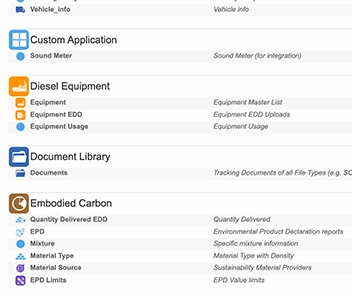
Sustainable construction does not exist in a silo. The embodied carbon from materials feeds the ESG report. The construction waste stream connects to the waste management program. The diesel emissions from construction equipment feed the air emissions record. In Locus, all of those connections are native — because every app shares the same data layer. Locus supports an ecosystem of more than 30 purpose-built apps. Your Sustainable Construction implementation can connect to new programs as your portfolio and reporting obligations grow — all on the same platform, and all sharing the same data.

All Locus apps share a unified data layer

11 // Locus Ecosystem

GHG Tracking GHG management software for regulatory reporting, carbon accounting, and emissions compliance
ESG and Sustainability Metrics ESG reporting software for organizations that need their disclosures to hold up
Waste Management Standard and hazardous waste management software for regulated enterprises
Air Quality Air emissions management software for Title V, NSR, NESHAP, and permit compliance
Water and Wastewater Software Water quality monitoring software for utilities and industrial operators
Audits and Inspections Audit and Inspection Management software for enterprise EHS programs
Full Locus Ecosystem Browse the complete collection of pre-built applications.

12 // Software Demonstration

See Locus Sustainable Construction in action

Clean construction programs succeed or fail on the quality of their data. Talk to a Locus specialist who has managed embodied carbon programs at the largest infrastructure agencies in the country — and can show you how the software handles your material types, your program requirements, and your compliance reporting obligations.
Request a Personalized Demo

Frequently Asked Questions

13 // FAQ

Embodied carbon refers to the greenhouse gas emissions associated with manufacturing, transporting, and installing the materials in a construction project. This differs from the operational carbon from the energy used to run a building after it is complete. The construction and transportation sectors combined generate the largest share of global greenhouse gas emissions. Most net zero programs have historically focused on operational carbon, leaving embodied carbon underreported. Buy Clean, LEED, Envision, GSA, and an expanding number of state and local programs now require accounting for embodied carbon, making accurate calculation an immediate compliance obligation rather than a voluntary reporting exercise.

An Environmental Product Declaration documents the Global Warming Potential of one unit of a construction material, as produced by a specific manufacturer. It reflects actual inputs to that material's production rather than an industry average. Locus manages all EPD data for every carbon-intensive material entering the construction site. Contractors connect EPDs directly to Locus software or source them from the EPA database or the EC3 database via Locus API. Locus then calculates the actual CO2e for the project by combining that EPD data with electronic weight and site delivery tickets recording the verified quantities of incoming materials.

Locus software is designed to manage embodied carbon data from any of three lifecycle endpoints: Cradle to Gate (through material manufacturing only), Cradle to Laid (including transportation and installation), and Cradle to Grave (including end-of-life processing and disposal). Different programs require different endpoints. Locus gives construction and sustainability teams the flexibility to run analyses at any of those stages and compare scenarios: business as usual, low-carbon design, and low-carbon construction.

The app generates XLS, XML, and PDF compliance reports for Envision, Buy Clean, LEED, and federal GSA programs. It also supports state and local clean construction requirements, including programs aligned with the US EPA label program for low embodied carbon construction materials. Power users can self-configure reporting templates as new programs are implemented or existing program requirements evolve.

In addition to the embodied carbon in materials, the app tracks diesel and gasoline equipment emissions with detailed engine and vehicle data, fenceline particulate concentrations, real-time noise monitoring, and site water, fuel, and electricity consumption. Preconstruction surveys for hazardous materials — including lead and asbestos — are also managed within the same platform.

Locus calculates the construction waste hauled to landfills, delivered to incinerators, or diverted to recycling centers, using contractors' EDD weight tickets as the source of record. Demolition and renovation activities (i.e., blasting, sorting, grinding, cleaning, and hauling) are tracked through the end-of-life stage. The circularity of construction materials is measured and reported, providing the data required for programs with minimum diversion requirements.

The app runs on the Locus Platform alongside apps for Scope 1 and 2 operational emissions, ESG reporting, waste management, water management, and air quality. Embodied carbon data from Sustainable Construction feeds natively into the GHG inventory and ESG reporting record. Construction waste connects to the Waste Management app. Construction stage air emissions connect to the Air Quality app. Because all Locus apps share the same data layer, construction carbon is part of the same unified compliance record as every other environmental program your organization manages.