
01 // RADIONUCLIDE COMPLIANCE

Software built for the complexities of NRC compliance

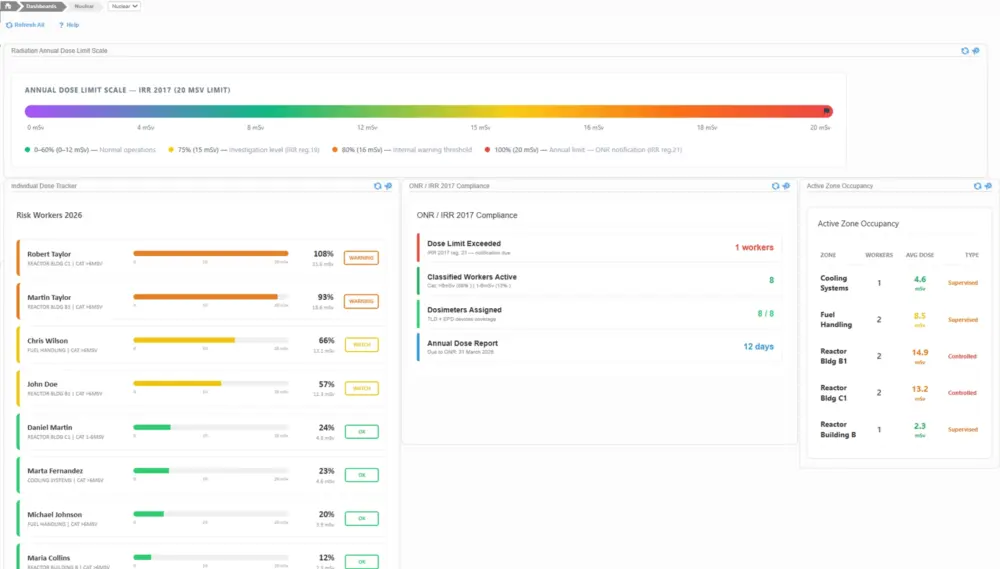
Locus Technologies nuclear and radionuclide compliance dashboard

02 // Purpose-built Software

Radionuclide Compliance Software for Nuclear Power Plants and DOE Facilities

Nuclear facilities operate under some of the most demanding environmental compliance requirements in the world. Every effluent release, every environmental sample, every radiological monitoring result must be documented, validated, and reported with a level of rigor that leaves no room for error.

Locus Radionuclide Compliance software is built specifically for that work. It manages RETS and REMP programs, automates AREOR and ARERR reporting, and organizes all environmental data across water, air, soil, and biota in one secure cloud platform. More than 40 percent of U.S. commercial nuclear reactor sites and six DOE research laboratories have chosen Locus software for this work.
Built on Locus Platform

Locus Radionuclide Compliance runs on the same foundation used for EHS compliance, waste management, safety incidents, and environmental data management across more than 30 industry-specific applications. For nuclear facilities that also manage hazardous waste programs, air quality compliance, or broader EHS obligations, those programs share the same platform and the same data.

The Radionuclide Compliance app itself is cloud-native, with 99.99+ percent uptime, SOC 2 Type 2 verification, and the security architecture that sensitive government and utility data requires. NQA-1 and ISO 9001:2008 quality standards are supported. Plus, the software supports dose assessment and management and meteorological tracking, connecting the full chain from effluent monitoring and environmental sampling through to the dose calculations that NRC programs require.

Platform Overview

Why nuclear compliance teams choose Locus

Locus Nuclear

Fulfill NRC requirements with confidence.

RETS and REMP programs, monthly and quarterly monitoring reports, and annual AREOR submissions all pull from the same validated data set, with minimal manual input at any stage.

Trust every data point before it enters the permanent record.

Automated validation checks incoming data from effluent monitors, laboratory EDDs, IoT instruments, and field collections, flagging exceedances, anomalies, and duplicates before they can propagate into reports.

Manage complex, long-term programs without losing the thread.

Nuclear environmental monitoring programs run for decades. Locus provides the cloud-native archive, the audit trail, and the search tools that make historical data as accessible as today's.

Give communities transparent access to environmental monitoring data.

Locus is ideally suited for public-facing dashboards; the same platform that powers Intellus, the public environmental data portal for Los Alamos National Laboratory, can serve communities surrounding any nuclear facility.

From effluent data to dose calculations, all in one system.

Dose assessment and management, meteorological tracking, and environmental monitoring all connect within the same platform, giving compliance teams the complete chain that NRC programs require without assembling data from separate tools.

Prepare for audits and inspections without a separate effort.

All data changes, user actions, calculations, historical records, annual reports, inspection logs, and sampling plans are tracked automatically, so audit preparation is about access, not assembly.

04 // Published account of AREOR product development, Locus Technologies

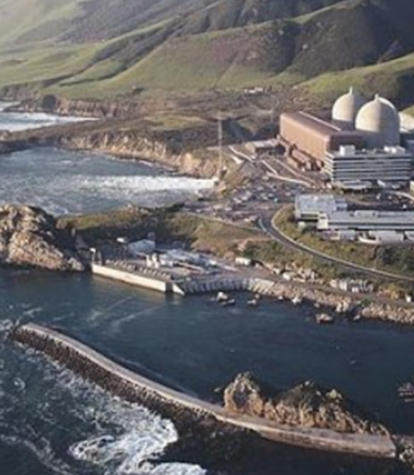
"Locus recognized this reporting difficulty after speaking with one of its customers, PG&E's Diablo Canyon Power Plant.

After listening to the current challenge and PG&E's suggestions, the importance of building the AREOR data summary tables as a formatted report and making it available to all of EIM's nuclear customer databases was apparent."

From field sample to filed report

05 // Lifecycle

  • Collect

    Gather data from effluent monitoring systems, IoT radiological instruments, meteorological equipment, mobile devices, laboratory EDDs, and legacy databases. Prepare and execute complex sample plans for groundwater, biology, air, and soil matrices. Manage chains of custody and print container labels. Field parameters log with full audit trails using the Locus Mobile app.

  • Validate

    Every incoming data point is checked against configured valid values and regulatory thresholds. Automated alerts flag exceedances, anomalies, EDD errors, and duplicate data before they enter the permanent record. The provenance of every calculation is tracked.

  • Analyze

    Execute natural language prompts, SQL queries, and keyword searches across the full dataset. Use built-in GIS for spatial analysis of sampling locations and to track changes in chemical concentrations over time. Predictive analytics synthesize historical data and forecast trends for tritium, C-14, and other isotopes. Choose from a library of charts, graphs, boring logs, and GIS maps to visualize effluent releases, groundwater contaminants, and residual radioactivity.

  • Report

    Generate NRC-compliant monthly, quarterly, and annual reports with minimal manual input. Locus automates AREOR, ARERR, and PSDAR reports and enables users to self-configure additional report formats. Share sanitized datasets and graphics for community transparency.

Locus Radionuclide Compliance software simplifies compliance

06 // Feature Highlights

Data Collection and Laboratory Integration

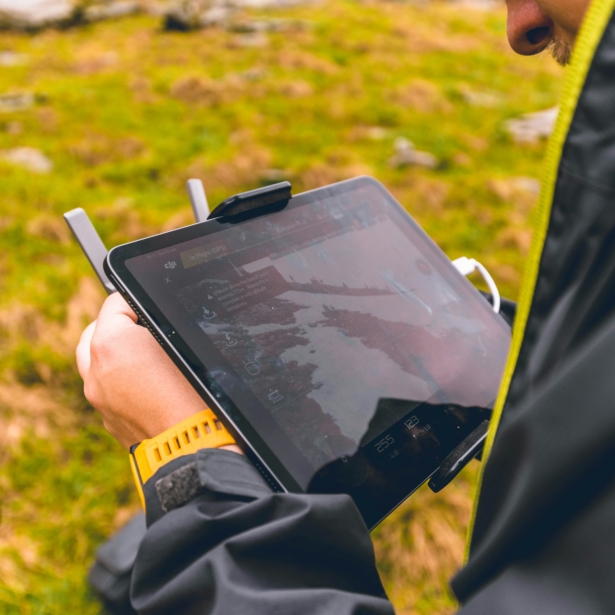
Nuclear environmental programs pull data from more sources than almost any other compliance program. Locus software centralizes all of it. The app ingests data from effluent monitoring systems, IoT radiological instruments, meteorological monitoring equipment, tablets and mobile devices, third-party tools, legacy databases, and laboratory EDDs. Meteorological tracking and management spanning wind speed, direction, atmospheric stability, and precipitation are handled within the same platform, connecting directly to effluent and dose workflows. Multiple EDD formats are supported, and a dedicated laboratory interface streamlines direct uploads from analytical laboratories. Field teams use Locus Mobile for chain-of-custody management, container labeling, and field parameter logging with full audit trails.

Locus Mobile →
Locus EIM →

Automated Data Validation and Quality Assurance

Every number feeds a regulatory report, and every regulatory report reflects on the operating license. Locus software validates data automatically as it enters the system — checking incoming records against configured valid values and regulatory thresholds, detecting exceedances and anomalies, and flagging EDD errors and duplicate data before they reach the permanent record. Automated alerts route to the right people immediately. The software enforces quality standards consistent with NQA-1 and ISO 9001:2008 requirements. Every data change, every user action, and every calculation step is tracked with a timestamp and user attribution, creating the kind of audit trail that NRC inspections require.

EHS Compliance Solutions →

AI and computer engineering reviewing environmental data and AI models

Sample Planning and Field Monitoring

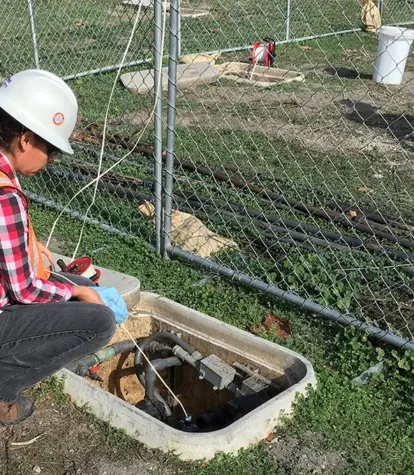
Nuclear environmental monitoring programs involve complex, multi-matrix sample plans that run continuously for the life of the facility and beyond. Locus includes a sample planning module that was purpose-built for that complexity. Prepare and execute sample plans for groundwater, biology, air particulates, and soil across multiple matrices simultaneously. Generate chains of custody and container labels. Log all sample attributes, from field parameters through final laboratory analyses, with full audit trails. Locus Mobile simplifies field parameter collection and works on any mobile device. The app also automates task tracking and work orders to ensure the timely completion of sampling events, regulatory deliverables, and inspection schedules.

Locus Mobile →
Sample Planning →

GIS, Visualization, and Predictive Analytics

Environmental compliance for nuclear facilities is, at its core, a spatial and temporal problem. Where are radionuclides present? How have concentrations changed over time? Where is the gradient pointing? Built-in GIS enables spatial analysis of sampling locations and monitors the change in chemical concentrations across the facility boundary and surrounding community. Predictive analytics synthesize historical data and generate trend forecasts for tritium, C-14, and other isotopes. A library of configurable chart types (time series, concentration vs. time with exceedance limits, borehole depth-concentration, regression charts, and more) allows compliance teams to visualize everything from effluent releases and groundwater contaminants to residual radioactivity. Dose assessment and management bring those monitoring results through to their regulatory conclusion, connecting environmental sampling and effluent data to the dose calculations that NRC programs ultimately require. Key performance indicators track against historical and regulatory benchmarks in configurable dashboards.

Locus GIS+ →

NRC Regulatory Reporting

The annual reporting cycle at a commercial nuclear power plant or DOE facility is one of the most analytically intensive regulatory obligations in any industry. Locus software automates it. Generate NRC-compliant monthly, quarterly, and annual reports with minimal manual input. The app automates AREOR data summary tables — the kind of complex groupings and summary statistics that are notoriously tedious to produce — as well as ARERR and PSDAR reports. Users can self-configure additional report formats as regulatory requirements evolve. The AREOR automation capability was developed in direct collaboration with PG&E's Diablo Canyon Power Plant and then made available to all Locus nuclear customers, reflecting the way Locus builds its product roadmap: from the field, with the people doing the actual compliance work.

AREOR announcement →
EHS Compliance Solutions →

Incident Response, Workflows, and Community Transparency

When a threshold exceedance occurs at a nuclear facility, the response has to be fast, structured, and documented from the first moment. Locus software automatically initiates workflows for event documentation, incident response, root cause analysis, and corrective actions when exceedances or anomalies are detected. Our integrated Safety & Incident Management app handles radiation releases and environmental spills with the same rigor as routine compliance, including investigation, root cause analysis, crisis management steps, and corrective action tracking. Beyond internal compliance, Locus is built for public transparency. Sanitized datasets and graphics can be shared easily with surrounding communities through public-facing dashboards. The Intellus environmental data portal for Los Alamos National Laboratory runs on Locus software.

Safety & Incident Management →
Audits & Inspections →
Intellus New Mexico →

07 // Neno Duplan, Founder and CEO, Locus Technologies

"Since our founding, Locus has partnered with key players in the nuclear industry,

...including the Department of Energy and leading nuclear sites. As the nuclear industry prepares for a resurgence, we are proud to play a role in this revival, building on our decades of expertise and deep roots in the nuclear sector."

08 // Software Demonstration

See Locus Radionuclide Compliance software in action

Nuclear environmental compliance is too exacting to evaluate from a data sheet. The best way to assess this software is a demonstration built around your specific program: your matrices, your reporting cycles, your regulatory obligations, and the communities your facility is accountable to. Talk to a Locus specialist who has worked with nuclear compliance programs and understands what NRC reporting actually requires.
Book a demo

Frequently Asked Questions

09 // FAQ

The app automates AREOR (Annual Radiological Environmental Operating Report), ARERR, and PSDAR reports, as well as monthly and quarterly monitoring reports required under RETS and REMP programs. Users can self-configure additional report formats as regulatory requirements evolve. All reports draw from the same validated operational data, so no separate data compilation effort is required at reporting time.

The app centralizes data from effluent monitoring systems, IoT radiological instruments, tablets and mobile devices, third-party tools, legacy databases, and laboratory EDDs. Multiple EDD formats are supported, and a dedicated laboratory interface streamlines direct uploads from analytical laboratories.

Data is validated automatically as it enters Locus software. The app checks incoming records against configured valid values and regulatory thresholds, detects exceedances and anomalies, flags EDD errors and duplicate data, and routes automated alerts to the appropriate users before anything enters the permanent record. Every data change and every calculation step is tracked with timestamps and user attribution, consistent with NQA-1 and ISO 9001:2008 quality standards.

The app supports data collection and management for groundwater, biology, air, and soil matrices, as well as effluent releases and radioactive waste. Sample planning, chains of custody, container labels, and field parameter logging are all managed within the same platform across all matrices.

Built-in GIS enables spatial analysis of sampling locations and can monitor changes in chemical concentrations over time. Predictive analytics synthesize historical data and generate trend forecasts for tritium, C-14, and other isotopes. Configurable chart types include time series, concentration vs. time with exceedance limits, borehole depth-concentration, and others. Key performance indicators are tracked against historical and regulatory benchmarks in configurable dashboards.

Yes. The app serves both operating and decommissioned nuclear power plants and DOE research facilities. For decommissioned sites, the app supports PSDAR reporting and the long-term data stewardship that decommissioning programs require, including decades-spanning groundwater monitoring and the preservation of a complete, searchable archive.

anitized datasets and graphics can be shared easily with surrounding communities through public-facing dashboards. The Intellus environmental data portal at intellusnm.com, built on Locus software for Los Alamos National Laboratory, is an example of what community transparency looks like in practice — 14 million environmental monitoring records, accessible to the public in real time.