
01 // Industrial PRETREATMENT & FOG

Industrial Pretreatment and FOG program management software for POTWs

02 // Purpose-built Software

One integrated application for two critical programs

Running an industrial pretreatment program means tracking a variety of industrial users, reviewing and updating permits, calculating significant noncompliance, and filing annual reports to the state, while often managing a companion FOG program with numerous food service establishments, inspection cycles, and hauler manifests.

Locus software has one cloud platform to manage both IPP and FOG compliance programs, built upon the same analytical data engine that manages more than 535,302,146 environmental records worldwide. When the data behind your compliance program is this well governed, compliance becomes something you can easily prove.

Built on Locus Platform

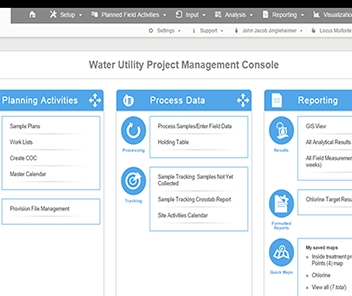
Locus IPP and Locus FOG are not standalone compliance trackers. Locus IPP/FOG combines two apps on a multitenant, cloud-native platform that also runs Locus Wastewater Management, MS4 Stormwater, and the full Locus EHS ecosystem. Industrial user data, FOG inspection records, and pretreatment sampling results all flow into the same validated system your environmental team uses for operational and discharge permits, spill management, and PFAS tracking. There is no re-entry, no reconciliation, and no separate vendor to manage. When an industrial discharge event connects to an effluent exceedance, you already have both datasets in one place.

Platform Overview

Benefits of Locus IPP/FOG software

Your program never misses a deadline.

Inspection schedules, permit renewal dates are automated, visible, and enforced by the system — not by whoever happens to be in the office that week.

Inspectors arrive prepared and leave with complete records.

Mobile forms, GPS tagging, and photo capture lead to complete, time-stamped field data before the inspector leaves the facility.

SNC status is calculated, not estimated.

Automated TRC and chronic violation calculations run against every sample result, flagging significant noncompliance before it becomes an audit finding and generating documentation the annual report needs immediately.

FOG compliance grows with your FSE inventory, not against it.

Overdue inspections, missed pump outs, and high-risk facilities are surfaced automatically. The program manager sees the problem before it becomes an overflow.

PFAS industrial surveillance is built in, not bolted on.

When your state adds PFAS monitoring requirements to industrial pretreatment permits, Locus is already ready. No new tool, no new vendor, no program rebuild — the platform that holds 4,675,831 validated PFAS records.

Your pretreatment program and your municipal wastewater compliance program share one system of record.

When an industrial discharge connects to a bypass or passthrough event, industrial user data and POTW wastewater data are already in the same platform.

04 // Laura Underwood, Director of Digital Water Services, Locus Technologies

"Locus' Industrial Pretreatment Management application can help POTWs with PFAS-related administration

... such as customizable industrial site surveys, industrial discharge sample scheduling and results collection, and permit compliance monitoring features."

Locus IPP/FOG at-a-glance

05 // Lifecycle

  • Register

    Build your industrial user and FSE inventory in one system of record. Assign IU classifications, link permits to facilities, and establish your FOG device database from day one.

  • Permit

    Issue and manage industrial permits and batch discharge authorizations with configurable templates, parameter limits, and renewal calendars. For FOG, set device requirements and maintenance frequencies by facility category.

  • Sample and Inspect

    Schedule sampling events and inspections against each permit and facility profile. Field teams collect data on mobile devices and close out records on site.

  • Calculate and Enforce

    The system evaluates every result against permit limits, flags TRC exceedances and chronic violations automatically, and generates enforcement correspondence from configured templates. Every escalation step is tracked from issuance through resolution.

  • Report

    Generate the Annual Pretreatment Report, SNC summaries, inspection status reports, and FOG compliance reports with a single click. Regulatory output is ready when the approval authority asks for it.

Tested and proven water compliance software

07 // Feature Highlights

Industrial User Registry

Every industrial user has a complete profile: SIC/NAICS codes, categorical determinations, process area descriptions, wastewater production volumes and sources, pretreatment system configurations, and discharge location coordinates. Continuous dischargers, batch discharge facilities, significant industrial users, and categorical industrial users are all managed within the same registry. From the facility record to the permit to the sample event to the compliance determination, the chain is governed and audit ready.

Industrial Permit Management

Permits are issued and renewed within the platform. Configurable templates support both industrial user permits and batch discharge authorizations, with parameter limits drawn from the system's pollutant library and unit conversion engine. Permit renewal calendars track expiration dates across your entire IU universe and trigger renewal workflows automatically. Local limits are maintained per IU and per discharge location, with the ability to assign different limit sets to facilities discharging into multiple receiving systems.

Sample Planning, Collection, and Data Validation

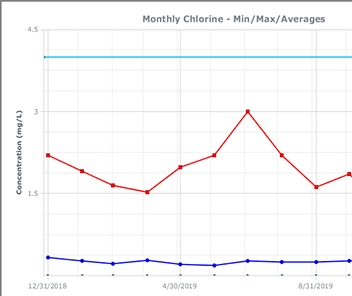
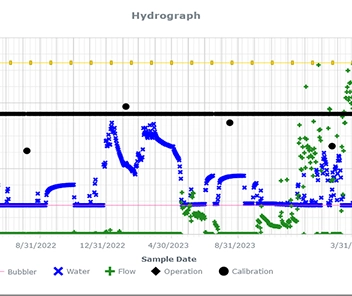
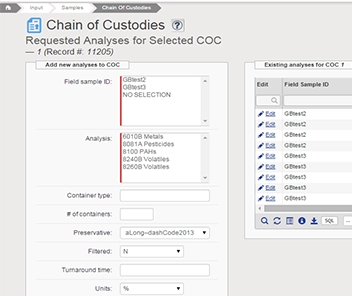
When laboratories report results in units that differ from the permit limit units, the system converts automatically and evaluates the result against the correct threshold. Valid values flag data entry errors at intake rather than after a compliance determination has already been made. When a state auditor asks for the analytical basis for a compliance determination, the answer is in a system managing half a billion validated records.

Sample Planning Module

Violation Detection, SNC Calculation, and Enforcement

SNC determinations in Locus are traceable to their source. Every calculation links directly to the EIM-validated sample data that produced it, so when an auditor asks how a compliance determination was made, the answer is already organized and printable. SNC status is calculated automatically using TRC thresholds (33% or more of all measurements taken during a 6-month period exceed the standard; 1.4x the daily maximum limit for BOD, TSS, and fats/oils/grease; 1.2x for all other parameters) and chronic violation criteria (66% or more of measurements exceeding limits over a six-month evaluation period). Supporting data is preserved so the calculation can be audited at any time.

Enforcement escalation is configured to match your Enforcement Response Plan. NOVs, warning letters, compliance schedules, and administrative orders are generated from templates and linked to the IU violation record. Every escalation step is tracked from issuance through resolution within the same workflow that produced the violation.

Mobile Field Inspections

Locus gives inspectors a configured inspection form on their mobile device that matches the checklist for that facility type, permit category, or grease device. Inspectors enter findings, attach photos, record observations about pretreatment system condition or grease device maintenance, and close out the inspection record on site. Where an inspection surfaces conditions that warrant immediate notice, the notice is generated on site from the same device, linked to the inspection record, and visible in the facility history before the inspector reaches the next location.

Mobile & Field Access

FOG Program Management and FSE Self-Reporting

The Locus FOG app manages the full program lifecycle: FSE registration and facility profiles, grease control device specifications and sizing records, inspection schedules by facility category and device type, pump out history, and enforcement actions for noncompliance. Food service establishments submit maintenance records, pump out manifests, and compliance certifications through an online self-reporting portal. When a submission arrives, the utility receives an automated notification and the report enters the review queue. Staff approve or flag submissions without re-entering data. The FSE's submission becomes the record.

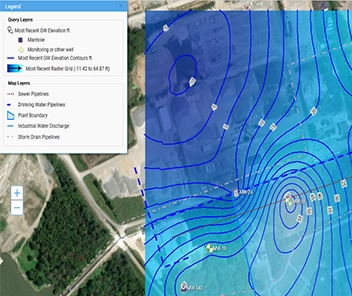
GIS layers display FSE compliance status, device locations, inspection history, and SSO hot spot geography together on one map. Facilities that are overdue for inspection, behind on pump outs, or located near overflow history are immediately visible. The program manager can prioritize enforcement resources on high risk facilities rather than cycling through the compliant majority.

Compliance Dashboards and Annual Reporting

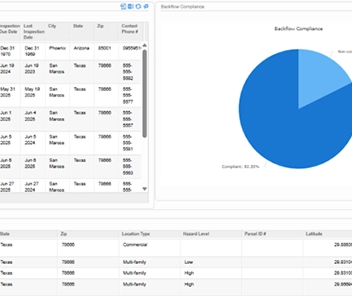
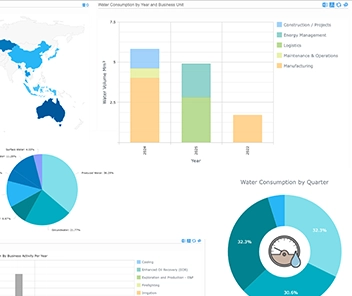
Locus delivers program oversight through configurable KPI dashboards with real-time data from both the IPP and FOG modules: IU compliance status by quarter, facilities trending toward SNC, FOG inspection currency. The Annual Pretreatment Report under 40 CFR 403.12(i) is generated directly from the platform. Updated IU inventories, SNC summaries with violation type and enforcement status, inspection records by SIU, and program change documentation all pull from the system's live records. Report generation that took days from spreadsheet programs takes minutes in Locus.

08 // Neno Duplan, Founder and CEO, Locus Technologies

"Utilities have struggled with fragmented, outdated, or single-purpose systems for too long.

That's why Locus Water is a game-changer for water pros trying to keep up with everything from DMRs, PFAS, and compliance to cybersecurity and customer outreach."

09 // IPP versus Industrial Water

Locus IPP and Locus FOG -- designed for Publicly Owned Treatment Works (POTWs).

If you are an industrial facility, manufacturer, food processor, or chemical producer looking to manage your own wastewater discharge permits, NPDES compliance, and effluent monitoring, check out Locus Industrial Water.

One app on a platform built for your entire water, EHS, & ESG program

10 // Truly Unified Platform

Dedicated IPP tools have existed for decades. What has never existed until now is an IPP tool that shares a common data model with a POTW's NPDES permit program and its drinking water quality records. For a pretreatment coordinator navigating a state audit, that connection is not a nice-to-have, it is the difference between retrieving the record and reconstructing it.

Every staff record, facility profile, permit history, and sample result entered into Locus IPP and Locus FOG is immediately available to every other Locus app the utility runs. That is not integration. That is the same platform.

Pretreatment programs are long-running institutional obligations, not short-term projects. The industrial user relationships, permit histories, compliance determinations, and enforcement records that a program accumulates over decades need to live in a system that survives personnel transitions, software vendor changes, and regulatory audits without degradation. When that history lives in Locus, it is governed, backed up, and accessible to the next coordinator from day one. Programs built on spreadsheets and institutional memory do not survive succession the same way.

Water & Wastewater Utility Solutions

11 // Software Demonstration

Your Source Control Program deserves better than a spreadsheet

See how Locus IPP and Locus FOG manages industrial users, food service establishments, and enforcement workflows in one cloud platform — connected natively to your municipal wastewater and drinking water compliance programs.
Schedule Your Personalized Demo

Frequently Asked Questions

12 // FAQ

Locus supports both permit types within the same industrial user profile. Continuous industrial user permits carry standard parameter limits, monitoring schedules, and renewal calendars. Batch discharge permits are configured with the episodic scheduling, advance notification requirements, and production-basis limit calculations appropriate for that permit type. Both types feed the same violation detection and SNC calculation workflows, and both are tracked in the same IU compliance history.

SNC calculations in Locus are automated and auditable. The system applies TRC thresholds (33% or more of all measurements taken during a 6-month period exceed the standard; 1.4x the daily maximum limit for BOD, TSS, and fats/oils/grease; 1.2x for all other parameters) and evaluates chronic violations based on the 66% threshold over rolling six-month evaluation periods. Every calculation retains the underlying sample data and limit values that produced it. The output is printable with supporting data, so the approval authority or an EPA auditor can verify each determination without asking you to reconstruct it.

Industrial users and food service establishments access a configured online form where they can submit self-monitoring reports, pump out manifests, and maintenance certifications. The form is built to match what the utility requires for that facility type and permit category. When a submission is received, the utility gets an automatic notification, and the report enters a review queue. Staff review within the platform and the submission becomes the official record. No paper, no re-entry, no email chains.

The Annual Pretreatment Report is a configured output in Locus. The report pulls the current IU inventory by category and compliance status, SNC summaries with violation type and enforcement action detail, inspection records and dates for each SIU, program change documentation, and any interference or pass-through incidents recorded during the year. The platform's live records mean the report reflects current program status without manual assembly from multiple sources.

Locus is licensed on a subscription basis with pricing based on program scale and the combination of apps selected. For utilities already running other Locus Water apps, adding IPP and/or FOG carries significantly lower total cost of ownership than deploying a separate system, because there is no integration work, no duplicate data entry, and no second vendor relationship to manage. For new customers, contact us for a quote based on your IU count, FSE inventory, and adjacent program needs.