
01 // Blog
How Electronic Data Deliverables (EDDs) Solve the Subsurface Puzzle
TL;DR: Electronic Data Deliverables (EDDs) turn environmental sampling results into structured evidence that remediation teams use to define contamination, evaluate risk, select cleanup remedies, document decisions, and track progress over time. But missing identifiers, inconsistent names, incorrect units, incomplete qualifiers, or other errors can delay submissions and quietly distort site maps, trends, and cleanup decisions. Locus EIM helps teams receive, validate, and combine laboratory, field, and geological data so they can spend less time troubleshooting spreadsheets and more time building a defensible understanding of site conditions.
For site remediation professionals, EDD consternation is real.
EDD consternation: the frustration, tedious troubleshooting, and technical friction a Licensed Site Remediation Professional (LSRP) experiences while preparing, validating, and submitting Electronic Data Deliverables (EDDs). Symptoms include spreadsheet fatigue, qualifier confusion, and heated negotiations with required fields and controlled vocabularies.
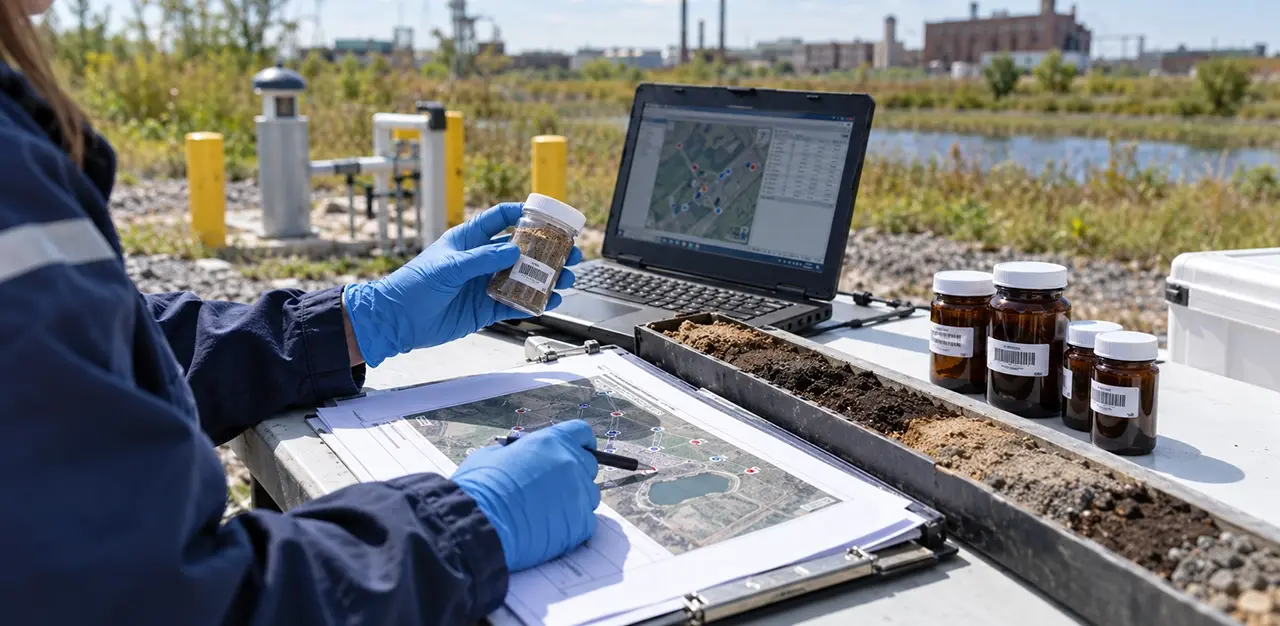
Electronic Data Deliverables are structured, machine-readable files that carry environmental sampling results and the information needed to interpret them, including sample identifiers, dates, analytical methods, concentrations, units, detection limits, and quality qualifiers. They allow laboratories, consultants, and regulators to exchange data that can be checked, combined, mapped, and analyzed without repeatedly transcribing reports. In a remedial investigation, EDDs supply labeled pieces of the pictureless subsurface puzzle. Combined with geology, groundwater measurements, and field observations, they help pollution investigators define contamination, evaluate exposure, select remedies, and measure cleanup progress. Their value lies in preserving both the measurements and their context—because a precise concentration means little if you cannot establish where it came from or how reliable it is.
These bare-bones data packets—digital digestates, if you will—feed the analyses, maps, and reports that support the entire cleanup process:
- Define the problem. Identify contaminants and establish their extent in soil, groundwater, sediment, and other environmental media.
- Evaluate exposure and risk. Connect contamination to potential exposure pathways and affected people or ecosystems.
- Select and design a remedy. Supply the evidence needed to compare cleanup alternatives and assess their likely performance.
- Document the decision. Provide the underlying data for reports and the administrative record, so regulators and the public can examine the basis for the selected remedy.
- Verify performance. Track progress toward cleanup goals and demonstrate continued protection over time.
EDDs make remediation traceable, reviewable, and measurable—from the first finding of contamination to the evidence that cleanup objectives have been met. Getting them accepted can test your patience. Getting them right is foundational.
For nearly four decades, EDDs have helped turn environmental sampling results into usable evidence for remediation. While individually modest, collectively, EDDs are capable of building a detailed picture of contamination—what’s above and below ground, where it’s moving, who may be exposed, and at what concentrations. Naturally, the picture gets harder to assemble when the puzzle pieces arrive mislabeled, missing connectors, or simply don’t fit.
Errors in EDDs can turn the pictureless puzzle of the subsurface into a misleading one. Missing sample identifiers, inconsistent well names, incorrect depths, duplicate records, and scrambled dates can disconnect laboratory results from the places and times they represent. Wrong units can inflate or shrink concentrations by orders of magnitude, while missing qualifiers or nondetects reported as zero can create false confidence about site conditions. Some errors stop a file from loading; others slip through and quietly distort maps, trends, and cleanup decisions. That’s why checking an EDD requires both format verification and scientific review: a puzzle piece may fit neatly and still belong somewhere else.
On the laboratory side, the weedier fields of an EDD explain how a reported concentration came to be and how much confidence to place in that value. EDDs can include preparation and analytical batch identifiers, extraction and analysis dates, dilution factors, detection and reporting limits, percent solids, and whether results are reported on a wet- or dry-weight basis. More detailed QA/QC deliverables also link sample results to method blanks, matrix spikes, laboratory control samples, surrogate recoveries, and instrument calibration checks. These fields help reviewers trace a result through the laboratory workflow, evaluate holding times, identify possible contamination or matrix interference, and understand qualifiers attached to the data. They may look like spreadsheet underbrush, but they provide the trail from “the lab reported this number” to “this number is usable for this decision.”
The subsurface rarely gives up its secrets in one sampling round, and the puzzle never comes with a picture on the box. Well-prepared EDDs provide the labeled pieces investigators need to build a defensible understanding of contamination and guide cleanup. Locus Technologies brings extensive experience in EDD formats, laboratory data delivery, and automated checking to that process. Through Locus EIM, teams can receive laboratory results, flag potential errors, and combine analytical data with field and geological information for mapping, analysis, and reporting. The payoff is less time wrestling with files and more time interpreting the site—because EDD consternation may be real, but assembling the subsurface puzzle shouldn’t require solving a spreadsheet mystery first.


Ms. Dorian Bailey leads all customer success and partnership endeavors for Locus Technologies, and she is the company’s in-house expert on embodied carbon, clean construction, and government procurement. Dorian is a frequent author and speaker, and she advises commercial and government entities on their use of software to manage environmental data, fulfill compliance requirements, and prepare regulatory disclosures. Dorian joined Locus Technologies in early 2024 after working as the Chief of Science and Sustainable Construction for the Port Authority of New York & New Jersey. Leaning on her unique expertise in environmental chemistry and materials testing, and her 30 years in the Materials Engineering Unit of the Construction Management Division at the Port Authority, Dorian helped shape the Locus Sustainable Construction software application to effectively quantify and mitigate the environmental impacts of construction. Dorian has a master’s degree in environmental science from the New Jersey Institute of Technology (NJIT), is accredited as a Certified Hazardous Materials Manager (CHMM), and she is a credentialed Envision Sustainability Professional.