


01 // Use Case: EHS Compliance & Incidents

EHS compliance software that works the way regulated industries actually operate

Locus Technologies has been the EHS compliance software platform of choice for Fortune 500 companies, national laboratories, chemical manufacturers, oil and gas operators, and water utilities since 1997. With more than 527 million analytical records and 1.6 million worldwide locations under active management, Locus is the proven platform for organizations that need audit-ready environmental, health, and safety compliance data every day — not just on reporting deadlines.

02 // THE BUYING COMMITTEE'S CHECKLIST

What a serious EHS compliance platform must handle and where most fall short

EHS compliance software gets evaluated on a wide spectrum of capabilities, but the organizations with the most demanding programs consistently identify the same gaps when they assess what they currently use. The software collects data but does not validate it. It tracks tasks but does not connect tasks to permit conditions. It generates reports but cannot adapt them when an agency changes its format. And it manages EHS in isolation, completely disconnected from the sustainability disclosures and water quality programs that depend on the same underlying data.

Locus was built to close every one of those gaps. The platform manages the full EHS lifecycle from data collection in the field through regulatory reporting to agency submission — with validation at every step, configurable workflows that match how your compliance program actually operates, and a unified data model that makes EHS records available to ESG and sustainability programs without any data re-entry.

EHS compliance programs supported by Locus software

03 // Solution Scope

Air Quality

Air quality and permit compliance

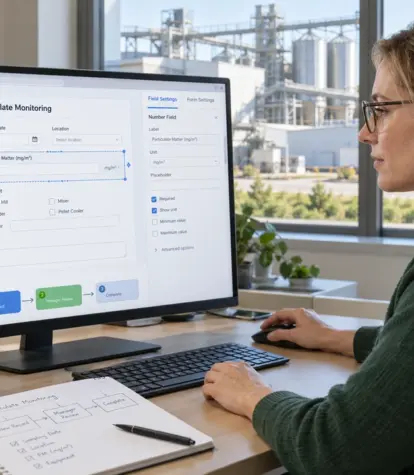
Locus Air Quality manages Title V operating permit conditions, continuous emissions monitoring data, deviation tracking, GHGRP (40 CFR Part 98) annual submissions, AIM Act refrigerant compliance, and state air program reporting. Permit conditions are tracked at the emission unit level with automated monitoring schedules and notifications when measured values approach permit limits. Deviation records are generated automatically when limits are exceeded, with the workflow routing and documentation that agencies require.

Explore Locus Air Quality

Hazardous waste management

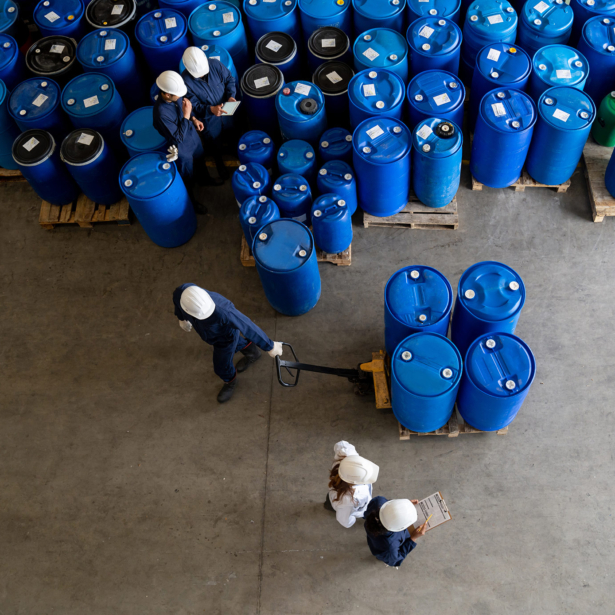
Locus Waste Management provides RCRA-compliant cradle-to-grave waste tracking, built on a patented data methodology developed specifically for the complexity of multi-site hazardous waste programs. The platform manages generator status determination, container tracking and labeling, manifest management with EPA e-Manifest integration, and biennial report generation. A top 10 U.S. environmental management firm uses Locus to manage a $2.4 million annual waste disposal program spanning 850 locations — surpassing $120,000 in cost savings in year one.

Explore Locus Waste Management
Waste Barrels

Incident management and OSHA recordkeeping

Locus Safety and Incident Management automates OSHA 300/301/300A log maintenance, incident recordability determination, and annual summary generation. Each incident record connects to a full investigation workflow with contributing factors, root cause analysis, witness statements, corrective actions assigned to owners, and verification of closure. For establishments subject to OSHA's electronic submission requirements — including the expanded 2024 rule requiring 300 Log submission by high-hazard industries — Locus generates ITA-compatible data exports.

Explore Locus Safety & Incident Management

Audits, inspections, and corrective actions

Locus Audits and Inspections manages facility compliance audits, permit inspection records, field observation documentation, and corrective action tracking — with configurable inspection forms, mobile data entry, and full audit trail documentation. Corrective actions are assigned to owners, tracked through completion, and verified with evidence. Every audit finding and closure is documented in a single system that connects to the broader EHS compliance record.

Explore Locus Audits & Inspections
Safety Inspection

Chemical inventory and EPCRA compliance

Locus Chemical Inventory tracks chemical quantities, storage locations, physical and health hazard classifications, and SDS documentation across all facilities. EPCRA Section 311/312 Tier II threshold calculations are automated, with state-specific report generation and support for electronic agency submission. TRI Form R threshold quantity determinations for manufacture, process, and otherwise-use quantities are derived from the same chemical tracking data — no separate system required.

Explore Locus Chemical Inventory

Refrigerant management and AIM Act compliance

Locus Refrigerant Management is one of the most sophisticated refrigerant compliance applications available. The app was designed by team members who hold EPA Universal Technician certification and CRCM credentials and who have led the CRCM certification program in partnership with the National Registry of Environmental Professionals. The platform tracks appliance inventories, scheduled and unscheduled service events, annual leak rate calculations, and AIM Act Section 103 regulatory reporting.

Explore Locus Refrigerant Management
EHS compliance officers reviewing data from appliances

05 // EHS Compliance Pillars

Why highly regulated organizations choose Locus

Data validated at entry, not discovered as wrong during an audit Locus validates environmental data the moment it enters the system against configurable rules set by scientists who know what bad environmental data looks like. Whether originating from mobile field collection, laboratory EDD imports, SCADA connections, or manual entry, by the time a record reaches a regulatory report, it has already passed automated validation. The difference between validated and unvalidated environmental data is the difference between a report that stands up to regulators and a report that generates follow-up questions.

Explore Locus Data Validation →

Configurable to your specific program without vendor fees or delays
EHS compliance programs are not generic. A Title V permit at a chemical plant has different conditions than a Title V permit at a food processing facility. An NPDES permit for a refinery has different parameters than one for a municipal wastewater plant. Locus's Configuration Workbench lets your team define the specific forms, fields, calculation methods, workflow routes, and report formats that your program requires without submitting a change request to Locus or waiting for a vendor release cycle.

Explore Locus Configurability →

Built and implemented by people who have held EHS roles
Every R&D and customer-facing Locus employee holds an advanced degree in a relevant science or engineering discipline or brings direct professional EHS experience. Locus implementation managers hold various credentials including EPA Universal Technician, CRCM, CHMM, CESCO, and FEMA Hazard Mitigation designations.

Explore Locus Domain Expertise →

EHS compliance data that feeds your sustainability program directly

06 // Unified Data Layer

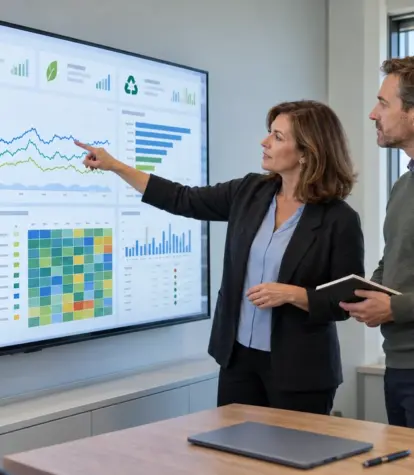
Business man in corporate conference room with ESG presentation

Locus = No Data Silos

The data collected for OSHA reporting, RCRA waste management, NPDES permit compliance, and air quality monitoring is the same data that underlies a CSRD disclosure, a CDP questionnaire response, and a GRI indicator report. In a fragmented software environment, sustainability teams extract this data manually from disconnected EHS systems, reformat it, reconcile the discrepancies, and ultimately produce ESG reports whose provenance cannot be fully traced.

In Locus software, EHS and ESG share the same data model. The waste disposal quantities recorded in Locus Waste Management are immediately available to the Locus ESG application for waste intensity calculations. The GHG emissions recorded in Locus Air Quality flow directly into Scope 1 calculations. No extraction, no reconciliation, no data provenance questions.

Explore Locus ESG & Sustainability

07 // Software Demonstration

See how the most demanding EHS programs in the world run on Locus.

Every Locus demo is led by a domain expert who holds the environmental or safety credentials relevant to your program. Tell us what you manage, and we will show you exactly how Locus handles it.
Book a demo

Frequently asked questions about EHS compliance software

08 // FAQ

EHS compliance software is a category of enterprise software that helps organizations manage their environmental, health, and safety regulatory obligations. It typically covers permit tracking, emissions monitoring, incident and injury recordkeeping, hazardous waste management, chemical inventory, stormwater compliance, and regulatory reporting across local, state, and federal requirements. Modern EHS compliance platforms also connect EHS data to ESG & Sustainability Reporting and sustainability disclosure programs.

EHS compliance software like Locus Technologies collects, validates, stores, and reports on the environmental and safety data that regulatory agencies require. It automates compliance calendars and task assignments to prevent missed deadlines, generates the reports and forms that agencies accept, maintains an audit trail on every record, and connects data from field collection and laboratory analysis through to regulatory submission. The best platforms also provide configurable workflows, mobile data collection, and real-time dashboards that show compliance status across all facilities simultaneously.

EHS software manages operational compliance obligations such as the specific permit conditions, emission limits, waste disposal requirements, and safety recordkeeping that regulated facilities must meet to stay in compliance with environmental and safety statutes. ESG software manages the aggregated, disclosed performance metrics that investors, regulators, and stakeholders use to evaluate an organization's environmental and social performance. In Locus software, EHS and ESG share the same data model, so operational EHS data flows directly into ESG disclosures without re-entry or reconciliation.

A comprehensive EHS compliance platform addresses multiple regulatory frameworks simultaneously. These typically include the Clean Air Act (Title V permits, GHGRP, AIM Act), the Clean Water Act (NPDES permits, discharge monitoring), RCRA (hazardous waste), EPCRA (Tier II chemical inventory, TRI), OSHA (300/301/300A recordkeeping, incident investigation), CERCLA (contaminated site data management), and TSCA (chemical reporting). Locus flexes to all of these frameworks within a single platform.

Key evaluation criteria for EHS compliance software includes data validation capabilities (does the platform validate data at entry or only at reporting?), configurability (can your team modify forms, workflows, and reports without vendor fees?), implementation expertise (do the people implementing the software have relevant environmental or safety credentials?), audit trail completeness (is every record traceable from field collection through agency submission?), mobile capability (can field teams collect data offline and sync later?), and integration with ESG, ERP, IoT, and sustainability reporting tools.

These terms are used interchangeably in the market. Both refer to software platforms that help organizations manage their environmental, health, and safety programs — including data collection, compliance tracking, incident management, and regulatory reporting. Some vendors use "EHS management software" to emphasize program management capabilities like audit scheduling, corrective action tracking, and training management, in addition to data-driven compliance functions.

Yes. Locus connects to ERP systems, LIMS (laboratory information management systems), SCADA systems, IoT sensors, and smart meters through standard APIs. ERP integration is valuable for connecting asset data, facility information, and financial data to EHS compliance records — particularly for waste disposal cost tracking, chemical procurement, and utility consumption data that feeds GHG and sustainability calculations.

Everything you need to know about EHS compliance software

09 // From the Experts