

01 // Configurability

EHS & S software that fits your operations hand in glove

02 // Empowered by Locus Technologies

Power users configure workflows, forms, dashboards, reports, and entire applications without writing a line of code and without a vendor invoice.

  1. 30+ pre-built apps, ready out of the box
  2. ~10 min to roll out a new app on Locus Platform
  3. 0 lines of code required to configure
  4. $0 in vendor fees to modify your software

03 // Flex. Adapt. Stand the test of time.

Your software should conform to your operations, not the other way around

Most EHS&S software vendors limit configuration to professional services engagements. Need a new field? You have to submit a ticket. Changing a workflow? Book a scoping call. Waiting weeks for a release that may or may not reflect what you actually asked for? That is the typical model. Locus is built differently.

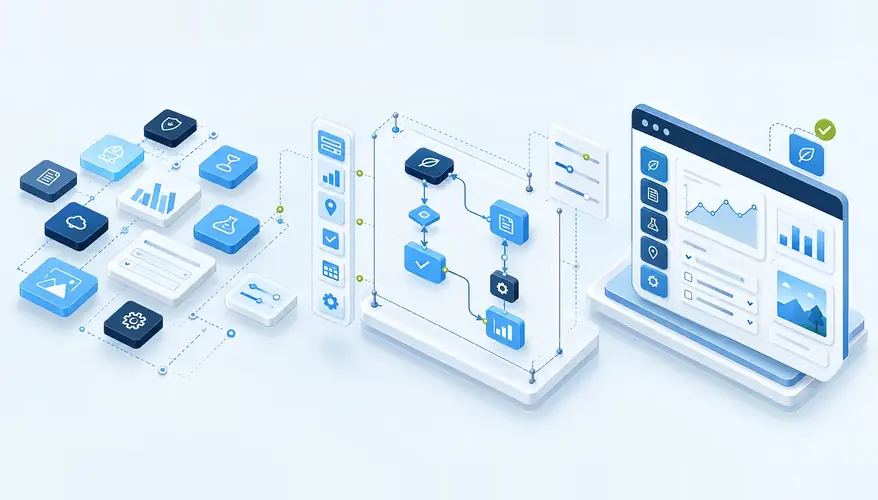
Locus Platform is built on a metadata-driven architecture that separates what your software does from how the underlying system works. This means your power users control how the platform behaves, what it collects, and how it reports. Changes go live in minutes, on your schedule, at no additional cost.

Metadata-Driven Defined

Every layer of the platform, adapted to your needs

04 // Four Dimensions. Tailored to You.

Adjust field labels, add new data inputs, and compose entirely new intake forms without vendor involvement. Field behavior can be governed by conditional logic so that the form responds intelligently to what a user enters. Example scenario: A waste compliance team adds a chemical-specific input field and configures it to trigger a mandatory secondary review step whenever a regulated substance appears on a manifest. The entire modification takes one afternoon and requires no outside assistance.


EHS manager working on desktop computer with AI and environmental data

Define multi-step approval sequences, conditional routing rules, automated task assignments, and escalation triggers using the Configuration Workbench. Workflows can be divided between individual users or user roles, and every step generates an audit trail automatically. Example scenario: A safety team configures a post-incident workflow that routes near-miss reports through a three-tier review process before marking a record closed. If a reviewer finds that an earlier step was incomplete, the workflow allows them to send the record back for revision without breaking the audit chain.

EHS manager working on desktop computer with AI and environmental data

Assemble role-specific dashboards from charts, maps, tables, tree maps, and diagrams that draw from any Locus data source. Different users see exactly the information they need and nothing more. Example scenario: A sustainability director needs to add real-time water consumption metrics to a board-level ESG disclosure dashboard as CSRD reporting requirements shift mid-year. The update is made inside the platform the same week the regulatory guidance publishes, with no vendor engagement required.

EHS manager working on desktop computer with AI and environmental data

Create and schedule regulatory and ESG reports formatted to match the exact specifications a permitting agency, board, or third-party auditor expects. Report templates can be modified in-house as requirements evolve. Example scenario: An air quality manager builds a site-specific Title V report format that maps directly to state agency submission requirements. When the state updates its reporting template, the manager adjusts the format in Locus the same week and without submitting a change request to any vendor.

EHS manager working on desktop computer with AI and environmental data

05 // BUILD YOUR OWN APPS

When off-the-shelf is almost right, build the rest yourself

Locus offers 30+ purpose-built apps covering EHS compliance, ESG and sustainability reporting, water quality, waste management, air quality, safety, and more. But no app ecosystem covers every scenario, and no two organizations' operations are identical.

That is why the Configuration Workbench doubles as a no-code app builder, letting your team assemble entirely new applications on the same secure, multitenant platform your organization already relies on. If you can drag and drop, you can build an app in Locus.

Locus Natural Gas Drilling

SCENARIO: Produced water tracking

An oil and gas operator needs to track produced water volumes, chemistry, and disposal routes across dozens of sites. No pre-built app matches the workflow exactly. A power user assembles a purpose-built application in the Configuration Workbench in under a day, with mobile-enabled data collection forms deployed to field teams immediately.

Container yard workers with tablet

SCENARIO: Supplier ESG survey

A sustainability team needs to collect Scope 3 emissions data from an extended supplier network. They design a survey-style intake form with conditional logic, configure automated completion reminders, and route supplier responses into an ESG disclosure dashboard without a single request to Locus professional services.

Locus Refrigerant Management software leak detection

SCENARIO: Refrigerant leak audit

A facilities team adds a step-by-step field inspection form with photo capture capability and automatic ODS threshold alerts to their existing refrigerant management workflow. The updated form is deployed to mobile devices the same afternoon it is configured.

SCENARIO: Calculation Sheet Module

A laboratory manager needs consistent, auditable chemical analysis calculations across a team of technicians. Their Calculation Sheet Module lets them define calculation logic as metadata, including formulas for perchlorate analysis or other complex chemistry so every technician produces identical, repeatable results without manual formula entry.

The real price of software you cannot adapt

Every change request submitted to a vendor is a line item. Every month waiting for a feature update is a month your team works around software that does not fit their operations. These costs are rarely recorded by procurement, but they accumulate fast.

THE TRADITIONAL MODEL

Professional services fees for every modification. Months between request and delivery. Workflows adapted to fit the software rather than the organization. Regulatory changes that require vendor engagement and a waiting period. Teams that build workarounds instead of workflows.

THE LOCUS MODEL

Power users make changes the same day a need arises. No vendor fees for configuration or modification. Software that mirrors how your team actually works, with terminology and forms that match your organization's language. Regulatory updates handled in-house, immediately. Every configuration is preserved through platform updates and travels with your tenant.

08 // REGULATORY AGILITY

Regulations change. Your software should keep pace.

EHS and ESG regulatory requirements shift constantly — new EPA rules, evolving CSRD frameworks, state-level permit conditions, emerging PFAS thresholds, and revised OSHA record-keeping standards. Organizations that depend on vendor-driven software updates are always one step behind. Locus customers are not.

Because configuration is in your hands, a change to a reporting threshold, a new disclosure field, or a revised inspection checklist can be live the same week a regulation publishes. Your compliance readiness aligns with the regulatory reality, not with a vendor's release calendar.

EPA reporting changes | CSRD evolution | State permit conditions | PFAS thresholds | OSHA record-keeping | Title V amendments | Discharge monitoring | Refrigerant regulations

09 // Not all "configurable" software is created equal

Many vendors describe their products as configurable. In practice, what they offer is vendor-managed modification.

Anything can be changed, but only by them, and only for a fee. That is not user configurability. That is recurring professional services revenue for the vendor.

Which model best fits your organization?

10 // Compare and Contrast

Locus user configurability

In Locus software, configuration is a power-user function built into the platform from the ground up. Your team, including environmental scientists, EHS managers, sustainability analysts, controls forms, logic, workflows, dashboards, and reports from within the platform's interface. Locus engineers are not part of the process unless you want them to be.

Locus configurations are fully preserved across all platform updates. Your organization's settings, business logic, forms, and reports are never overwritten by a new release. This is a direct consequence of how metadata-driven architecture works, and it is a meaningful structural advantage over code-level modification. Locus configurability is made possible by foundational platform design capabilities. Explore them here:

Metadata-Driven Architecture →
Multitenancy →
Unified Platform + Apps Model →

Vendor "customization"

With most EHS software vendors, any meaningful change touches underlying code. This means a scoping call, a statement of work, development time, quality assurance, and a deployment on the vendor's schedule. Changes made this way are often lost or must be re-applied after major version upgrades. The result: organizations grow reluctant to ask for changes because the process is slow and expensive.

Frequently Asked Questions

11 // FAQ

No. The Configuration Workbench is a no-code, drag-and-drop environment designed for power users (e.g. environmental professionals, EHS managers, and sustainability analysts) not software developers. If you can build a spreadsheet with formulas or design a slide deck, you have the skills to use it.

Both. Locus offers 30+ purpose-built applications ready to deploy out of the box. The Configuration Workbench also functions as a no-code app builder, allowing your team to assemble entirely new applications with their own forms, logic, workflows, and dashboards within the same secure, multitenant platform your organization already uses.

No. Locus configurations are fully preserved across all platform updates. Because the platform is built on a metadata-driven architecture, your tenant's settings, business logic, forms, and reports are stored separately from the underlying platform code and are never overwritten by a new release.

No. Configuration is a power-user function built into the platform. Your team makes changes directly in the Configuration Workbench at no additional cost. Locus professional services are available if you want them, but they are never required for standard configuration work.

Most configuration changes — adding a field, adjusting a workflow routing rule, modifying a report format — can be completed and deployed within the same working session. There is no development queue, no release cycle to wait for, and no vendor ticket to submit.

The Configuration Workbench covers forms and fields, business logic and workflow routing, multi-step approval sequences, dashboards and data visualizations, regulatory and ESG report templates, mobile data collection forms, calculation sheets, and survey-style intake forms. You can modify any of these elements within existing apps or use them as building blocks for new ones.

Because configuration is in your hands, a change to a reporting threshold, a new disclosure field, or a revised inspection checklist can be live the same week a regulation publishes. You are not dependent on a vendor release calendar or a professional services engagement to respond to regulatory changes.