






Version Control Problems
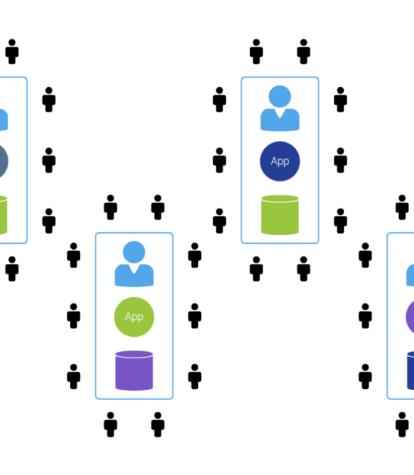
It tells you that your organization is one of many running separate copies of the software.
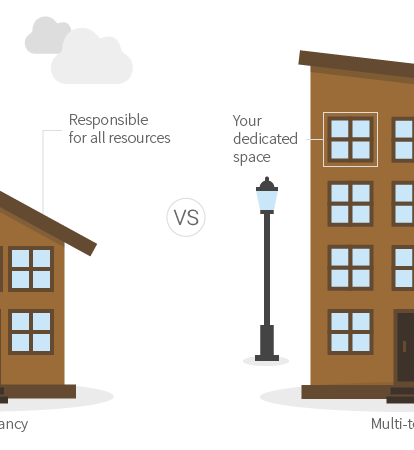
01 // Multitenancy
02 // The Elephant in the Room
The EHS software market has a quiet problem. Dozens of vendors call their product "cloud." Many use the word "SaaS." A handful will even say "multitenant" if you push them. But ask a simple follow-up: “can you tell me what version of your software I will be running?” and the answers get evasive fast.
At Locus Technologies, our answer has been the same since 1997: there is no version number. Every customer runs the same platform and the same and latest version. Every update happens automatically. Every new feature is available to everyone at once. That is true multitenancy, and it changes everything. We call it a rolling upgrade program.
03 // fact v. fiction

This is the model that powers the most trusted software in the world: Salesforce, Amazon, Workday, Google Workspace, and Microsoft 365. They operate a single system for millions of customers because the economics and the outcomes are simply better. Locus Technologies has operated this way for environmental, health, safety, and sustainability management since the company's founding.
What multitenancy is not: Hosting software in the cloud does not make it multitenant. Running your software on AWS or Azure does not make it multitenant. Calling your product "SaaS" does not make it multitenant. A vendor can host separate copies of their software in a cloud data center and still be running a fundamentally single-tenant architecture.
05 // Neno Duplan, PhD, Founder and CEO, Locus Technologies
06 // Most EHS Software Is "Fake SaaS"
Published industry research from the period of peak EHS cloud adoption indicated that as many as 90% of EHS applications were delivered as single-tenant, either installed on customer premises or hosted by vendors in dedicated per-customer environments.
The vendors stuck in that 90% have a problem. Rebuilding an application from single-tenant foundations into a true multitenant architecture requires a complete rearchitecting of the data model, the security model, the configuration framework, and the deployment pipeline. It is not something you announce in a press release and deliver in the next software version.
So instead, many have done something else. They moved their existing single-tenant software to a cloud data center and started calling it SaaS. Others acquired a different company that had some multitenant functionality and began migrating customers toward it while maintaining the old system. A few simply began using the word "multitenant" in their marketing without changing their architecture at all.
The result is a market full of ambiguous claims and a category of software buyers making decisions without the information they need.
07 // The cost to customers is real

08 // Does Your EHS Software Have a Version Number?
Every pre-multitenancy traditional software product has a version number: the release identifier that marks which copy of the software you are running. Version 9. Version 10.2. Version 2024.1. These numbers exist because different customers are running different versions. They are copies of the software that diverge from the current release and require explicit migration to update.
In a true multitenant platform, version numbers do not exist in this sense. There is one current version. Every customer is on it. When the software changes, every customer changes with it automatically.
At Locus Technologies, we cannot tell you what version you are running because the question does not apply. You are running the same platform as every other Locus customer, continuously updated, always current.
If your EHS vendor can tell you what version of the software your organization is running, that is useful (and potentially concerning) information.
It tells you that your organization is one of many running separate copies of the software.

It tells you that your vendor is maintaining those separate copies while simultaneously developing the next release.

It tells you that at some point, you will need to migrate from your version to the next one and that migration will require time, money, and risk.

It tells you that if you do not upgrade to a new version, at some point your current version is no longer supported.

Artificial intelligence is the top technology investment priority across enterprise software. Every EHS and ESG vendor now claims AI capabilities. Many of those claims do not hold up to scrutiny.
"Real AI" automation -- the kind that predicts permit exceedances, flags anomalies in emissions data, automates regulatory report generation, and triggers compliance workflows -- requires something most EHS vendors cannot provide: a unified, harmonized, consistent data model across all customers and all data types.
Consider what AI needs to actually work at this level. A model that predicts a Clean Air Act permit risk must reason across air quality measurements, production variables, historical permit limits, and weather data simultaneously. A model that automates ESG disclosure must access energy consumption, water usage, waste generation, and safety incident data through a common semantic framework. An AI that triggers a compliance workflow must understand the relationship between a measurement result and a regulatory threshold, across every facility, for every program.
11 // Key Benefits
There is no upgrade project waiting on your calendar. No version migration to budget. No backlog of features that arrived for other customers first. When Locus Technologies releases new capabilities, every customer has them. Your platform improves continuously, invisibly, the way modern cloud software is supposed to work.

Shared infrastructure means shared costs. A single system serving hundreds of customers delivers far better per-customer economics than hundreds of separate systems. Research on multitenant vs. single-tenant architecture consistently finds that multitenant systems reduce infrastructure costs by up to 50% compared to per-customer single-tenant models.³ Locus Technologies passes those savings to customers through pricing stability and sustained R&D investment.
Environmental regulations change constantly: new EPA rules, evolving CSRD requirements, PFAS limits, SEC climate disclosure developments. In a single-tenant environment, each regulatory update is developed, tested, and deployed separately for each customer version. At Locus Technologies, we build the update once and deploy it for every customer simultaneously. Your compliance tools keep pace with the regulatory calendar.
This is addressed in detail above. The short version: if your vendor's architecture fragments data across customers, their AI will always be advisory, not automated. Multitenancy is not sufficient for real AI by itself, but it is necessary. Without it, there is a hard ceiling on what AI can do for your EHS and ESG program.
A true multitenant provider operates one system and can observe aggregate system health, data quality trends, and performance benchmarks across the entire platform. Locus Technologies can publish real-time performance statistics across its customer base, which is something that is only possible when one system serves everyone. Single-tenant providers have no view across their fragmented deployments. Ask your current or prospective vendor to show you real-time, platform-wide performance data.
Tenant-level data security in a multitenant system is enforced at every data access point in application logic rather than being managed as a per-customer infrastructure decision. AWS, in its own published security guidance for multitenant SaaS environments, documents the use of tenant-aware IAM policies, row-level security, and logical data partitioning as robust isolation mechanisms for shared-infrastructure applications.* Locus Technologies' security posture is designed, tested, and updated continuously as part of a unified system, not as a per-customer configuration.
When all customers operate the same system, their collective experiences inform platform improvements. Locus can observe aggregated, anonymized trends across its customer base, use that intelligence to improve the platform for everyone, and train AI models on data patterns that no single customer's data set could support. Locus Platform continually improves as the community of customers grows. You benefit from this “wisdom of the crowd” built into platform.
12 // Gaining Clarity
When evaluating EHS, ESG, or water management software, these questions cut through marketing language and expose what the architecture actually is. Ask these questions in every vendor demo.
Is your platform truly multitenant: yes or no?
A multitenant platform is not ambiguous. The answer is yes or no. Any response with conditions: "we offer several deployment options," "it depends on your configuration," or "we have a cloud-native and a hosted option" is a no.
What version of the software will my organization be running?
In a true multitenant system, this question is irrelevant. There is one version, shared by every customer. If a vendor can give you a version number, it is not a multitenant platform.
When you release a new regulatory template or compliance feature, how long before all customers have it?
In a true multitenant system, the answer is immediately, at the next release, for every customer simultaneously. In a single-tenant system: the answer involves customer scheduling, IT coordination, and staged rollouts.
Can you share real-time performance statistics across your entire customer base right now?
A true multitenant provider runs one system and has continuous visibility across the whole platform. A single-tenant provider manages separate instances with no aggregate view. Ask them to show you the data.
If I have custom workflow configurations, what happens to them when you release an update?
In Locus Technologies’ metadata-driven multitenant system, configurations are stored as data, not as code. Updates to the platform code do not affect customer configurations. In single-tenant systems with hard-coded customizations, updates can break customer workflows -- which is why vendors in those systems negotiate update timing with each customer individually.
13 // Better Architecture Is Better for the Planet
14 // Leaders From Day One
Locus Technologies was founded in Mountain View, California in 1997 with a specific architectural conviction: the future of environmental compliance software was a shared, cloud-based platform. Not installed software. Not hosted copies. It would be a single system that would improve continuously and serve every customer from one location.
16 //
Every feature Locus has built since 1997 was built on a multitenant foundation. Every AI capability Locus now deploys is possible because the data model was already unified. Every regulatory update Locus releases reaches every customer because there has never been version divergence to work around.
The competitors who built on-premises products and later announced "cloud roadmaps" were not catching up. They were managing the cost and complexity of a decision they could not undo. Multitenancy is an architectural principle, not a software feature. It does not retrofit.
Locus is the only major EHS and ESG SaaS platform built cloud-native and multitenant from day one, still owned and operated by its original founder, without the version sprawl, acquisition complexity, or architectural debt that defines most of the competition.
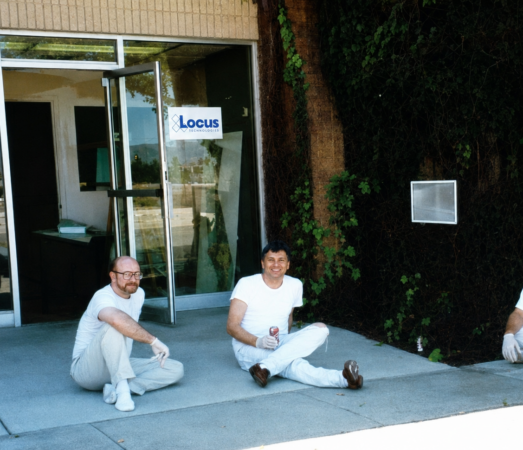
16 // Neno Duplan, Founder and CEO, Locus Technologies
... reconciling the outputs because the systems were never meant to work together. The air team's numbers didn't match the sustainability team's numbers, which didn't match what went to the CFO. That is not a reporting problem. It is an architecture problem. One platform, one validated data model, one version of the truth."
17 // Locus Advantage
Locus Technologies built a true multitenant platform before most of your shortlist vendors had heard the term. That head start cannot be acquired. It cannot be announced. It is baked into every line of code, every data model, every AI feature, and every regulatory update that Locus has ever shipped.
If your current EHS platform has a version number, you are paying for someone else's architectural choices via upgrade costs, in IT overhead, in regulatory lag, and in the growing gap between what your software can do with AI and what Locus customers already have.
18 // Deeper Dive
19 // FAQ
This is the most common misconception, and it is worth addressing carefully. In a well-designed multitenant system, data security is enforced at the application layer, not the infrastructure layer. Data access is governed by tenant-aware logic enforced in code. AWS, in its published security guidance for multitenant SaaS environments, documents multiple robust isolation patterns, including tenant-aware IAM policies, row-level security, and logical data partitioning. These are the same isolation mechanisms used by Salesforce, Workday, and other enterprise platforms trusted by regulated industries. The security posture is continuously tested and updated as part of a single unified system rather than depending on the correct configuration of hundreds of separate environments.
A well-designed multitenant platform includes resource management controls that prevent any single tenant from affecting others. Because Locus Technologies operates one system, it has full visibility into resource utilization across the entire platform, which enables proactive management that single-tenant operators cannot perform.
At Locus, configuration is metadata, not code. Forms, workflows, fields, calculations, and data relationships are stored as configuration data. Every customer can tailor their platform extensively to match their operations without touching the underlying code. Your configurations persist through every platform update because the platform code and your configuration data are separate layers. This is actually one of the strongest arguments for a metadata-driven multitenant architecture: deep customization without the version-lock risks of hard-coded modifications.
Nothing changes for your data or your configurations. Platform updates are applied to the application layer. Your historical data, your custom workflows, and your configuration remain intact. There is nothing to schedule. Nothing to approve. No IT involvement required.
Ask the five diagnostic questions in the section above. A confident "yes" with transparent, specific answers is meaningful. Vague answers, deployment option menus, or pivots to feature demonstrations are informative in a different way. Additionally: ask any vendor to show you real-time performance statistics across their entire customer base. A true multitenant provider can do this. A single-tenant provider cannot.
Locus has a structured data migration and implementation process refined over nearly three decades of onboarding customers from every type of prior system. The question is whether you pay that migration cost once or continue paying the ongoing costs of single-tenant architecture in upgrade fees, regulatory lag, and AI limitations indefinitely.
20 // Footnotes
¹ Survey data referenced in Locus Technologies published materials; consistent with Verdantix EHS Software market analyses noting that the majority of the installed EHS software base remained on-premises or single-tenant-hosted through the late 2010s.
² Enterprise software upgrade consulting costs: referenced in independent EHS industry commentary and consistent with general enterprise software migration benchmarks from Gartner and IDC.