01 // Water Quality Frameworks

Water quality software built on more than half a billion records. Every major framework supported.

Locus Technologies manages more than 530 million records across 1.9 million worldwide locations, with more than 4.8 million PFAS records tracked across 38,500+ global sites. The team that built this platform includes a former municipal environmental compliance director, a doctoral GIS researcher, and environmental data management specialists who have run these compliance programs in practice.

02 // Spotlight

4.8M+ PFAS records tracked across 38,500+ global sites in Locus software.

Customers have used Locus Technologies to manage and track their water and environmental records since 1997.

The regulatory frameworks Locus water quality software addresses

03 // Frameworks

Clean Water Act (CWA)

The Clean Water Act is the primary federal law governing water pollution control in the United States. It establishes the structure for regulating pollutant discharges into waters of the United States, authorizes the EPA to set wastewater standards for industry, and provides the framework for NPDES permits, water quality standards, and total maximum daily loads (TMDLs). The CWA also addresses oil spill prevention and stormwater management.

What Locus does: Locus Environmental Information Management (EIM), Locus Platform, and Locus Water applications provide the data infrastructure for CWA compliance programs. The platform manages discharge monitoring data, laboratory analytical results, field measurements, chain-of-custody records, and compliance schedules for facilities operating under CWA authority. Automated data validation, exceedance alerts, and regulatory report generation reduce the manual workload that CWA compliance traditionally demands.

NPDES Permit Management and Discharge Monitoring Reports (DMRs)

The National Pollutant Discharge Elimination System (NPDES) permit program controls water pollution by regulating sources that discharge pollutants into waters of the United States. NPDES permits specify effluent limitations, monitoring requirements, and reporting obligations. Permit holders submit Discharge Monitoring Reports (DMRs) monthly, quarterly, or annually, and are required to report permit exceedances within defined timeframes.

What Locus does: As water quality monitoring software, Locus generates DMR output directly from monitoring records, eliminating the manual transcription between field data and report submission that creates errors and audit risk. The platform tracks compliance with all permit conditions, flags exceedances as they occur, and maintains the complete data chain from sample collection through submission. Locus connects to electronic submission portals for DMR filing where supported.

Streamline your DMR reporting

MS4 — Municipal Separate Storm Sewer System Compliance Program

MS4 permits regulate stormwater discharges from municipal separate storm sewer systems, covering cities, counties, transit authorities, universities, and other public entities that operate storm drain systems. MS4 permits require permit holders to develop and implement stormwater management programs covering public education, illicit discharge detection, construction site runoff control, and post-construction stormwater management. Annual reporting to the state and the EPA is required.

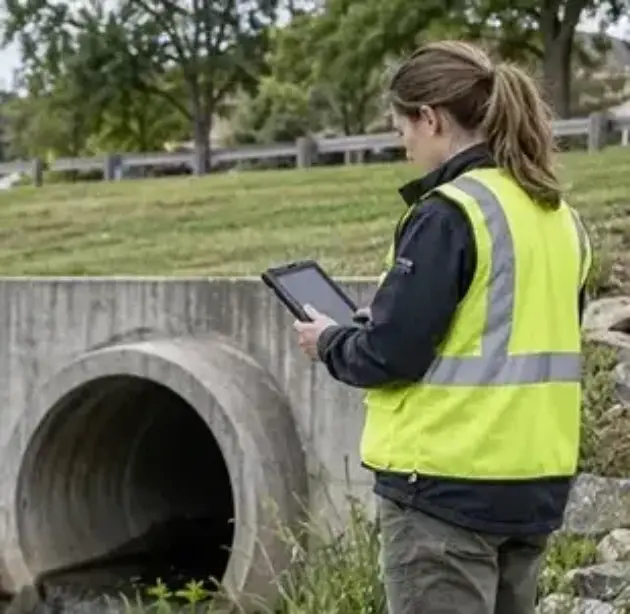
What Locus does: Locus supports MS4 permit compliance through stormwater discharge tracking, outfall inspection management, illicit discharge detection recordkeeping, and annual report generation. The platform's GIS mapping capabilities are particularly valuable for MS4 programs; field inspectors can view and record outfall status directly on a mapped interface, with data synchronizing to the central Locus compliance record automatically.

Industrial Pretreatment Program Management

Industrial Pretreatment Programs are designed to prevent pollutants from industrial and commercial users from interfering with wastewater treatment operations, passing through treatment processes untreated, or damaging collection system infrastructure. Utilities are responsible for identifying and permitting Significant Industrial Users (SIUs), enforcing discharge limits, conducting inspections and sampling, tracking compliance schedules, and maintaining detailed records to satisfy federal and state pretreatment regulations under the Clean Water Act. Managing these programs requires coordination across permitting, laboratory analysis, field inspections, enforcement activities, and regulatory reporting, often involving large volumes of data and complex workflows.

What Locus does: Locus centralizes industrial pretreatment program management by maintaining a complete record of industrial users, permits, discharge limits, inspections, sampling events, and enforcement actions within a single platform. The system automates compliance tracking for SIUs, generates notifications for permit renewals and required inspections, and flags violations or exceedances in real time. Locus streamlines data collection from field and laboratory sources, simplifies annual reporting requirements, and provides a complete audit trail for regulatory agencies, reducing administrative burden while improving program oversight and compliance visibility.

Industrial Pretreatment Software

FOG Program Management

Fats, Oils, and Grease (FOG) management programs help utilities reduce sewer blockages, sanitary sewer overflows (SSOs), and infrastructure damage caused by grease accumulation in wastewater collection systems. Utilities must identify and regulate food service establishments, track grease interceptor maintenance, conduct inspections, enforce compliance requirements, and respond to overflow incidents. Managing a FOG program can be operationally challenging due to the high number of facilities involved, inconsistent maintenance practices, and the need to coordinate field inspections, pumping records, enforcement actions, and public outreach efforts.

What Locus does:Locus provides utilities with a centralized platform for managing all aspects of FOG program operations, including food service establishment inventories, inspection scheduling, grease trap maintenance records, enforcement tracking, and incident response documentation. The platform automates reminders for required cleanings and inspections, enables mobile field data collection, and provides real-time visibility into compliance status across the service area. Locus also helps utilities identify recurring problem areas, track trends in SSOs and grease-related maintenance issues and maintain complete documentation to support regulatory reporting and enforcement activities.

FOG Management Software

Safe Drinking Water Act (SDWA)

The Safe Drinking Water Act authorizes the EPA to establish national standards for drinking water quality and requires public water systems to monitor and report on regulated contaminants. The SDWA framework includes primary standards (health-based maximum contaminant levels, MCLs), secondary standards (aesthetic qualities), treatment technique requirements, and public notification obligations.

What Locus does: Locus drinking water quality software manages monitoring schedules, analytical data, MCL compliance calculations, and reporting for public water systems operating under SDWA. As water quality laboratory management software, the platform handles analytical data imported from multiple labs, validated against sample-specific holding times and detection limits.

Drinking Water Quality Software

Consumer Confidence Reports (CCR)

The Consumer Confidence Report (CCR) rule requires community water systems to deliver an annual or biannual water quality report to customers. CCRs must include information on the source of the water, detected contaminants, compliance with drinking water standards, and educational information on potential health effects. The EPA is modernizing the CCR rule to enable electronic delivery and improve accessibility.

What Locus does: Locus aggregates the monitoring and compliance data that CCRs require from across a water utility's operations, including sampling results from multiple labs, MCL compliance status, source water information, and treatment violation history, into report-ready data sets that can be formatted for agency-specific CCR templates.

Locus EIM Software

04 // Software Demonstration

See how Locus handles your water quality compliance program.

Every Locus water quality demo is led by a team member with direct experience in environmental compliance operations. Talk to someone who knows this work from the inside.
Schedule a Demo

Common questions about water quality framework compliance

05 // FAQ

Yes. Locus imports Electronic Data Deliverables (EDDs) from multiple laboratories in standard and lab-specific formats, validates data against sample-specific holding times and detection limits, and consolidates analytical results from all sources into a unified, auditable record. Chain-of-custody documentation is maintained throughout.

Yes. Locus Mobile gives field staff water quality monitoring tools for sampling data, GPS-tagged location information, field measurements, and photos directly on mobile devices, including offline in areas without connectivity. Data synchronizes to the central Locus Platform automatically when connectivity is restored.