
01 // Locus Air

Manage every permit. Calculate every emission. Miss nothing.

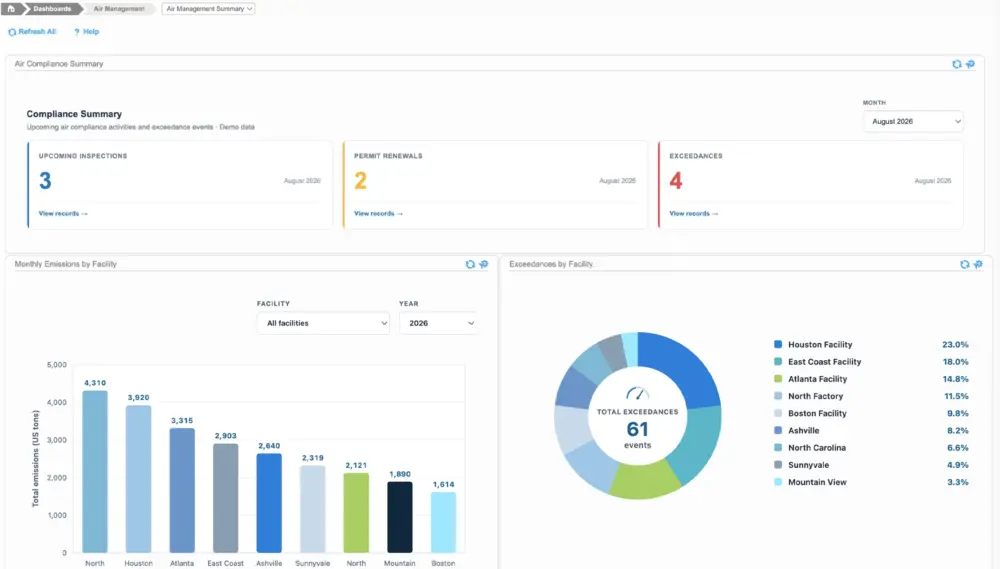
Locus Technologies air quality management dashboard

02 // Purpose-built software

Air Emissions Management Software for Title V, NSR, NESHAP, and Permit Compliance

Keeping up with Clean Air Act, NSR, NESHAP, and Title V permit requirements is complex and the stakes are high. The Locus Air app gives large organizations a unified, cloud-based platform for managing permits across multiple facilities, calculating emissions inventories automatically, monitoring deviations, and generating the regulatory reports that agencies and management require. Automated calculation engines, a centralized factor library, IoT sensor connections, and GIS visualization can all work together in one system. Because the app runs on the Locus Platform, air data connects natively to your GHG inventory, ESG program, chemical inventory, and spill management workflows.

Built on Locus Platform

Locus Air can be integrated with the compliance, asset management, and remote sensing capabilities of the Locus Platform. Permit documents, compliance obligations, deadlines, and report data all live in one secure, searchable cloud system that connects to adjacent Locus apps for GHG, ESG, CSRD, refrigerant management, chemical inventory, and audits. Power users can self-configure the app in response to regulatory changes that affect permit workflows without custom development and without waiting for a vendor engagement. IoT-enabled emissions sensors and third-party software connect via API to bring operational data directly into the compliance record.

Platform Overview

Why EHS teams choose Locus Air

Manage permits for multiple facilities from a single shared dashboard.

Every permit, every obligation, every deadline, and every document is centralized in one role-based view, and it’s searchable across all your facilities simultaneously.

Calculate emissions automatically with a built-in factor library and engine.

Automated calculations using AP-42 and 40 CFR Part 98 factors, combined with built-in validation rules, eliminate the human errors that plague manual data entry and spreadsheet formulas.

Centralize all permit documents, requirements, and deadlines in one place.

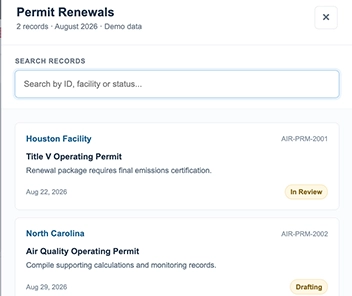
Permit renewals, reporting deadlines, compliance tasks, and related documents are searchable and organized in one secure cloud platform. Important items are no longer scattered across email threads and shared drives.

Generate deviation reports, emissions inventories, and regulatory submissions fast.

Built-in templates and automated formatting reduce reporting time dramatically — from annual emissions inventories to deviation reports for internal stakeholders and regulatory agencies.

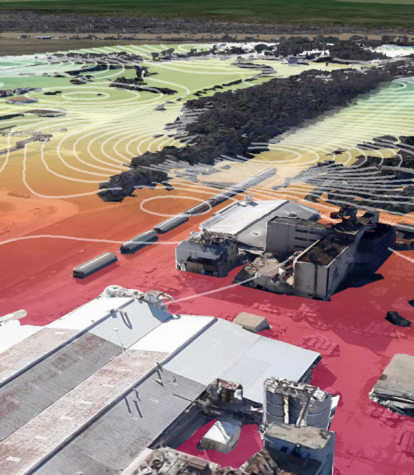
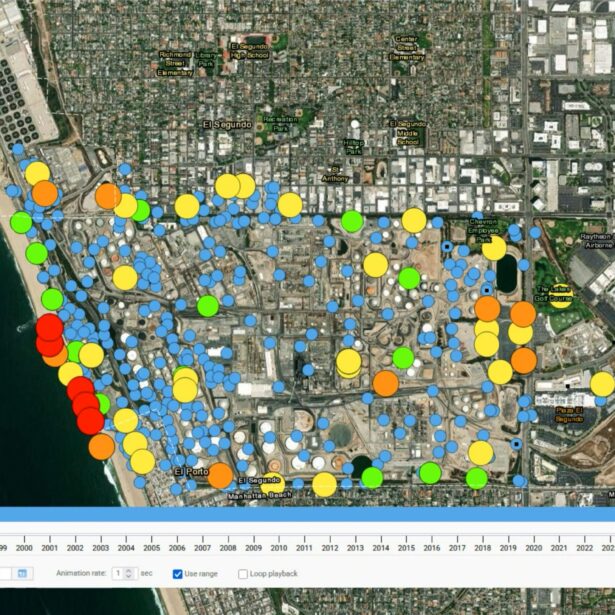
Locus Google Earth Visualization

Visualize emissions sources, trends, and risks with built-in GIS analytics.

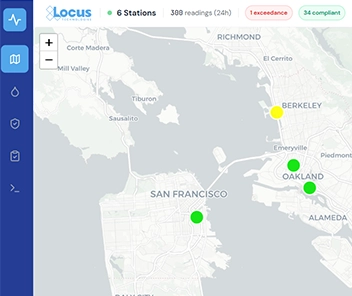
GIS-powered visualization identifies trends, risks, and operational improvement opportunities that tabular data alone cannot surface.

Connect air emissions data natively to your GHG, ESG, and sustainability programs.

Air data and GHG inventory share the same platform data layer. As a result, the same operational records that drive permit compliance also feed your sustainability disclosures.

Connect IoT sensors and third-party systems via API for real-time data.

Emissions sensors, Continuous Emissions Monitoring Systems (CEMS), SCADA systems, ERP software, and other monitoring tools feed data directly into the compliance record — eliminating manual input and version discrepancy.

Self-configure workflows when regulations change, without involving developers.

When a new program is implemented or an older tool is eliminated, the Locus Configuration Workbench lets power users adapt permit workflows and calculations on their own timeline.

05 // Don Hill, Director of Environmental Affairs, Foster Farms

"The accurate tracking and reporting of critical environmental resource usage is a necessary part of our compliance responsibilities,

... and a major component of our efforts to ensure that we are a sustainable producer. The Locus application software will make a significant contribution to our resource management capabilities."

Managed from end-to-end

06 // Air Compliance Lifecycle

  • Configure

    Load emissions factors, define emission sources and fuel properties, configure permit obligations, deadlines, and reporting requirements. Set up once; operate simply.

  • Calculate

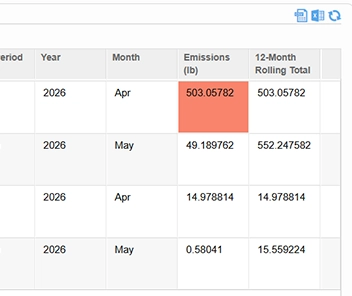
    Enter or import monthly operational activity data like fuel use, material throughput, and metered readings. The calculation engine automatically applies the right emission factors, control efficiencies, and unit conversions to produce emissions results in lb, kg, US ton, and MT.

  • Monitor

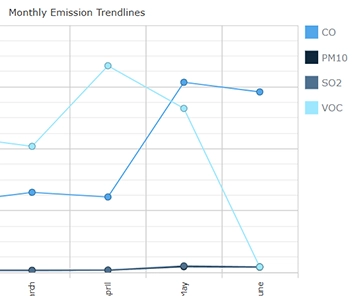
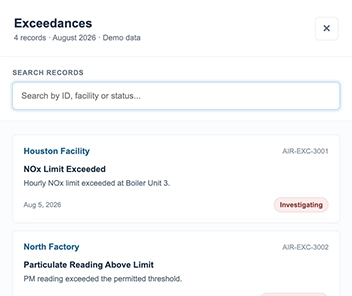
    Track permit limits against calculated emissions in real time. Receive automated alerts for permit renewals, reporting deadlines, and compliance tasks. Investigate exceedances using integrated Audits and Inspections tools.

  • Report

    Generate annual emissions inventories, deviation reports, and other submissions using built-in templates. Reveal full calculation transparency — every factor, every parameter, every result — to achieve audit readiness at any time.

Locus Air software simplifies compliance

07 // Feature Highlights

Permit Management and Compliance Tracking

Locus centralizes all permit-related documents, requirements, deadlines, and report data in one secure, searchable cloud platform. Every permit across every facility is visible in one system. Expiration and renewal dates surface automatically. Compliance tasks are linked to the obligations they fulfill. Permit documents, consent decrees, and supporting records attach directly to the permit record. Automated reminders go out for permit renewals, reporting deadlines, and compliance tasks, well before a deadline is missed. The app is fully integrated with Locus compliance and asset management tools, making it straightforward to manage comprehensive assets, emissions, and requirements data for multiple facilities and multiple permits from a single role-based dashboard.

Task and Compliance →
Chemical Inventory →

Automated Emissions Calculations and Factor Management

Emissions calculations are where data quality either holds or breaks. Manual factor selection and spreadsheet formulas introduce errors that are difficult to detect and costly to defend under regulatory scrutiny. Locus automates the calculation from end to end. The app uses a standardized calculation framework: for standard air pollutants, emissions equal activity multiplied by one minus control efficiency, multiplied by the emission factor and any unit conversion factors. For greenhouse gas pollutants, the global warming potential is applied to the same equation. The system evaluates source characteristics, fuel type, equipment properties, and control configurations automatically to select the right emission factor from the built-in library. The factor library includes US EPA AP-42 factors for combustion sources including natural gas, distillate fuel oil, motor gasoline, and liquid propane. Built-in validation rules catch calculation errors before they propagate into reports. Every parameter used in every calculation is visible in the record so auditors can trace any result back to its source without manual reconstruction.

GHG Tracking →
Chemical Inventory →

Deviation Response and Exceedance Management

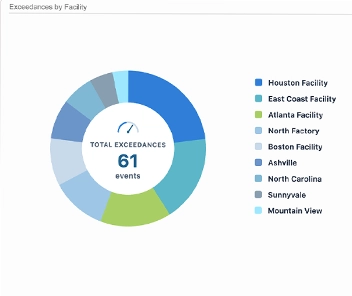
When a calculated value crosses a permit threshold, Locus sends automated alerts to the right people and provides structured tools for response. Built-in Audits and Inspections integration lets teams investigate the exceedance, log root causes, and document corrective actions — all within the same system where the deviation is recorded. Version histories, compliance logs, and supporting documentation are always accessible. When a regulator asks how a deviation was identified, investigated, and resolved, the answer is already organized and audit ready.

Audits and Inspections →
EHS Compliance Solutions →

Emissions Inventory and Regulatory Reporting

Regulatory reporting should not require rebuilding what is already in your compliance records. Locus generates annual emissions inventories, deviation reports, and other report formats for internal stakeholders or regulatory agencies using built-in templates and automated formatting. The same operational data that drives daily emissions tracking populates the regulatory submission automatically. For programs including Title V, LCFS, and GHG, the reporting framework is already structured. Emissions results are calculated in pounds, kilograms, US tons, and metric tons simultaneously — so any required unit is always available without manual conversion. As regulatory programs evolve or new programs are added, power users self-configure reporting workflows using the Locus Configuration Workbench, without vendor involvement and without a development cycle.

Dashboards and Reporting →
EHS Compliance Solutions →
ESG Reporting →

GIS Visualization and Spatial Analytics

Knowing your emissions numbers is necessary. But knowing where they are occurring and how they relate spatially to permit boundaries, community proximity, and other environmental factors is what turns compliance data into operational intelligence. Locus Air offers built-in GIS visualization to identify trends, risks, and opportunities for operational improvements. Emissions sources are plotted spatially. Exceedance zones are visible on the map. Field teams access the same spatial data during inspections that permit managers use for strategic planning. For facilities with complex source configurations or multiple regulated areas, the spatial view of your emissions program is a requirement for defensible permit management.

Locus GIS+ →
Audits and Inspections →

IoT, Sensor, and Third-Party Integration

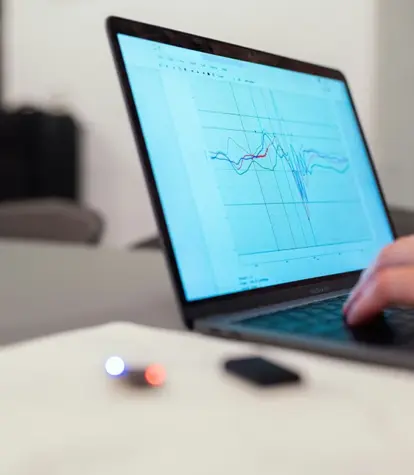
Air compliance data comes from many sources, including manual readings, laboratory results, IoT-enabled emissions sensors, CEMS data, SCADA systems, ERP software, and metered processes. Locus connects to all of them. The app supports API integrations with third-party software and direct connections to IoT-enabled emissions sensors, bringing operational data into the compliance record automatically and eliminating the manual entry steps where errors accumulate. Metered processes are supported for both totalizing meters (where the net reading is calculated automatically from current and prior values) and non-metered or non-totalizing sources. Real-time sensor data, field measurements, and imported operational records all feed the same calculation and reporting framework.

SCADA and Sensors →
API Integrations →
Chemical Inventory →

08 // Neno Duplan, Locus Technologies

"When it comes to the air we breathe, there's no room for doubt. Locus streamlines emissions tracking and reporting requirements

... across Clean Air Act programs — fully integrated with our compliance, asset management, and remote sensing systems, making digital transformation a breeze."

Locus Air is one app on a platform built for your entire EHS and ESG program

09 // truly unified platform

Locus = No Data Silos

Air emissions do not stay in a single compliance silo. The chemical resulting in VOC emissions can be tracked in Chemical Inventory. The permit deviation requiring investigation connects to Audits and Inspections. The greenhouse gas component of your emissions inventory feeds directly into your GHG program. The ESG disclosure that summarizes your air performance for investors draws from the same platform record as your Title V submission.

In Locus software, all of those connections are native. The Factor Library that powers air emissions calculations is shared with the GHG program. Chemical names from Chemical Inventory feed directly into air pollutant records as emission sources. A spill event that generates an air emission connects to both the Spill Management and the Air app records simultaneously. This is what a unified platform looks like in practice. It’s not a collection of modules that share a login screen. It’s a single system where operational reality is captured once and used everywhere it is relevant.

Locus supports an ecosystem of more than 30 purpose-built apps. Your Air Quality implementation can expand into new programs as your regulatory obligations grow — all on the same platform, and all sharing the same data.

All Locus apps share a unified data layer

10 // Locus Ecosystem

GHG Tracking GHG Management Software for Regulatory Reporting, Carbon Accounting, and Emissions Compliance
ESG and Sustainability Metrics ESG Reporting Software for Organizations That Need Their Disclosures to Hold Up
Chemical Inventory Chemical Inventory Management Software for Complex Operations
Spill Management Spill Management Software for Incident Tracking, Compliance, and Corrective Action
Audits and Inspections Audit and Inspection Management Software for Enterprise EHS Programs
CSRD Disclosures CSRD Compliance Software for Double Materiality, ESRS Data Collection, and Assurance-Ready Reporting
Refrigerant Management Refrigerant Management Software for Compliance, Chronically Leaking Systems Reporting, and ESG Reporting
Full Locus Ecosystem Browse the complete collection of pre-built applications.

11 // Software Demonstration

See Locus Air in action

Air permit compliance is too consequential to evaluate from a data sheet. Talk to a Locus environmental specialist who understands Title V, NSR, NESHAP, and the complexity of multi-facility permit programs. They will show you how the app handles your emissions sources, your permit obligations, and your regulatory reporting requirements.
Request a Personalized Demo

Frequently Asked Questions

12 // FAQs

The app is designed for Clean Air Act compliance including Title V, NSR, NESHAP, and state-level reporting programs. It supports emissions tracking and reporting for GHG, LCFS, and additional state and local programs. The platform is self-configurable by power users, so when new regulatory programs are implemented or existing tools are updated, permit workflows and calculation templates can be adapted without custom development.

Locus uses a standardized calculation framework for air pollutant emissions. Operational activity data like fuel use, material throughput, or metered readings is entered or imported for each emission source. The calculation engine evaluates source characteristics, fuel type, equipment properties, and control configurations, then automatically selects the appropriate emission factor from the built-in factor library. Control efficiencies are applied on a pollutant-specific basis. Results are produced and rolled up by source and various time periods. Every input parameter and every factor used is visible in the calculation record for full audit traceability.

The application comes with AP-42 factors and supports uploading permit-based or custom factor and stack test results. The system follows a defined factor hierarchy that prioritizes stack testing measurements and permit-specific factors above regulatory defaults — reflecting how regulatory agencies expect data quality to be evaluated.

Every permit document, compliance obligation, reporting deadline, and renewal date is centralized in one cloud platform, searchable across all facilities simultaneously. Role-based dashboards give site-level teams a view of their permits while giving corporate teams aggregate visibility across the entire portfolio. Automated reminders go out before renewals and reporting deadlines become missed deadlines.

The app supports API connections to third-party software and direct integration with IoT-enabled emissions sensors. Metered processes are supported for both totalizing meters (where net readings are calculated automatically) and non-metered sources. SCADA systems, CEMS, ERP software, and other operational data sources connect via the Locus Platform's integration framework, bringing real-time data into the compliance record without manual re-entry.

Air emissions data and GHG inventory share the same platform data layer. The Factor Library that powers air emissions calculations is shared with the GHG program. Emissions results calculated for air permit compliance automatically contribute to GHG inventory totals. ESG disclosures that report on air emissions and carbon performance draw from the same verified operational records as Title V submissions without any manual data transfer between systems.

When a calculated emissions value approaches or crosses a permit threshold, Locus sends automated alerts. The integration with Locus Audits and Inspections allows teams to investigate exceedances, document root causes, and log corrective actions within the same platform. Version histories, compliance logs, and all supporting documentation are always accessible, so audit preparation does not require assembling information from multiple systems.