
01 // AIR QUALITY FRAMEWORKS

Meeting air quality standards is data intensive. Locus makes compliance manageable.

From Title V operating permits to EPA Greenhouse Gas Reporting Program submissions and AIM Act refrigerant phase-down tracking, Locus Technologies provides the emissions inventory, permit management, and reporting infrastructure that industrial facilities, utilities, and chemical manufacturers depend on.

The air quality standards and regulations Locus addresses — and what your team gets in practice

02 //

Clean Air Act (CAA)

The Clean Air Act sets the federal clean air standards governing air pollution control in the United States. It establishes the National Ambient Air Quality Standards (NAAQS) that the US EPA sets for criteria pollutants, requires emissions monitoring and reporting from major and area sources, and provides the authority for the state implementation plans through which Clean Air Act implementation reaches individual facilities, along with operating permits and enforcement actions. Most facility-level compliance obligations — from Title V to GHGRP — derive their authority from the CAA.

What Locus does: Locus air emissions management software serves as the data foundation for CAA compliance programs. The platform connects to electronic and manual air monitoring data sources, calculates emissions using standard or facility-specific methodologies, tracks compliance with permit conditions written against EPA air quality standards, and generates the reports that state and federal agencies require. Task management and automated notifications keep compliance calendars on track across multi-facility operations.

Title V Operating Permits

Title V of the Clean Air Act requires major stationary sources of air pollution to obtain a comprehensive operating permit that consolidates all applicable air quality requirements into a single document. Title V permits include emission limits, monitoring requirements, recordkeeping obligations, and annual compliance certification. Annual compliance reports must be submitted to state agencies and, in many cases, to the US EPA's Compliance and Emissions Data Reporting Interface (CEDRI).

What Locus does: Locus Title V capabilities include permit condition tracking across multiple emission units, automated monitoring data collection from continuous emissions monitoring systems (CEMS) and parametric monitoring, deviation tracking, and report generation. Locus links Title V compliance data directly to the emissions inventory records required for GHGRP and state program reporting.

Streamline your Title V reporting

EPA Greenhouse Gas Reporting Program (GHGRP) / 40 CFR Part 98

The US EPA's GHGRP requires large GHG emitters (facilities emitting 25,000 metric tons CO2e or more annually) to report annual GHG emissions to the US EPA. Facilities subject to 40 CFR Part 98 calculate emissions using subpart-specific methods, maintain detailed monitoring records, and submit annual reports through the EPA's Electronic Greenhouse Gas Reporting Tool (e-GGRT). Subparts cover more than 40 source categories.

What Locus does: Locus supports GHGRP data collection, calculation, and reporting for multiple subparts, including stationary combustion, industrial processes, and refrigerant systems. The platform maintains the monitoring records, calculation inputs, and documentation that 40 CFR Part 98 requires. Because Locus operates as a unified platform, data used for GHGRP reporting simultaneously feeds GHG Protocol corporate inventories and ESG disclosures — eliminating the separate calculation spreadsheets that create audit risk.

State Carbon Programs

Several states operate mandatory GHG cap-and-trade or carbon pricing programs that apply to facilities not covered by federal GHGRP (or covered differently). California's Cap-and-Trade Program (AB 32/SB 32), the Regional Greenhouse Gas Initiative (RGGI) covering multiple northeastern states, and Washington State's Climate Commitment Act are the most significant. California's Low Carbon Fuel Standard (LCFS) applies specifically to transportation fuel producers and importers.

What Locus does: Locus supports California LCFS compliance data management and GHG inventory tracking aligned to state program requirements. The platform's configurable reporting layer can be adapted to state-specific calculation methodologies and submission formats. Locus expertise in California carbon compliance — including LCFS verification — reflects more than a decade of applied engagement with state program requirements.

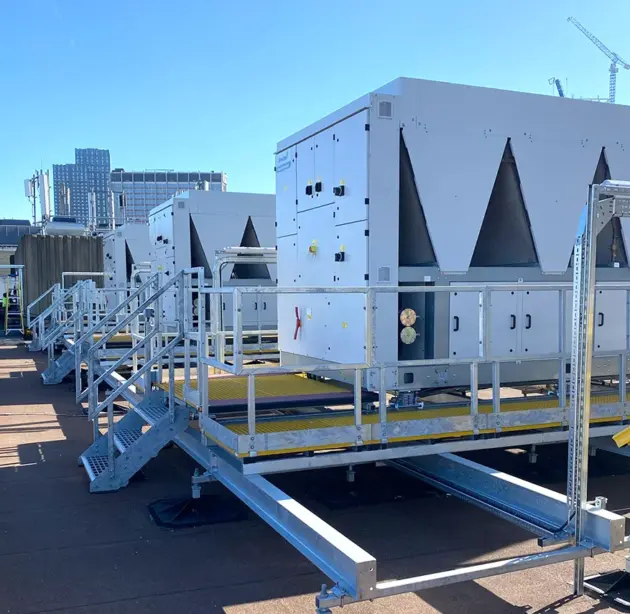
Locus Refrigerant Management photo of roof chillers

AIM Act — American Innovation and Manufacturing Act

The AIM Act (2020) directs the EPA to phase down the production and consumption of hydrofluorocarbons (HFCs) by 85% by 2036, establish standards for HFC substitutes, and implement rules governing HFC management practices. Section 103 regulations require facilities with HFC-containing appliances above certain charge thresholds to implement leak inspection programs, maintain service records, and report annual leak rates. The AIM Act builds on and expands the refrigerant management requirements previously established under Section 608 of the Clean Air Act.

What Locus does: Locus Refrigerant Management tracks appliance inventories, scheduled and unscheduled service events, refrigerant purchases and disposals, and leak rate calculations in accordance with AIM Act Section 103 methodology. Automated alerts notify compliance teams when appliances approach regulatory leak rate thresholds, and annual reporting outputs are generated directly from the platform. An EU version of the application, released in 2026, extends the same approach to F-Gas Regulation obligations. The Locus refrigerant team is led by the instructor for NREP's Certified Refrigerant Compliance Manager (CRCM) program.

Explore Locus Refrigerant Management

Toxic Release Inventory (TRI) -- Air Quality Context

Alongside EPA air pollution standards for criteria pollutants, the agency's Toxic Release Inventory program (EPCRA Section 313) requires facilities in covered industries that manufacture, process, or otherwise use TRI-listed chemicals above threshold quantities to report annual releases and waste management quantities to the EPA. TRI data is publicly available and used by communities, investors, and regulators to assess facility-level environmental performance. Air emissions are among the primary release categories reported under TRI.

What Locus does: Locus Chemical Inventory and emissions management tools support the tracking of TRI-listed chemical quantities, threshold determinations, and release calculations for air emissions. The platform's unified data model means that chemical inventory data used for TRI reporting is the same data used for EPCRA Section 311/312 Tier II reporting and hazardous waste generator determination.

Explore Locus Air Quality capabilities

Common questions about air quality framework compliance

03 // FAQ

Locus Technologies supports the full set of US air quality frameworks that regulated facilities report against: the Clean Air Act and its NAAQS-driven permit obligations, Title V operating permits, the GHG Protocol Corporate Standard, EPA's GHGRP under 40 CFR Part 98, state carbon programs including California Cap-and-Trade and LCFS, AIM Act Section 103 refrigerant requirements, and TRI air releases under EPCRA Section 313. All of them draw on one validated emissions data set rather than separate spreadsheets per program.

Yes. Locus connects to electronic data sources, including CEMS, SCADA systems, and IoT sensors. Monitoring data flows directly into permit condition tracking and emissions inventory calculations without manual data entry.

Locus has an Emission Factor library for permitted/facility-based emission factors, stack testing data, as well as regulatory factors (such as EPA AP-42). The calculations are setup to prioritize using stack test results over permitted/facility factors. If these are not available, regulatory factors for air emission calculations is the default option.

Yes. Locus's configurable architecture allows teams to define jurisdiction-specific monitoring requirements, permit conditions, and reporting formats for each facility or group of facilities, all within the same platform instance.

Locus generates reports aligned to regulatory agency submission requirements. Your implementation team works with your agency-specific format requirements during configuration to ensure output is compatible with state and EPA electronic submission systems.

04 // Software Demonstration

See how Locus handles your facility's air quality compliance program.

Locus demos for air quality are led by professionals with real Title V, GHGRP, and LCFS experience. Tell us your compliance calendar and we will show you exactly how the platform handles it.
Schedule a Demo