





San Jose Water Company
San Jose Water — Silicon Valley's largest investor-owned water utility — uses Locus EIM to automate and optimize drinking water quality management and compliance data across its service territory.
01 // Use Case: Water quality monitoring software
The team behind Locus Water includes a former municipal water utility director, doctoral GIS researchers, and water compliance professionals who have managed these programs in practice. When your water quality data must be right, complete, and defensible, the scale and expertise Locus brings is a significant asset.
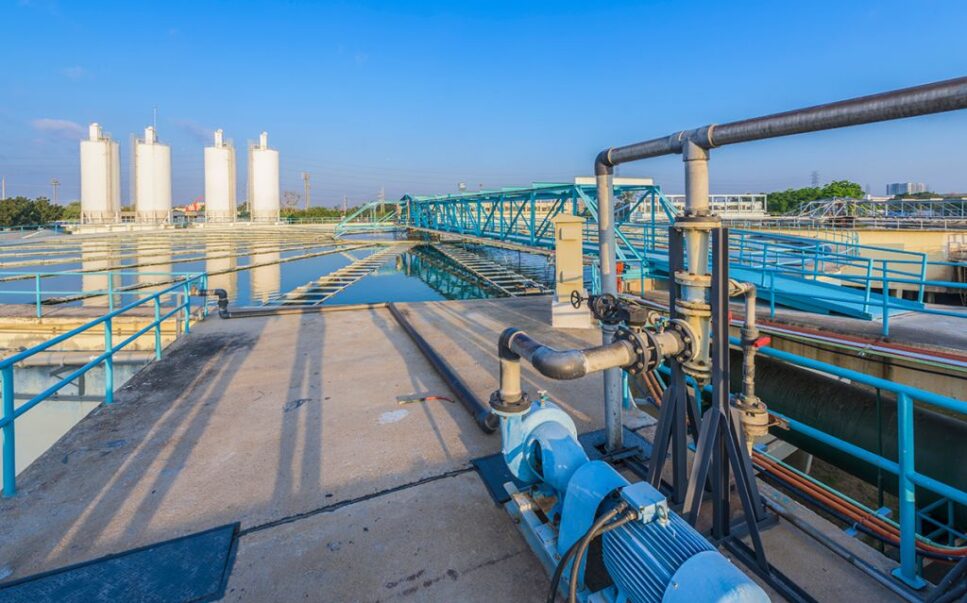

Managing environmental compliance obligations at water and wastewater treatment facilities is a highly complex and resource-intensive responsibility due to the wide range of federal, state, and local regulations that govern facility operations. Operators must continuously monitor and document water quality, chemical usage, discharge limits, air emissions, biosolids handling, and equipment performance to ensure compliance with permits and regulatory standards such as the Clean Water Act and Safe Drinking Water Act.
The complexity is compounded by evolving regulations, aging infrastructure, emerging contaminants, and the need for real-time reporting and data management.
03 // Frameworks & Highlights
Drinking water quality compliance (SDWA)
Locus manages monitoring schedules, analytical data, exceedances, and workflows for public water systems. The platform can import analytical data from your accredited 3rd party or in-house laboratories, validate sample results against sample-specific holding times and detection limits, and compare results to applicable MCLs and action levels. Monitoring schedules for all compliance driven samples are managed within one scheduling environment, with automated reminders and missed-sample alerts.
Explore Locus Drinking Water software →
PFAS monitoring and compliance
Locus manages PFAS analytical data with the specificity that such low MCLs require, including abilities to log method-specific result qualifiers. With more than 4.4 million PFAS records currently under management, Locus has demonstrated PFAS data management capability at a scale no comparable platform can match.
Explore PFAS →
NPDES permit compliance and discharge monitoring reports
Locus generates Discharge Monitoring Reports directly from validated effluent monitoring data — eliminating the manual transcription between the laboratory result and the agency submission that creates both errors and audit risk. Permit conditions and effluent limits are tracked at the outfall and parameter level with automated exceedance alerts and configurable notification workflows.
Explore DMR Reporting →
MS4 Stormwater Compliance
Locus supports MS4 permit compliance through stormwater discharge tracking, outfall inspection record management, illicit discharge detection documentation, and annual report generation. MS4 inspection history, BMP implementation records, and outfall status are all maintained in the same system as other water quality compliance data.
Explore Locus Stormwater software →
Consumer Confidence Reports (CCR)
Locus aggregates compliance data that Consumer Confidence Reports require, including detected contaminant results, source water information, and treatment technique compliance status from across a utility's monitoring program into report-ready data tables.
Explore Locus CCR tools →
Real-time monitoring through SCADA and IoT integration
Locus connects to SCADA systems, smart meters, and IoT sensors through standard integrations -- bringing real-time process data (flow rates, chlorine residuals, pH, turbidity, and other continuous monitoring parameters) into the same compliance data environment as laboratory analytical results.
Explore SCADA & Sensors →
04 // Domain Expertise
The Locus team behind the water quality platform includes a former director of water quality and environmental compliance for a variety of municipal water systems senior directors of strategy and innovation in the water and environmental sector, and doctoral GIS researchers from institutions including the University of Oxford. This is not a technology team that learned basic water compliance to build software for it; these are water professionals who applied their expertise to shape how software handles the specific data management challenges that water programs face.
That expertise is visible in the details: the way Locus handles PFAS non-detect results under different statistical protocols, the way the GIS+ module connects a monitoring location to its full analytical history with a single click, and the way the DMR module connects effluent monitoring data to permit conditions to regulatory submission without any intermediate manual steps.
05 // Perennial Customers


The 98% annual customer renewal rate that Locus maintains across its entire customer base reflects the same dynamic in the water sector: utilities that have gone through UCMR sampling cycles, PFAS MCL compliance assessments, and NPDES permit renewals with Locus found that the software delivered when under regulatory scrutiny.
San Jose Water — Silicon Valley's largest investor-owned water utility — uses Locus EIM to automate and optimize drinking water quality management and compliance data across its service territory.

Valley Water, which manages water supply for 2 million people in Santa Clara County, California, is a long-standing Locus customer managing water quality and environmental data on the platform.

Hillsboro Water, which manages four public water systems and Barney Reservoir in Oregon, uses Locus software to centralize water quality data, coordinate regulatory requirements, streamline field collection, and support data-driven decisions.

The City of San Marcos, Texas uses Locus EIM to streamline water and wastewater quality data management and compliance reporting. Integrated mobile capabilities and connectivity with the city’s GIS help teams access field information and respond more quickly.
07 // See it in action

08 // Recommended Reading
09 // FAQ
Water quality monitoring software is a platform that manages the data collection, validation, analysis, and regulatory reporting functions of water quality programs — for both municipal water and wastewater treatment operations. It typically handles sample planning, laboratory data import and validation, compliance schedule management, comparison of results to regulatory thresholds (MCLs, effluent limits, action levels), and report generation for agencies. Leading water quality platforms like Locus Water also support SCADA and IoT integration for real-time monitoring, GIS mapping, and mobile field data collection. Locus Water also hosts a variety of purpose build applications in stormwater, industrial pretreatment management, FOG, and cross connection control.
Water utilities use specialized environmental data management and compliance software to manage the compliance requirements associated with US regulations such as the Safe Drinking Water Act and Clean Water Act. Locus Technologies is among the leading platforms in this category. Key evaluation criteria include sample planning, mobile field data collection, laboratory EDD import capability, data validation, results and trending analysis, and operational and discharge report generation.
A Laboratory Information Management System (LIMS) manages data within a laboratory — tracking samples, analytical instruments, test methods, and results from receipt through analysis. Water quality compliance software manages data from field collection through agency reporting; it receives analytical results from a LIMS (via EDD import) and manages everything downstream, such as validation, regulatory threshold comparison, compliance schedule management, exceedance alerting, and report generation. Locus software connects to LIMS platforms through standard API integrations.
Yes, some can. Locus generates Discharge Monitoring Reports directly from validated effluent monitoring data — importing laboratory results, calculating monthly, quarterly, or annual statistical summaries consistent with permit reporting requirements, and generating DMR output in formats compatible with agency systems. The DMR generation workflow in Locus eliminates the manual transcription step between laboratory results and report submission that is a common source of DMR errors and reporting violations.
Locus connects to SCADA systems through standard API integrations, bringing continuous process monitoring data (flow rates, pressure readings, chlorine residuals, turbidity, and other parameters) into the same compliance data environment as laboratory analytical results. When a SCADA-monitored parameter approaches a permit limit or regulatory threshold, Locus generates an automated alert and initiates a configurable notification workflow. This integration eliminates the data gap between real-time process monitoring and the compliance record that periodic lab sampling alone cannot close.