







Yes. Locus Platform is a multitenant SaaS environment where different user groups access the applications relevant to their role, governed by role-based access controls. An EHS manager sees waste management and incident applications. A sustainability analyst sees GHG and ESG disclosure applications. An IT administrator sees all applications and their configuration status. Every user group works from the same underlying data model, which means the data each team produces is immediately available to every other team that needs it.
01 // SOLUTIONS BY DEPARTMENT
This platform earns its keep across your entire organization
Most EHS software is purchased by one department and tolerated by everyone else. Locus is different.
The same platform that gives your EHS team audit-ready compliance records gives your sustainability team financial-grade ESG data, your IT organization a governed single-vendor architecture, and your CFO a defensible story on environmental liability. Every department gets something specific. Every department shares the same validated data.
02 // Locus Technologies for the Enterprise
The cost of fragmentation is too great to measure
EHS, sustainability, and water compliance programs in large organizations are typically managed across a fragmented collection of point solutions, spreadsheets, and manual processes — each serving one team's immediate need without contributing to the broader data environment.
An EHS manager maintains OSHA logs in one system. A sustainability analyst builds GHG inventories in a separate tool with data manually extracted from the EHS system. A water quality team runs permit compliance in a third application that no other department can access. IT manages four vendor relationships, four security reviews, and four integration projects for what is fundamentally one category of organizational need.

Locus Platform resolves the disconnect
Locus Platform resolves this by providing a single multitenant, SOC 2 Type 2-verified cloud environment where all of these functions share one data model, one workflow engine, one audit infrastructure, and one API integration surface. Your IT team evaluates Locus once. Procurement negotiates one contract. And then every department that touches environmental, safety, or sustainability data gets a purpose-built application experience on infrastructure they already trust.
The result is lower total cost of ownership: fewer vendor contracts, fewer integration maintenance cycles, fewer data reconciliation projects, and no professional services fees for configuration changes that your own power users handle in the Configuration Workbench. Another result is quality data — because when waste disposal records, air permit compliance data, GHG calculations, and incident reports all live in the same validated environment, the reports derived from them are consistent, defensible, and ready when any stakeholder asks.
04 // Locus for EHS Compliance teams
Trusted EHS software built by fellow EHS professionals
EHS compliance professionals carry compliance calendars that span air permits, waste manifests, water discharge reports, chemical inventories, incident logs, and safety audits — often across dozens of facilities, each with its own permit conditions, regulatory deadlines, and agency relationships. The consequence of missing a deadline or producing an inaccurate report might be an enforcement action, a fine, or a reputational event.
Locus addresses this with 30+ purpose-built compliance applications that cover the full EHS spectrum: Title V air permit compliance with automated deviation tracking, RCRA cradle-to-grave waste management with patented tracking methodology, NPDES discharge monitoring report generation from validated sampling records, OSHA 300/301/300A log maintenance with automated recordability determination, chemical inventory management for EPCRA Tier II and TRI reporting, refrigerant management under the AIM Act, and spill and corrective action management. Every application generates a complete audit trail — collection timestamp, personnel, instrument, validation status, and reviewer attribution — that holds up under regulatory inspection.
Locus addresses this with 30+ purpose-built compliance applications that cover the full EHS spectrum: Title V air permit compliance with automated deviation tracking, RCRA cradle-to-grave waste management with patented tracking methodology, NPDES discharge monitoring report generation from validated sampling records, OSHA 300/301/300A log maintenance with automated recordability determination, chemical inventory management for EPCRA Tier II and TRI reporting, refrigerant management under the AIM Act, and spill and corrective action management. Every application generates a complete audit trail — collection timestamp, personnel, instrument, validation status, and reviewer attribution — that holds up under regulatory inspection.


And designed for you to make it your own
The Configuration Workbench means EHS teams are not dependent on a vendor queue when a permit condition changes, a new facility opens, or a state agency updates its report format. Your team makes the change. It goes live the same day.
Every R&D and customer-facing Locus employee holds an advanced science or engineering degree or direct professional EHS experience. The professionals who implement Locus for your organization understand your compliance obligations before the kickoff call.
06 // Locus for Sustainability Teams
Financial-grade disclosure data without the data collection burden
Sustainability and ESG professionals face a disclosure environment that has fundamentally changed in three years. CSRD Phase 1 companies are filing mandatory reports based on 2024 data. California SB 253 requires Scope 1 and 2 disclosures for companies with $1 billion or more in California revenue starting with 2025 data. The SEC climate disclosure rules establish financial-grade assurance requirements for large, accelerated filers. And CDP, GRI, SASB, TCFD, and ISSB/IFRS S1/S2 obligations layer on top of mandatory requirements for most large enterprises.


The core problem sustainability teams face is not understanding the frameworks.
The problem is collecting data from operational systems such as utility bills, fuel records, waste disposal logs, water consumption meter, and supply chain surveys that live in departments that have no mandate to support the sustainability report. Locus resolves this structurally. Because EHS, water, and facilities data already lives in Locus, the Scope 1 emissions calculated from fuel combustion records, the Scope 2 electricity consumption from utility integrations, and the waste disposal quantities from RCRA manifests are all available in the same platform that generates the ESG disclosure report. No extraction, no reconciliation, no email campaign to collect data from reluctant facility managers.
08 // Locus for Water & Wastewater Pros
Water quality and wastewater compliance sit at the intersection of scientific rigor and regulatory consequences.
A public water system managing SDWA compliance across multiple pressure zones, serving a population that expects zero notification failures, cannot afford imprecise analytical data management. A wastewater treatment plant submitting monthly DMRs under an NPDES permit cannot afford manual transcription errors between the lab bench and the agency submission. A stormwater program managing 400 outfall inspection records cannot afford a disconnected inspection app that does not feed the permit compliance record.


Locus manages more than 527 million water-related records across 1.6 million worldwide locations, with more than 4.8 million PFAS records tracked across 38,500 global sites. This is not a legacy data archive — it is an active production load, maintained under the same platform uptime standard of 99.99%+ that the rest of the Locus customer base depends on.
The Locus Water and Wastewater Suite manages analytical data from multiple laboratories through EDD imports with automated validation, sample planning and chain-of-custody workflows, SCADA and IoT integration for real-time process monitoring, PFAS result tracking with EPA MCL comparison, DMR generation from validated sampling records, MS4 outfall inspection records through Locus Mobile and GIS mapping, Consumer Confidence Report data aggregation, and UCMR 5 sampling program management. The team behind this platform includes former municipal water utility directors and doctoral GIS researchers from institutions including the University of Oxford.
10 // Locus for Operations Teams
Compliance data that connects to how facilities actually run
Operations managers and plant managers are downstream consumers of environmental compliance programs — required to sign permit certifications, accountable for permit exceedances that trace back to process decisions, and responsible for the facility conditions that generate the data that EHS and sustainability teams report. When the compliance system is disconnected from operational reality, the gap shows up as late exceedance notifications, permit deviations discovered during audits, and incident investigations that lack the process data needed to identify root cause.

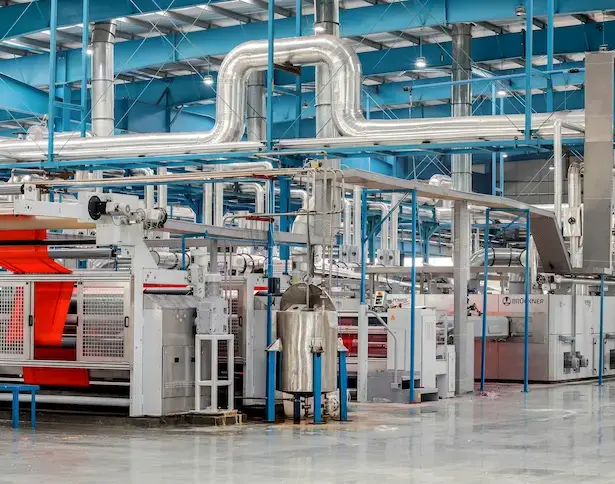
Locus connects compliance data to operational context. SCADA systems and IoT sensors integrate directly with Locus, bringing real-time process data (flow rates, temperatures, effluent parameters, equipment runtime) into the same environment as permit compliance records. When a parameter approaches a permit limit, operations staff receive an automated alert through the Locus Task and Compliance application before a deviation becomes a violation. When an incident occurs, Locus Incident Management captures not just the OSHA-recordable outcome but the full investigation workflow: tasks performed, equipment involved, contributing factors, corrective actions assigned, and verification of closure.
The Configuration Workbench allows operations teams to build their own applications without IT involvement, such as a produced water tracking app for an upstream oil and gas facility, a refrigerant service record form tailored to a specific refrigerant type, a preventive maintenance checklist that feeds the compliance calendar. These applications run on the same governed, secure platform as every other Locus application in the organization, with no separate IT review required.
Locus Mobile enables field operators to capture inspection data, equipment readings, and incident details on any device — including offline in areas without connectivity — with automatic synchronization when connectivity is restored.
12 // Locus for IT & Digital Transformation Teams
One vendor, one security review, infinite application scope
For IT leaders managing the technology portfolio of an organization with significant EHS and sustainability obligations, the status quo is a governance problem. Multiple EHS point solutions mean multiple vendor contracts, multiple data processing agreements, multiple SOC report reviews, multiple integration projects, and multiple support escalation paths. When one of those vendors is acquired, sunsets a product, or fails a security audit, IT absorbs the burden.


One vendor relationship governs the full spectrum
One vendor relationship governs EHS compliance, ESG and sustainability reporting, environmental data management, water quality monitoring, and operational compliance tracking — all on a single multitenant SaaS platform with SOC 1 Type 2 and SOC 2 Type 2 verification of Locus's own operations, financials, and security controls, not merely those of its hosting provider. Locus hosts on AWS, maintains 99.99%+ uptime independently verified by third-party monitoring and published publicly in real time, and supports SSO integration and role-based access controls that align to enterprise identity governance requirements.
14 // Locus for Finance, Risk, & Executive Teams
The platform that turns environmental data into a strategic asset
For CFOs, Chief Risk Officers, and executive leaders, environmental and sustainability data is no longer purely an operational matter. It is a financial disclosure item, a risk factor in credit agreements and insurance renewals, a metric in ESG ratings that influence the cost of capital, and a subject of regulatory scrutiny that can generate material liabilities. The quality of that data — its auditability, its consistency across frameworks, its defensibility under third-party assurance — directly affects how investors and regulators view the organization.


Locus provides the data infrastructure that makes environmental and sustainability data credible at the board level. Because every record in Locus carries a complete audit chain (collection timestamp, personnel, instrument, validation status, QA reviewer attribution, and reporting history) the Scope 1 emissions figure in a CSRD disclosure, the PFAS exceedance record in a 10-K risk factor, and the waste disposal cost in a remediation liability calculation are all supported by documentation that a financial auditor can follow from the report back to the field sample. This is the difference between environmental data that legal and finance teams trust and environmental data that generates follow-up questions during earnings season.
16 // highlights for every department
Four platform capabilities that every department uses, in different ways
Locus is the only EHS platform built on a validated, science-grade data foundation that makes AI outputs trustworthy rather than speculative. AI is only as good as the data it runs on, and Locus data — validated at entry, audit-chained throughout, and managed by scientists who know what bad environmental data looks like — is the foundation that responsible AI in EHS requires.
Every department can configure Locus applications to match its specific processes — forms, approval tiers, dashboards, report formats — without IT involvement and without vendor fees. EHS teams adapt permit compliance workflows. Sustainability teams build supplier ESG survey tools. Operations teams create inspection forms for specific equipment types. The Configuration Workbench governs all of it, within the same secure platform.
Environmental compliance is spatial; monitoring wells, outfall locations, facility footprints, contamination plumes, and stormwater catchment areas all have geographic dimensions that tabular data alone cannot represent. Locus GIS mapping is integrated directly with the compliance data environment, not bolted on through a third-party integration, and includes augmented reality field navigation developed with doctoral-level GIS expertise
Every department has a different audience for the data Locus manages — regulators, auditors, boards, operations managers, and field crews all need different views of the same underlying records. Locus dashboards, reports, and the OneView platform-wide interface are all configurable to role, not locked to a single layout. A compliance manager sees permit condition status. A CFO sees aggregate liability exposure. A field technician sees today's sampling schedule and yesterday's results
17 // Software Demonstration
Every stakeholder in your organization has a reason to choose Locus.
Schedule a demo with a Locus subject matter expert. Tell us which departments are in the room, and we will address what each one needs to hear — specifically, with data to back it up.
Book a demo

Common questions about Locus as an enterprise-wide platform
18 // FAQ
No. Locus is licensed as a platform subscription. Departments access the applications within their organization's platform tenant. Application-specific features may carry separate pricing, which your Locus account team will detail during the scoping process.
Because Locus is a unified platform with a shared data model, a regulatory change that affects how emissions are calculated, how waste is classified, or how a report is formatted can be addressed once in the Configuration Workbench, by a power user in the relevant department — and the change propagates to every report and workflow that uses that data. There is no need to update multiple disconnected systems.
Implementation is staged and prioritized by your organization's most urgent compliance needs. A single application or department can be fully operational within weeks of kickoff. Expansion to additional departments or applications occurs within the same platform tenant, without a separate implementation cycle. Locus implementation managers hold domain expertise relevant to each department they support.