





01 // About Locus

Environmental compliance and ESG software built in Silicon Valley

Founded by a Scientist. Still Run by One.

In 1997, a civil engineering PhD founded Locus Technologies in Silicon Valley to solve an environmental problem that spreadsheets could not. The company is still led by that same founder. It has never been acquired. It has never taken private equity money. And every person who builds and supports this platform holds an advanced science degree or brings direct EHS experience from the field.

02 // Origin Story

Silicon Valley contamination sparks Silicon Valley software innovation

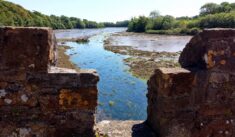
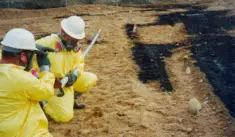
Fairchild Semiconductor was the most important chip manufacturer in the world and the godfather of Silicon Valley. What Fairchild and its descendants did not know was that the solvents and degreasers used in chip manufacturing were leaking through their underground storage tanks into the soil and groundwater of Mountain View. For decades. The EPA eventually designated 23 Superfund sites in the Valley and ordered remediation from some of the most powerful technology companies on earth.

Dr. Neno Duplan was a civil engineer working in the middle of it. He had spent years on Superfund and RCRA cleanups and had already invented a software prototype for managing environmental data at the scale and complexity those programs demanded. When commercial web browsers arrived in the mid-1990s, he understood their potential and launched Locus Technologies on April 11, 1997. Fairchild Semiconductor became the first customer.

The relationship was symbiotic, and Fairchild invited Locus to operate from its Silicon Valley campus at 299 Fairchild Drive, Mountain View, California. And today, that same address remains the headquarters for Locus Technologies.

03 // Dr. Neno Duplan, Founder and CEO, Locus Technologies

"We built Locus to hold up when it matters most. In the field, in the lab, and in front of a federal regulator."

Corporate Team

Every competitor in this space has changed hands. Locus has not.

The EHS and ESG software industry has spent the last decade in an M&A cycle that shows no sign of stopping. Sphera was assembled by private equity from IHS Markit assets, then sold to Blackstone for $1.4 billion. Intelex became a subsidiary of Fortive. Enablon was acquired by Wolters Kluwer for $275 million. Cority has been backed by private equity firm, Thoma Bravo, and ...

grown primarily through acquisition. Each of these companies is now owned by investors whose primary obligation is to a return, not to a regulatory outcome.

Over the years, Locus has sat across the table from multiple venture capital firms, including funds from Sand Hill Road, just minutes from the Mountain View office. Every overture has been declined, and the reasoning has never changed: the investors were interested in financial returns. The mission of Locus Technologies is environmental outcomes. Those are not the same objective, and pretending otherwise would have changed what Locus builds and who it hires.

The result of that steadfast independence is a software platform with nearly three decades of unbroken architectural continuity, a scientific culture that has never been restructured to hit an EBITDA target, and a customer base that knows exactly who holds their data and what obligations that holder is accountable to.

Founder-led from day one

05 // Key Highlights

  • Zero private equity investors. Ever.

    Independent ownership lets Locus plan beyond an investor fund cycle. Product, hiring, and customer decisions can remain anchored in environmental outcomes and long-term platform stewardship.

  • Zero acquisitions since 1997.

    Locus has grown through internal product development rather than assembling acquired products. That continuity supports a coherent architecture, shared data foundation, and consistent product direction.

  • One owner. The founder.

    Ownership and operating leadership have remained aligned from the beginning. Customers know who is accountable for the platform’s direction, the company’s commitments, and the stewardship of their data.

Our developers sit next to the scientists. In many cases, they are the same person.

06 // Our People

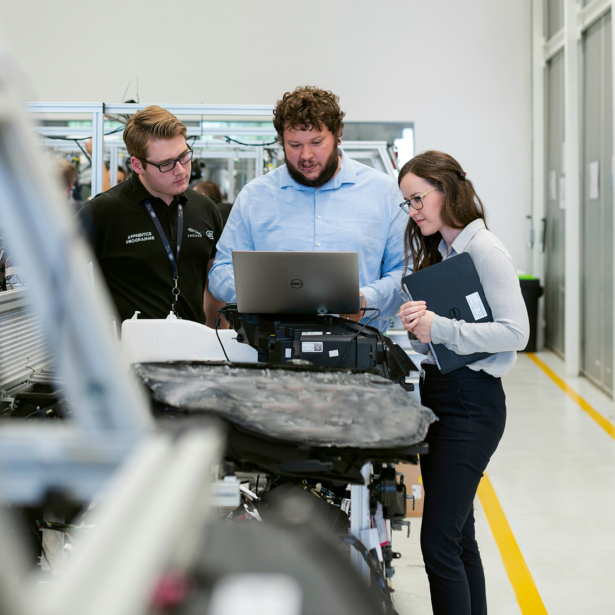
Man working on laptop as demonstration of AI for EHS and ESG

Experience from the field, lab, and regulatory front line

Every client-facing employee at Locus holds an advanced degree in science or engineering or brings direct professional EHS experience from the field. Software architects came from Hewlett-Packard, PeopleSoft, and Salesforce. Environmental scientists, geochemists, hydrologists, and compliance professionals came from the sites, the labs, and the regulatory programs Locus now manages in its software.

When a Locus customer calls with a question about a PFAS monitoring workflow, a stormwater sampling protocol, or groundwater plume modeling, the person who answers has managed that kind of program themselves. That depth of practical knowledge separates Locus from the pack and drives its deliberate and sustained commitment to recruiting scientists and engineers.


Shaped by leading institutions and demanding environments

Much of our talent comes from Stanford, Carnegie Mellon, UC Berkeley, MIT, Cornell, Oxford, and Purdue. Others come from the Department of Energy, from consulting firms, from water utilities and nuclear facilities.

We are headquartered in Silicon Valley – where engineering rigor, scientific depth, and technical innovation tend to coalesce – and our team shows it.

Join the team

07 // Dr. Neno Duplan, Founder and CEO

"Our competitors have talented programmers. We have talented programmers who also hold advanced degrees in

civil engineering, chemistry, geology, and hydrology. In regulated industries, that is not a minor distinction. Software built without domain expertise is a map drawn by someone who has never left the office."

08 // OUR TRACK RECORD

When other products buckle under the pressure, people call Locus Technologies for help.

The hardest environmental programs in the world trust Locus Technologies with their data. Los Alamos National Laboratory, home of the Manhattan Project, managing nuclear and chemical contamination across nearly 40 square miles of one of the world's most advanced scientific facilities, runs on Locus. The program contains over 16 million records from more than 32,000 locations, and every record is available to the public in real time through the platform. Locus software manages data for multiple nuclear reactors and plants in the United States.

The Locus customer list includes organizations whose environmental programs have drawn federal oversight, congressional attention, and in some cases became the basis for major motion pictures like Erin Brockovich, A Civil Action, Dark Waters, and Oppenheimer. Chevron, Honeywell, Raytheon, Shell, ExxonMobil, Westinghouse, Chemours, and the Port Authority of New York and New Jersey are not customers purely because of their size. They are customers because their environmental obligations are among the most complex and consequential in the country, and those programs require a platform built to a standard that most software never reaches.

When a program is complex enough to test any platform's limits, Locus has consistently been the answer – not the weak point.

Proven on the hardest environmental programs in the world

09 // Key Highlights

  • 16M+ Records at Los Alamos National Laboratory

    At this scale, value depends on making complex scientific information organized, searchable, and accessible to the people who rely on it. The deployment demonstrates how Locus supports rigorous environmental analysis and public transparency.

  • Multiple nuclear reactors and plants managed on Locus

    Nuclear environmental programs require exacting traceability and dependable access across long operating, monitoring, and remediation timelines. Locus provides a durable system of record for work where continuity and data integrity carry exceptional weight.

  • 4.8M+ validated PFAS records across 38,500 global sites as of September 2026

    PFAS programs continue to evolve as analytical methods and regulatory thresholds change. A structured, validated record helps teams investigate individual sites and recognize patterns across a broader portfolio.

We were building cloud software before anyone called it "cloud".

10 // Our Firsts

Locus has been ahead of this industry at every major inflection point. In 1999, Locus launched the first web-based environmental information management application and the first SaaS product of any kind for environmental compliance. A year later, Locus released the first mobile environmental data collection application connected to a cloud system. In 2011, the company unveiled the first iPhone application for environmental field data collection. These were not incremental improvements on existing tools. They were category-defining moments, each driven by the same founding instinct: that the volume and consequence of environmental data would eventually demand infrastructure that no one had built yet.

That instinct is instrumental in the context of artificial intelligence. AI in environmental compliance is only as reliable as the data it draws from. Unvalidated records, fragmented architectures, and manually assembled datasets produce confident-sounding outputs that cannot survive regulatory scrutiny. The organizations positioned to use AI well in this domain are the ones that spent years building validated, governed, audit-ready data foundations before AI became the conversation. Locus has been building that foundation since 1997, which means the work that makes AI trustworthy in environmental compliance is already done for every customer on the platform.

Decades of experience and breakthroughs

11 // Moments in Time

1983: First environmental database prototype developed at Carnegie Mellon
1997: Locus Technologies founded, Mountain View CA
1999: First cloud-based environmental SaaS application
2000: First mobile environmental data collection connected to SaaS
2001: First purpose-built EHS compliance software platform for the industry
2011: iPhone application for environmental field data collection
2019: Full infrastructure migration to AWS
2025: European expansion for CSRD support

A Silicon Valley company with a European scientific tradition

12 // Global Perspective

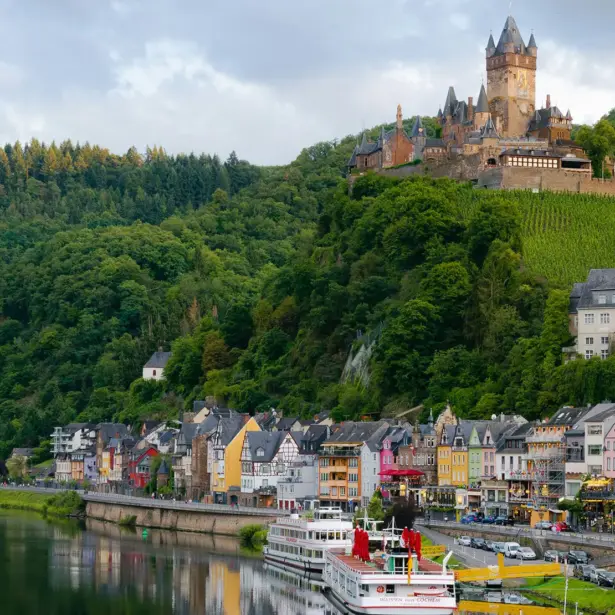
Dr. Neno Duplan was born and raised in Croatia, completed graduate engineering work at Carnegie Mellon, and built his career in Silicon Valley. The company he founded reflects all three of those influences: European regulatory depth, American engineering discipline, and Silicon Valley's relentless pursuit of what comes next.

Europe has historically set the pace on environmental and sustainability regulation. CSRD, the most demanding corporate sustainability disclosure requirement in history, is a European framework now shaping reporting obligations for multinationals worldwide. Locus expanded its European operations in 2025 to support that wave of demand, serving both European organizations and U.S. companies operating in the EU. For a company founded by a Croatian-born engineer who completed his doctoral work in Zagreb and his professional formation across multiple continents, that expansion reflects something baked into the company long before the regulatory landscape made it necessary.

For customers on either side of the Atlantic, Locus brings a regulatory perspective that is genuinely global, built by people whose professional growth spanned multiple continents and multiple regulatory traditions.

CSRD Disclosures

13 // THEN AND NOW

Software built precisely for what comes next

Fairchild Semiconductor and its successors built the technology infrastructure of the 20th century and, in doing so, created one of the most complex environmental cleanup obligations in American history. That crisis created the conditions for Locus Technologies to exist.

The AI data centers now powering the 21st century's technology revolution require enormous quantities of energy and water. Their environmental footprint covers energy consumption, water use, scope 2 emissions, and e-waste, all of which carry growing regulatory and ESG disclosure obligations for every major technology company. The semiconductor industry's environmental story has come full circle.

Locus was founded to manage the environmental consequences of the last great technology boom. The platform, the data governance standards, and the scientific depth built since 1997 are exactly what the next boom requires.

Scientists come here to do meaningful work.

14 // Our Culture

Locus is a place where a hydrologist with a Stanford PhD works alongside the software developer who built the platform that holds their data. Where the person who wrote the regulatory comment for a state water board now configures the compliance workflow that manages it. Where the environmental consultant who spent years in the field designing the questions now builds the software that answers them.

The work is serious. The problems are real. The data managed on this platform drives remediation decisions, informs enforcement actions, and shapes corporate disclosures that investors and regulators scrutinize closely. For scientists and engineers who spent years in the field wishing they had access to better tools, building those tools is its own form of motivation.

Locus is independently owned, which means the priorities of the company are set by its mission and its customers. There are no investor board mandates to navigate and no acquisition integration projects to survive. The work here is about building better environmental software, which is what the team that built it came to do.

View Open Positions

15 // Software Demonstration

Thirty years of science. Thirty minutes of your time.

See what 30 years of environmental science and Silicon Valley engineering looks like in practice. Every Locus demo is led by a subject matter expert with direct environmental credentials.
Request a Demo

Frequently Asked Questions

17 // FAQ

The Locus Platform is the cloud software platform built by Locus Technologies, a company founded in Mountain View, California in 1997. It hosts more than 30 purpose-built applications for environmental data management, EHS compliance, water quality, greenhouse gas reporting and ESG disclosure, used by regulated enterprises, government agencies, national laboratories and water utilities. Other companies use the word "Locus" in their product names; the Locus Platform described on this site refers to the unified platform for EHS, ESG, water, and environmental data from Locus Technologies.

Locus Technologies was founded on April 11, 1997, by Dr. Neno Duplan, a civil engineer who had spent years on Superfund and RCRA cleanup programs in Silicon Valley. He remains the company's CEO and sole owner. The company has never been acquired and has never taken outside investment.

No. Locus Technologies is an independent environmental compliance and ESG software company headquartered at 299 Fairchild Drive, Mountain View, California. It has no corporate relationship with the logistics, robotics, solar, or healthcare companies that share the name.