
01 // CSRD Disclosures

CSRD-ready data, from the systems you already use

02 // Purpose-built software

CSRD Reporting Platform for Double Materiality, ESRS Data Collection, and Assurance-Ready Disclosure

The CSRD reporting framework requires something fundamentally different from prior sustainability reporting: the Corporate Sustainability Reporting Directive demands a structured double materiality assessment, data collected across subsidiaries and value chains to ESRS standards, limited assurance from an independent auditor, and a disclosure that holds up to the same scrutiny as a financial statement. Locus CSRD software was built for exactly that level of rigor. With a dedicated CSRD Practice Group in Europe and the same auditable, financial-grade data infrastructure that has served EHS and environmental compliance programs for decades, Locus helps organizations meet CSRD requirements with data they can defend.

Built on Locus Platform

Locus CSRD software runs on the same platform as our GHG Management, ESG Reporting, Waste Management, Air Quality, Refrigerant Management, and our Locus Water apps. The environmental and operational data that those programs collect every day is already in Locus, such as GHG emissions, waste quantities, water use, refrigerant releases, air emissions. For organizations that use Locus for operational compliance, that data is available to CSRD disclosures without extraction, reformatting, or reconciliation. The platform's audit trail and data validation infrastructure is exactly what CSRD's limited assurance requirement demands.

Why compliance teams choose Locus CSRD reporting software

Complete a double materiality assessment that survives limited assurance review.

The double-materiality module structures all stakeholder input, documents the methodology, and produces a traceable assessment that auditors can follow. Confidently replace the narrative descriptions that cannot be verified.

Collect ESRS data across every subsidiary, every location, and your value chain.

Configurable data collection workflows reach global headquarters, regional subsidiaries, individual facilities, and external value chain partners with the same validation rules applied at every level.

Organize disclosures by ESRS topical standard, not by spreadsheet tab.

ESRS-aligned disclosure templates map data to the specific disclosure requirements of each topical standard (E1 through G1) so the connection between operational data and reported figures is explicit and auditable.

Walk into limited assurance with a complete, traceable data record.

Every data point in Locus carries its source, collection method, validation status, and user attribution. The complete provenance trail that independent auditors need to provide limited assurance without reconstructing the data collection process is at your fingertips.

Coordinate CSRD data collection across finance, facilities, risk, and sustainability teams.

Configurable workflows route data collection tasks to the right stakeholders with automated reminders and status tracking visible to the program lead. Keep internal teams and external suppliers on track.

Adapt to ESRS revisions without waiting for a software update.

Locus Configuration Workbench lets your team update disclosure templates when ESRS standards are revised. There’s no need to involve vendors, submit change requests, or wait for a release.

05 // Dr. Zvonimir Dadić, Head of CSRD Practice Group, Locus Technologies Europe

"Managing CSRD compliance requires navigating complex datasets, evolving standards, and cross-border regulatory demands.

While certain data, such as financial metrics, may already adhere to strict standards, other required information can be elusive, complex, and difficult to interpret. Our cross-border team understands the intricacies of environmental, social, and governance data, and can properly map those datasets to meet CSRD requirements."

Double Materiality to
Disclosed Report

06 // Lifecycle

  • Assess

    Identify which sustainability topics are material to your organization. The double materiality assessment evaluates each topic from two directions — how your operations affect the world, and how the world affects your financial position. Stakeholder input is structured, scored, and documented in a methodology that your assurance provider can follow.

  • Collect

    Operational data already in Locus flows directly into your CSRD record, including GHG emissions, waste, water, air emissions, and refrigerant releases. Other data enters via structured intake forms deployed to subsidiaries and facilities, through the multilingual ESG Survey Tool for value chain suppliers, and through API connections to HR and finance systems for social and governance data.

  • Validate

    Before any data point reaches the disclosure record, it is validated. Anomalies and incomplete submissions trigger automated alerts. Every data point retains its source, collection method, validation status, and user attribution — the provenance that limited assurance requires.

  • Disclose

    Validated data is mapped to ESRS-aligned disclosure templates that are organized by topical standard. The complete record — materiality assessment, data collection documentation, and audit trail — is available for assurance review. When ESRS standards are revised, your team updates the templates using Configuration Workbench without involving a developer or waiting for a release.

Locus CSRD software simplifies disclosures

07 // Feature Highlights

Double Materiality Assessment

CSRD's double materiality assessment is mandatory and must be defensible. It is also genuinely complex: organizations must evaluate sustainability topics from two distinct perspectives simultaneously, engage stakeholders across business units and geographies, document the methodology with enough specificity to satisfy an auditor, and then map the results to the ESRS topical standards that determine what they must report. Locus structures every stage of this process. Identify the relevant sustainability topics across all ESRS topical areas. Collect and aggregate stakeholder input on both impact materiality and financial materiality. Score topics systematically against configured thresholds. Produce a documented materiality matrix and assessment report with the full methodology that limited assurance providers need. Compare assessments across reporting periods to demonstrate how the organization's priorities and exposure have evolved.

ESG Reporting →
ESG and Sustainability Frameworks →

Multi-Level ESRS Data Collection

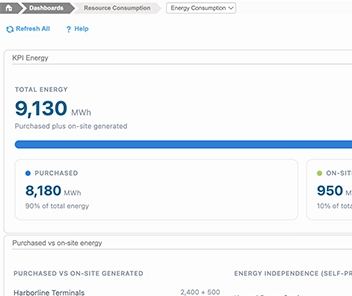
Collecting CSRD data is harder than reporting it. The challenge is organizational, not technical: the data lives across subsidiaries in different countries, facilities with different systems, and value chain partners who have never submitted environmental data to anyone. Locus deploys configurable data collection workflows at every level of the organization and beyond. At the corporate level, operational data already in Locus — GHG emissions, waste, water, air emissions, refrigerant releases, embodied carbon, renewable energy — is available without re-entry. At the subsidiary and facility level, structured data collection forms with ESRS topic alignment, automated completion reminders, and validation before submission collect what is not already in the system. For value chain data, Locus's ESG Survey Tool reaches external suppliers with configurable intake forms in multiple languages, conditional logic, and automated follow-up. Social and governance data such as employee satisfaction, equal pay, DE&I metrics, community engagement, corporate governance practices connects via API to HR and finance systems. Everything arrives in the same validated Locus record.

ESG Reporting →
Locus Mobile →
Sophare AI & Pay Equity →

ESRS-Aligned Disclosure Templates and Reporting

The ESRS are detailed and specific. Each topical standard carries mandatory disclosure requirements that must be met if the topic was determined to be material, plus general disclosure requirements that apply regardless. As a CSRD reporting tool, Locus organizes disclosures by ESRS topical standard, mapping validated operational data to each disclosure requirement explicitly so the connection between what was collected and what was reported is clear and auditable. Disclosure templates are configurable by your own team using Locus Configuration Workbench; when EFRAG publishes updated ESRS standards or the European Commission adopts revisions, your team updates the template on your timeline without submitting a vendor change request. Locus Technologies flexes to all ten ESRS topical standards: E1 Climate Change, E2 Pollution, E3 Water and Marine Resources, E4 Biodiversity, E5 Resource Use and Circular Economy, S1 Own Workforce, S2 Workers in the Value Chain, S3 Affected Communities, S4 Consumers, and G1 Business Conduct.

ESG and Sustainability Frameworks →
Configuration Workbench →
ESG Reporting →

Audit Trail and Limited Assurance Readiness

CSRD requires limited assurance from an independent auditor, with the expectation of escalation to reasonable assurance over time. That means the data behind every CSRD disclosure must be traceable, documented, and verifiable. It cannot be presented as a finished figure without a paper trail. Locus maintains a complete provenance record for every data point: data source, collection method, validation status, calculation methodology where applicable, user attribution, and timestamp at every step. This documentation is a function of how the Locus Platform stores data; it is not assembled for the auditor after the fact. When an assurance provider asks for documentation, it comes from the system in the form it was collected, validated, and approved. Every data change is logged. Every calculation is traceable. Every submission is version-controlled.

GHG Management →
ESG Reporting →

Multi-Stakeholder Workflows and Cross-Department Coordination

CSRD data does not belong to any single team. Climate change and emissions data comes from environmental and engineering. Employee data comes from HR. Community impact data comes from public affairs. Governance data comes from legal and the board. Financial materiality assessment input comes from finance. Collecting all of it, on schedule, in a form that meets ESRS requirements, requires structured coordination across functions that do not normally collaborate on reporting. Locus Technologies’ configurable workflows route data collection tasks to the right internal stakeholders with automated reminders, completion status visible to the program lead, and escalation when tasks go overdue. Every contributor works in the same system, so data arrives in a single record rather than a collection of spreadsheets that must be consolidated and reconciled.

Task and Compliance →
ESG Reporting →

The Locus CSRD Practice Group

Locus maintains a dedicated CSRD Practice Group in Europe - not a generalist ESG consulting team, but specialists in double materiality methodology, ESRS data collection design, and cross-border regulatory interpretation. Led by Locus Technologies Europe and supported by teams in the Czech Republic and Croatia, the practice group brings the regulatory depth and implementation experience that organizations need whether they are reporting in the first wave, preparing for a future wave, or navigating the scope changes that continue to shape the directive. CSRD readiness resources are available before a CSRD solution is implemented.

Challenges companies face collecting CSRD data →
Adapting to Evolving Scope of CSRD →
Tracking CSRD Data in US →

08 // Neno Duplan, Founder and CEO, Locus Technologies

"As one of the early SaaS leaders in net-zero digital solutions for ESG reporting, Locus continues to provide value

to companies that want to be credible with their carbon reporting and sustainability software. CSRD raises the bar significantly — it requires data that can withstand independent audit, collected across the full organization and supply chain, organized by standards that go far beyond what most companies have reported before."

Locus CSRD is one app on a platform built for your entire EHS and ESG program

09 // Truly Unified Platform

Locus = No Data Silos

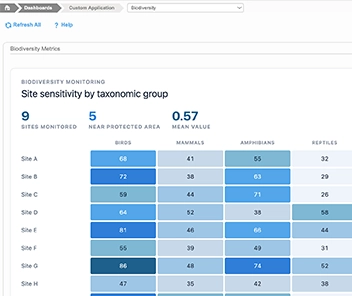
The ESRS topical standards require data that touches almost every operational program a regulated company manages. GHG emissions data for E1. Pollution and emissions data for E2. Water use and quality data for E3. Waste generation and circularity data for E5. Workplace safety and incident data for S1.

For organizations that already use Locus to manage those programs, the data CSRD requires is already in the platform, and it’s validated, traceable, and organized. For organizations coming to Locus specifically for CSRD, those connected programs are available to build on as CSRD sustainability reporting expands into the organization's broader ESG program.

All Locus apps share a unified data layer

10 // Locus Ecosystem

GHG Management GHG Management Software for Regulatory Reporting, Carbon Accounting, and Emissions Compliance
Air Quality Air Emissions Management Software for Title V, NSR, NESHAP, and Permit Compliance
Waste Management Hazardous Waste Management Software for Regulated Enterprises
Locus Water Water Monitoring Software for the Most Consequential Environmental Data on Earth
Refrigerant Management Refrigerant Management Software for Compliance, Chronically Leaking Systems Reporting, and ESG Reporting
ESG Reporting ESG Reporting Software for Organizations That Need Their Disclosures to Hold Up
Safety and Incident Management Safety and Incident Management Software for OSHA, FRA, and Enterprise EHS Compliance
Sustainable Construction Sustainable Construction Software for Embodied Carbon Tracking, Clean Construction Compliance, and Material Circularity
Full Locus Ecosystem Browse the complete collection of pre-built applications.

11 // Software Demonstration

See Locus CSRD disclosures in action

CSRD implementation is not a software problem alone. It is an organizational, regulatory, and data architecture challenge. Talk to a member of the Locus CSRD Practice Group who has worked through CSRD implementation with multinational organizations. They can show you exactly how Locus handles double materiality, ESRS data collection, and assurance readiness for your specific situation.
Request a Personalized Demo

Frequently Asked Questions

12 // FAQs

The Corporate Sustainability Reporting Directive is an EU regulation requiring large companies to disclose detailed environmental, social, and governance data according to the European Sustainability Reporting Standards. As of the EU Omnibus I Directive published in February 2026, the scope applies to large enterprises with more than 1,000 employees and over €450 million net turnover. Non-EU groups with substantial EU operations are also subject to the directive. The regulation has been evolving, and Locus tracks these changes and configures its software accordingly. Contact the Locus CSRD Practice Group for guidance on whether your organization is currently in scope.

Double materiality requires organizations to evaluate sustainability topics from two perspectives simultaneously: impact materiality (how the company's operations affect the environment and society) and financial materiality (how sustainability issues affect the company's financial performance). Locus is built to flex to the entire double materiality assessment process: topic identification across ESRS topical areas, structured stakeholder input collection, scoring against configured thresholds, materiality matrix generation, and auditable methodology documentation. The assessment output is traceable and available for limited assurance review.

Locus Technologies flexes to support ESRS topical standards such as E1 Climate Change, E2 Pollution, E3 Water and Marine Resources, E4 Biodiversity and Ecosystems, E5 Resource Use and Circular Economy, S1 Own Workforce, S2 Workers in the Value Chain, S3 Affected Communities, S4 Consumers and End-Users, and G1 Business Conduct. ESRS-aligned disclosure templates map validated data to each standard's mandatory disclosure requirements. Templates are configurable by your team using Locus Configuration Workbench when standards are revised.

Configurable data collection workflows reach global headquarters, regional subsidiaries, individual facilities, and external value chain partners. Operational data already in Locus — GHG emissions, waste, water, air emissions, refrigerant releases — is available without duplicate data entry. The Locus ESG Survey Tool deploys ESRS-aligned intake forms with multilingual support to external suppliers, with automated reminders and validation before submission. Social and governance data connects via API to HR and finance systems. Everything enters the same validated Locus record.

Locus maintains a complete provenance record for every data point: data source, collection method, validation status, calculation methodology, user attribution, and timestamp at every step. This documentation is built into how the platform stores data. It isn’t assembled after the fact for the auditor. Every data change is logged, every calculation is traceable, and every submission is version-controlled. When an assurance provider asks for documentation, it comes directly from the system.

Locus Configuration Workbench empowers your team to update disclosure templates to reflect ESRS revisions without vendor involvement or waiting for a software release. When EFRAG publishes updated standards or the European Commission adopts changes, your team makes the update on your own timeline. This is the same configuration capability that allows Locus customers across all industries to adapt to regulatory changes without custom development.

The Locus CSRD Practice Group is led by Dr. Zvonimir Dadić from Locus Technologies Europe, with EU-based teams in the Czech Republic and Croatia. The practice group provides CSRD-specific expertise spanning regulatory interpretation, double materiality methodology, data collection design, and ESRS disclosure alignment as well as standard software implementation support. Locus doubled its European headcount in January 2025 specifically to meet growing demand for CSRD compliance solutions.